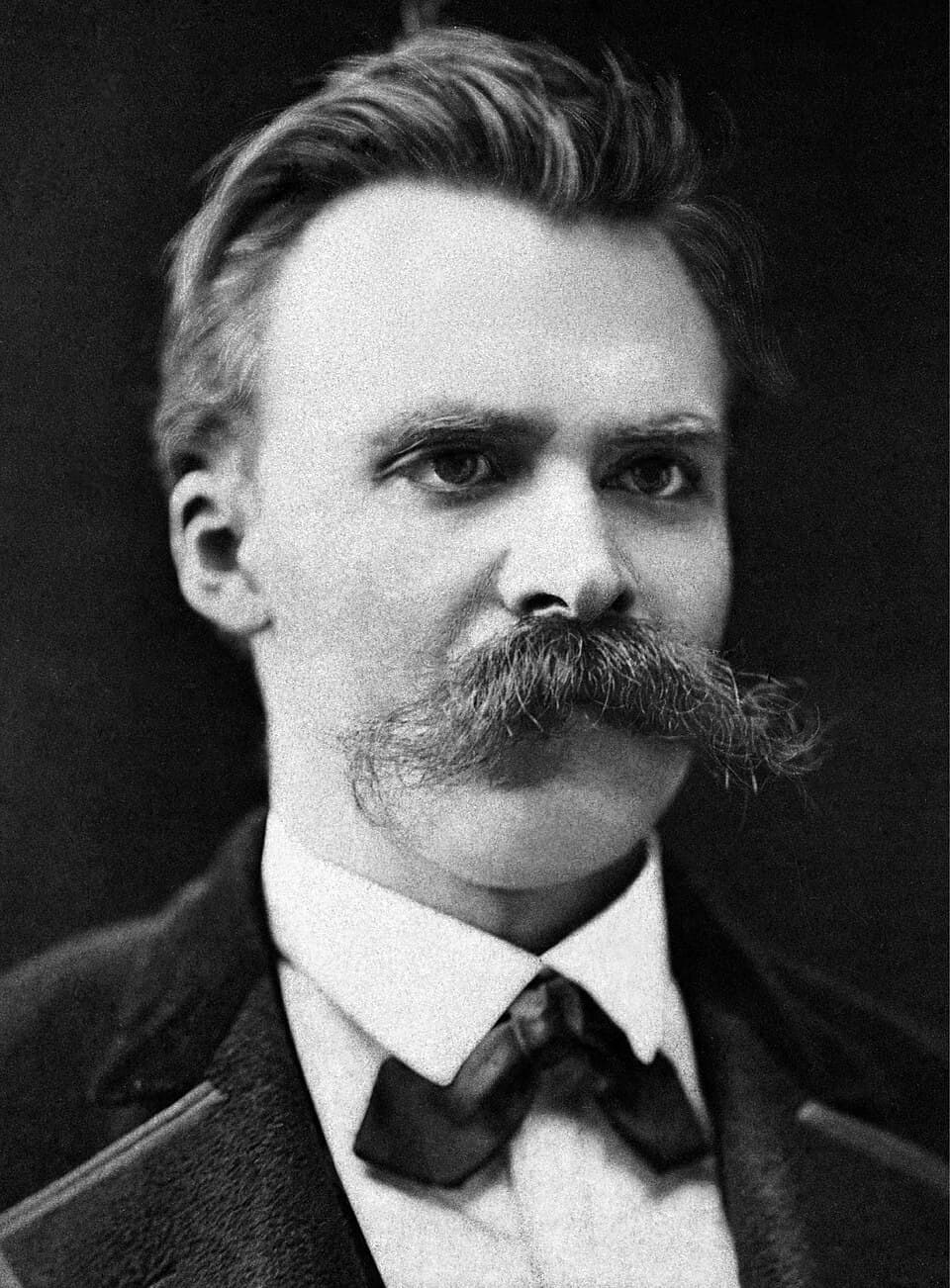

Nietzsche is the philosopher your students quote without reading. I know because I've been collecting their misattributed "God is dead" citations for two decades, and exactly zero of them have actually cracked open Beyond Good and Evil. I finally sat with Beyond Good and Evil myself last year, and I'll admit it took three attempts before it stopped feeling like homework. So there's something almost perversely satisfying about listening to the real thing while grading sophomore essays on The Great Gatsby - Tyler from third period's argument that "Gatsby was actually the villain" suddenly feels almost quaint next to a man systematically dismantling Socrates.
I came to this audiobook expecting the Nietzsche I remembered from grad school - dense, Germanic, requiring coffee and a highlighter. What I got was something sharper. Shorter. Meaner. This isn't Nietzsche building elaborate philosophical systems. This is Nietzsche with a hammer, and he's not being metaphorical about it.
Wittkower brings that same stripped-down precision to Meditations on First Philosophy - different philosopher, completely opposite method, but the narration has that same quality of getting out of the text's way.The Philosopher With a Grudge List
Let me be honest about what you're getting into: at just under five hours, Twilight of the Idols is Nietzsche's greatest hits album of intellectual violence. Socrates? Demolished. Christianity? Eviscerated. German culture? His own people, and he's merciless. The book reads like a man who knows he's running out of time - this was written in 1888, a year before his breakdown - and has decided to stop being polite about the things he hates.
The structure is almost aphoristic in places. Short, punchy sections that hit like jabs rather than haymakers. "What does not kill me makes me stronger" comes from this book, and hearing it in context is jarring. We've turned it into a gym poster. Nietzsche meant it as a philosophy of suffering.
D.E. Wittkower's narration takes the unobtrusive approach - no dramatic interpretation, no attempt to make Nietzsche sound like a movie villain or a prophet. It's dry, measured, academic. For philosophy, that's actually a compliment. The reading doesn't compete with the material. It presents and steps aside. Whether that's a stylistic choice or a limitation, I honestly couldn't tell you, but the effect works.
Why Your Students Would Hate This (And Why That's the Point)
Here's what Ludovici warns in the preface, and he's right: this is not an entry-level text. Nietzsche assumes you've already wrestled with Plato, that you understand what he means by "slave morality," that you're prepared to have your assumptions about progress and enlightenment challenged. He doesn't explain himself. He pronounces.
My students - the ones who actually read - would find this infuriating. Where's the argument? Where's the evidence? Where's the part where he proves he's right? That's not what Nietzsche does. He asserts. He provokes. He trusts that the reader will either keep up or fall away. It's elitist, honestly. And I found myself... not disagreeing with his method, even when I disagreed with his conclusions. Sometimes you need someone who refuses to hold your hand.
The audio format actually works here in a way I didn't expect. Philosophy audiobooks can be brutal - you lose your place, you can't flip back, you miss a crucial definition and the next twenty minutes become meaningless. But because Nietzsche writes in these concentrated bursts rather than extended arguments, each section stands somewhat alone. I could grade three essays, tune back in, and not feel completely lost.
The Problem With Hammers
Not everything here ages well. Nietzsche's comments on women are - well, they're what you'd expect from a 19th-century German philosopher, which is to say they made me wince. His cultural criticism of Germany reads differently after the 20th century borrowed his terminology for purposes he would have despised. And some of his targets - specific philosophers and movements that dominated his era - require footnotes that an audiobook can't provide.
At 1.0x speed (yes, I'm that person), the nearly five hours felt appropriate. This isn't a book you rush. The prose deserves to be savored, even when - especially when - it's making you uncomfortable. Nietzsche chose those words with surgical precision. Speeding through them defeats the purpose.
Class Dismissed
Listen to this if you've already read some Nietzsche and want the concentrated version. If you're a philosophy student who needs the text but can't face another page of German-to-English translation awkwardness. If you're a teacher like me who wants to feel intellectually challenged instead of intellectually exhausted.
Skip it if you're new to Nietzsche - start with Zarathustra or even a secondary source. Skip it if you need systematic arguments, or if you want fair warning for aggressive atheism and cultural criticism. And honestly? Skip it if you want to listen casually. This demands attention.
Twilight of the Idols isn't comfortable. It isn't meant to be. But at 11 PM, with a stack of essays about symbolism in Fitzgerald and a philosopher telling me that everything I've been taught is a lie? It felt like exactly the right kind of uncomfortable.
My students would hate this. I loved it.