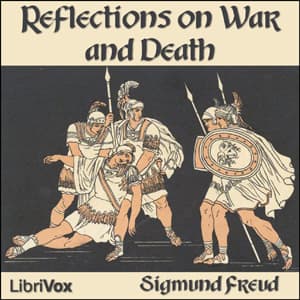

I was making chai at 2 AM - the kind of elaborate, cardamom-heavy production my mother would approve of - when Freud started explaining why we're all secretly relieved when other people die. Just casually, you know, the way one does.
This is a fascinating case study in Freud at his most accessible and, honestly, his most unsettling. Written in 1915, smack in the middle of World War I, these essays aren't the dense psychoanalytic theory you might expect. They're Freud grappling with the same question everyone was asking: how did civilized Europe tear itself apart so quickly? And his answer - that our veneer of civilization is thinner than tissue paper, that our unconscious minds never really gave up the primitive impulse toward violence - hit differently at 2 AM with steam rising from my cup.
When the Father of Psychoanalysis Gets Personal
What makes this collection compelling is watching Freud work through his own disillusionment in real time. He'd genuinely believed in the civilizing power of European culture. Art, science, shared intellectual heritage - surely these would prevent barbarism? The war shattered that assumption, and you can hear him processing it. Classic cognitive dissonance, except the subject is Freud himself, and the dissonance is about the entire foundation of his worldview.
At just over an hour, this isn't a commitment - it's more like an intense conversation. The brevity works. Freud's arguments are sharp, almost aphoristic at times. He doesn't belabor points. He makes them, lets them land, moves on. His literary prose was exceptional, and you can hear it in phrases that stick: his observation that we "cannot maintain our former attitude towards death" after the war, that we must "give death the place in reality and in our thoughts which is its due."
D.E. Wittkower's Steady Hand
The narration is what I'd call competent and appropriate - which sounds like faint praise but isn't, really. Wittkower delivers Freud's dense philosophical content with clarity and measured pacing. No dramatic flourishes, no attempts to make it more entertaining than it is. For material this cerebral, that's the right call. You're not here for a performance; you're here for ideas, and Wittkower stays out of the way.
That said, the production is bare-bones. Solo narration, no music, no framing. This is a LibriVox recording, which means free and public domain, but also means you're getting functionality over polish. Wittkower isn't trying to interpret Freud for you. He's just delivering the text.
The Uncomfortable Psychology of Grief
The second essay, on death, is where Freud gets genuinely uncomfortable. He argues that in our unconscious, we don't really believe in our own death - can't conceive of it, actually. But we're perfectly capable of wishing death on others, even people we love. That ambivalence, he suggests, is at the root of grief. We mourn not just the loss but our own guilty relief, our own freed hostility.
Psychologically, this tracks. It's the kind of observation that makes you squirm because you recognize it. Why does Freud's century-old analysis of war still feel so relevant? Short and Tragic Life of Robert Peace wrestles with that same uncomfortable question about whether circumstances reveal character or create it. Maybe because human nature hasn't changed as much as we'd like to think. Maybe because we're still pretending our civilized selves are our real selves.
Who Should Listen (And Who Should Skip)
If you want an introduction to Freud that isn't Interpretation of Dreams or Three Essays on Sexuality, this is genuinely useful. It's short, it's readable (listenable?), and it shows Freud engaging with current events rather than case studies. Psychology students, philosophy enthusiasts, anyone interested in how thinkers respond to crisis - you'll find something here.
Skip it if you're expecting dynamic narration or production value. This is academic content delivered academically. The 76-minute runtime means you could finish it in a single focused session, which is probably ideal. Not background listening material - you need to pay attention or you'll lose the thread.
Case Closed, Patient Unresolved
As someone who spends her days analyzing why people do terrible things to each other, I appreciated Freud's honesty here. He's not offering solutions. He's not even offering comfort. He's just saying: this is what we are, underneath. The war didn't create human brutality; it just gave it permission to surface.
Is that depressing? Sure. Is it also probably accurate? My research suggests yes. Freud understood human nature well enough in 1915 that his observations still sting today. That's worth an hour of your time, even if the production is bare-bones and the narrator is merely adequate.
My chai went cold while I listened. Freud would probably have something to say about that.