
Okay, I need to talk about the coughing.
I know that's a weird way to start a review for a Regency romance, but listen — when you spend nearly twelve hours with a book, and there's a persistent background cough lurking in the recording like some phantom chaperone, you notice. It's like someone was sitting just outside the recording booth with a chest cold and nobody thought to, I don't know, pause? Wait? Offer the person a lozenge? I was deep into a branding project at 2 AM, headphones on, Diego curled on my keyboard (as he does when he wants attention and I'm ignoring him), and every time the cough popped up it yanked me right out of Regency England and back into my apartment. Frustrating. Because the actual story? The actual vibes? Pretty wonderful.
Charlotte Arkendale Is the Abuela Energy I Didn't Expect
Here's what got me about this book: Charlotte runs a background-check service for women evaluating their suitors. In Regency England. She's basically a private investigator in petticoats, and she has this steel-spine practicality that reminded me so much of my abuela sizing up every man who walked through her door in San Antonio. Abuela had a mental dossier on every boy in the neighborhood — who his parents were, whether he went to church, if his shoes were clean. Charlotte would've been her favorite fictional character, no question. Abuela would have loved this one.
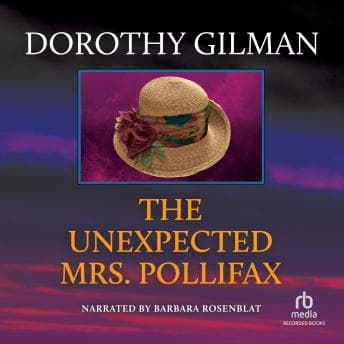
And then there's Baxter St. Ives, who Charlotte hires as her man-of-affairs (hence the title, which does double duty — it's the professional arrangement AND the, well, affair). Baxter is this brooding, cerebral chemist type who everyone underestimates because he wears spectacles and prefers his laboratory to ballrooms. The fact that Amanda Quick made the hero a scientist who gets genuinely excited about chemical compounds? Chef's kiss. He's not your standard rakish duke. He's awkward and intense and possessive in a way that feels earned rather than performative.
The chemistry between them — and I mean the romantic kind, not Baxter's actual chemistry — builds on this foundation of intellectual respect. Charlotte doesn't swoon because he's handsome. She respects his mind first, and the attraction grows out of that mutual recognition of competence. It's a slow burn, but the kind where you feel the heat building behind every clipped conversation about murder suspects.
Barbara Rosenblat Deserves Better Production
Here's where I'm conflicted, because Barbara Rosenblat's actual performance is lovely. She gives Charlotte this crisp, no-nonsense delivery that softens just slightly when Baxter is near — and that tiny vocal shift told me everything about Charlotte's feelings before the text even confirmed them. Her Baxter has this lower, more measured cadence, careful and controlled, which matches a man who's spent his life being methodical about everything including his own emotions.
But the production? The production let her down. Beyond the coughing situation, there are moments where you can hear her swallowing, these little wet mouth sounds that — once you notice them — become impossible to unhear. I design album covers for indie musicians sometimes, and I think of it like putting a gorgeous illustration on a poorly printed poster. The art is there. The execution around it is sloppy. It's an older recording and it shows. Rosenblat deserved a cleaner mix.
I'd put her at a strong performance wrapped in mediocre packaging. Which is maddening.
The Mystery Is Fine. The Feelings Are Better.
Let me be honest: the murder mystery plot is... fine. It's functional. It gives Charlotte and Baxter a reason to spend time together and be in danger together, which creates the pressure cooker for their romance. But I wasn't listening at midnight because I needed to know who killed Charlotte's client. I was listening because I wanted to hear the moment Baxter finally cracks open that controlled exterior and admits what he feels. Amanda Quick (who is really Jayne Ann Krentz, for those keeping score) knows that the mystery is the vehicle but the romance is the destination. And she gets you there.
Did I cry? Not my usual ugly-cry, no. But there's a quiet ache in the way Baxter talks about being overlooked his whole life — being the family's afterthought, the one nobody expected passion from — that hit me somewhere tender. It's not a four-tissue book. It's more of a tight-chest, whispered "oh" kind of book. The feelings are warm rather than devastating, and sometimes that's exactly what you need.
The pacing is deliberate. Some people might call it slow. I call it Regency-appropriate. These characters don't rush because their world doesn't rush. But if you're a 2x speed listener looking for action, this isn't your book.
Who Gets to Come to This Affair
This is for you if: you love heroines who are smarter than everyone in the room and know it, heroes who are quietly intense rather than loudly alpha, and Regency settings that feel lived-in rather than costume-y. Nothing New for Sophie Drew scratched a similar itch for me — a heroine who operates entirely on her own terms and earns every bit of the slow-burn payoff. If you liked Courtney Milan's historicals or Lisa Kleypas's Wallflower series, you'll find something to love here.
Skip it if: audio quality is a dealbreaker for you, or if you need a fast-moving plot to stay engaged. The mystery meanders, and the production issues are real.
This book felt like a cup of strong tea on a Sunday afternoon — not flashy, not trendy, but warm and steady and made with care. I just wish someone had cleaned up the recording so I could've savored it without the phantom cougher crashing the party.