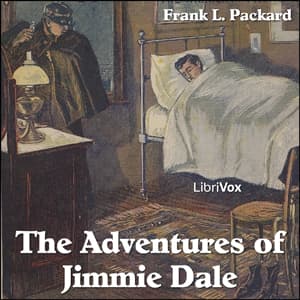

"And he, Jimmie Dale—"
I swear, if I heard that phrase one more time I was going to throw my phone into the Pacific. But I'm getting ahead of myself.
I was reorganizing the horror section at the library — yes, at 8 PM, yes, alone, yes, the fluorescent lights were doing that flickery thing they do when the building's settling — and I needed something to keep me company that wasn't my own imagination. So I queued up The Adventures of Jimmie Dale, figuring a pre-pulp mystery from 1917 would be the audio equivalent of comfort food. What I got instead was a 19-hour crash course in why Batman exists.
The Grandfather of the Batcave (Literally)
Here's the thing that kept me locked in despite the book's considerable flaws: Jimmie Dale is the prototype. The wealthy socialite who slums it as a costumed vigilante? That's him. The secret lair — called "The Sanctuary," which, growing up in a house where that word meant something very different, gave me a genuine chill? That's him too. The grey paper seal he leaves at crime scenes is basically a proto-Bat-Signal in reverse. Frank L. Packard wrote this in 1917, and you can draw a direct line from Jimmie Dale to Zorro (1919), The Shadow (1930), and Bruce Wayne (1939).
But knowing something is historically important and enjoying 19 hours of it are two very different things. Packard writes in that early 20th century pulp style where every revelation requires three paragraphs of Jimmie Dale's internal monologue about how dire things are, how the net is closing, how this time — THIS time — there's no escape. And then he escapes. Every time. The tension should ratchet up, but Packard keeps crying wolf until the wolf just becomes background noise.
The mysterious woman who blackmails Jimmie into fighting crime — known only as "The Tocsin" — is genuinely interesting as a concept. A faceless handler pulling the strings of a man who cracks safes for sport? That's a great hook. But the book teases her identity for so long that by the time the reveal comes, I'd cycled through intrigue, impatience, and a kind of resigned acceptance that Packard was going to milk this for every page he could.
LibriVox Roulette: The Eternal Gamble
So here's the deal with LibriVox recordings, and anyone who's listened to more than a few knows exactly what I mean — it's a volunteer operation, which means quality varies not just book to book but chapter to chapter. This recording has some genuinely solid readers. One listener singled out Anna specifically, and I get it — when you hit a chapter where the reader understands pacing and actually commits to the melodrama (and this book DEMANDS melodrama), it works. The breathless descriptions of Jimmie slipping through Chinatown in his alter ego as "Larry the Bat" — a drug-addled underworld figure he inhabits with a full disguise kit — those chapters sing when the narrator leans into the pulp energy.
But then you'll get a chapter where the reader is clearly just... reading. Flat. Metronomic. And for a book that's already fighting against repetitive prose, a flat narrator turns "and he, Jimmie Dale" from an annoying tic into a sleep aid. At 19 hours, the inconsistency wears on you. I found myself mentally grading narrators by chapter like I was evaluating presenters at a library conference. (Occupational hazard.)
The pacing issues aren't all on the volunteers, though. Packard himself is the problem. The man never met a description of a safe-cracking he couldn't stretch to three pages. I bumped the speed to 1.25x around hour six and never looked back.
Who Needs This in Their Ears
If you're a comics history nerd, a pulp fiction completist, or someone who wants to understand where the superhero archetype actually came from — before the capes, before the comics code, before any of it — this is essential listening. It's free, it's public domain, and it's genuinely fascinating as an artifact.
If you're looking for a tight, propulsive mystery? This isn't it. The structure is episodic, the protagonist makes decisions that'll have you muttering "why would you DO that" into your steering wheel, and the repetitive phrasing is a legitimate endurance test.
I'm glad I listened. I'm not sure I'd listen again. But I spent a week with Jimmie Dale, and now when someone on my podcast brings up Batman's origins, I've got receipts that go back over a century. That same genre-archaeology itch got scratched a different way when I sat with Middle of Things — another case where the historical scaffolding under the story is honestly more interesting than the story itself. Shirley (my cat) was unimpressed. She's right that it's no Shirley Jackson. But Shirley Jackson walked so a lot of people could run, and Frank Packard? He crawled so they could walk.
The Card Catalog Entry
A fascinating historical artifact wrapped in an uneven free audiobook. Worth your time if you care about genre genealogy. Just bring your speed controls and your patience.