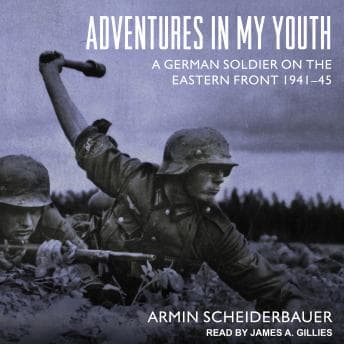

I was sitting in gridlocked traffic on I-35 in Austin—105 degrees outside, AC struggling—when I started this. Listening to a German infantry officer freeze his tail off on the Eastern Front while I'm sweating through my shirt creates a weird kind of cognitive dissonance. But that's the job.
Let me be clear right up front: This isn't Call of Duty. If you're looking for non-stop explosions and heroics, go buy a Tom Clancy novel. This is a memoir written by a guy who was wounded six times before he was old enough to legally drink in the States.
The Voice in the Mud
Nothing—and I mean nothing—ruins a war memoir faster than a narrator who can't pronounce the names of the towns he's supposedly fighting in. I've listened to books where the narrator butchers simple German ranks so bad I want to throw my phone out the window.
James A. Gillies? He's legit.
I don't know if he served or if he just spent a lot of time in Berlin, but his German pronunciation is flawless. It matters. When Scheiderbauer is describing the retreat through East Prussia or the defensive lines in '42, Gillies pronounces the locations and units with a command that keeps you in the moment. He sounds like an officer giving a briefing, not an actor trying too hard. Ranger (my Shepherd) usually falls asleep during the history heavy-hitters, but Gillies has a commanding tone that kept the dog's ears perked up.
Not All Glory and Gunfire
Here's where I have to manage your expectations. The book was originally written for the author's daughter. It wasn't meant to be a bestseller. Because of that, it's incredibly honest—sometimes to a fault.
Scheiderbauer captures the reality of the infantry: the endless marching, the waiting, the bureaucratic nonsense, and the sheer exhaustion. (I've seen this scenario play out in real life—war is 90% waiting around and 10% pure chaos.)
But that honesty means the pacing drags. There were stretches—specifically around the middle of the book—where I found myself zoning out a bit. It gets into the weeds of unit movements and logistics that only a hardcore historian or a logistics officer would love. I had to bump the speed up to 1.5x just to get through the winter of '43 without losing my mind.
The accounts of the Soviet offensives in '44 and '45, though? Gut-wrenching. You feel the desperation. The guy was 21 years old, commanding men, knowing the end was coming. That part hit me.
Who This Is For (And Who Should Skip It)
If you're a serious student of military history or you want to understand the Wehrmacht perspective from the ground level—yes, it's worth the credit. It's a solid primary source. The lack of political grandstanding is refreshing; it's just a soldier trying to survive a war he didn't start but had to finish. That same unflinching honesty—stripped of ideology—is what makes Memories of Childhood's Slavery Days so powerful, even if the context couldn't be more different.
But if you're a casual listener who gets bored easily? Skip it. It's a slow burn. It's dry. It requires patience.
Mission Complete
Personally, I respected the hell out of it. But I'm also the guy who reads field manuals for fun, so take that with a grain of salt.







![Steve Jobs [unabridged audiobook] audiobook cover](/_next/image?url=https%3A%2F%2Fcovers.audiobooks.com%2Fimages%2Fcovers%2Ffull%2F9788499923406.jpg&w=1920&q=75)