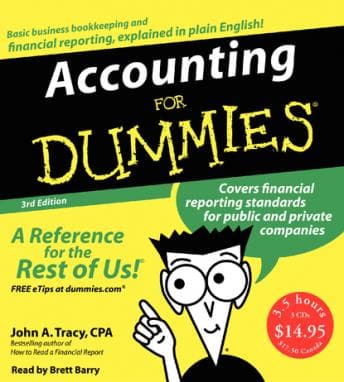

Quick Verdict: A 3-hour accounting primer that's fine for absolute beginners but will frustrate anyone wanting actual depth.
So here's the thing. I grabbed this because tax season was approaching and I wanted to finally understand what my company's finance team actually does when they talk about GAAP versus cash-basis accounting. The reviews online are weirdly split—some people love it as a gentle intro, others are genuinely annoyed it's not technical enough. After listening during a particularly brutal Monday commute where my train was delayed 40 minutes at Hillsdale, I get both perspectives.
The Abridged Problem Nobody Warns You About
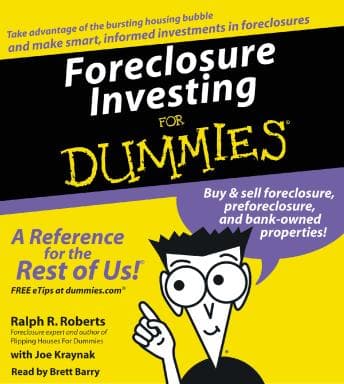
This is an abridged audiobook. Three hours and thirteen minutes. The physical "Dummies" book is like 400 pages. Do the math—you're getting maybe a third of the content, tops. And honestly? It shows.
John Tracy is a CPA who taught at CU Boulder and worked at Ernst & Young, so the guy clearly knows his stuff. But the audio version feels like someone took a comprehensive textbook and extracted only the chapter summaries. You get the basics: debits and credits, the difference between balance sheets and income statements, why depreciation exists. But the moment you want to understand HOW to actually apply any of this—how to set up a chart of accounts, how to handle inventory valuation methods, what happens when you need to reconcile a discrepancy—the audio just... moves on.
One reviewer compared choosing the audiobook format to "a bad choice, like milk" and I laughed out loud because yeah, that's exactly it. Some content needs the visual component.
Brett Barry Does His Job (No More, No Less)
Brett Barry's narration is perfectly competent. Clear enunciation, reasonable pacing, no weird mispronunciations of accounting terms. But there's nothing memorable about it either. For instructional content like this, that's probably fine? You don't need dramatic flair when someone's explaining retained earnings. He reads it like a professor who's given this lecture a hundred times—professional, slightly detached, gets through the material.
I bumped it to 1.5x (my default) and it worked fine. Could've probably gone 1.75x honestly, since there's not much complexity requiring slower processing.
Who Should Listen (And Who Should Skip)
If you've literally never opened a financial statement and just want to stop feeling stupid when your boss mentions "the P&L"—this works. It's like Accounting 050, the pre-req before the actual intro class. Tracy explains concepts in plain English without drowning you in jargon.
But if you're trying to actually DO accounting? Set up books for a side business? Understand your startup's financials beyond surface level? Skip this. The ROI on this audiobook is basically zero. You need the full book, or honestly, a different resource entirely. There are YouTube channels that go deeper in less time.
The Format Mismatch
Here's my real issue: accounting is inherently visual. Ledgers, T-accounts, financial statements with columns that need to balance—you can't absorb this stuff by listening. Tracy will describe a balance sheet and I'm sitting there on BART trying to mentally picture assets on the left, liabilities and equity on the right, and by the time he moves to the income statement I've already lost the thread.
This isn't the narrator's fault or even really the author's fault. It's a fundamental format problem. Some books translate well to audio. Instructional accounting content... doesn't. I finished this in two commutes and retained maybe 40% of it. Compare that to a narrative business book where I retain 80%+ because stories stick. Mindful Athlete had that same stickiness—concrete techniques I could actually visualize and apply during my commute, not abstract concepts that evaporated the second I stepped off the train.
The Bottom Line on Your Bottom Line
Look, it's not bad. It's just aggressively mediocre and probably the wrong format for the subject matter. If you have three hours to kill and want the absolute gentlest possible introduction to what accountants do, fine. But if you're spending an Audible credit on this when you could get the Kindle version for less and actually SEE the examples? That's a resource allocation error. And now, thanks to this book, I at least know what to call it.