
When's the last time a book from 1920 made you yell at your steering wheel? Not because the medicine was wrong this time - because a lawyer-turned-detective in the Roaring Twenties was actually making me guess wrong about the murderer, and I was annoyed about it. In the best way.
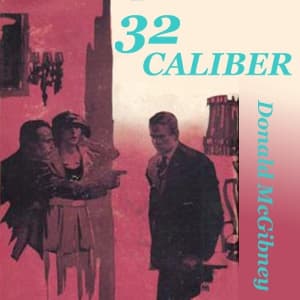
I picked up 32 Caliber on a whim. Four hours, fifteen minutes - that's basically a long night shift's worth of charting with some leftover minutes for the drive home. I figured I'd knock it out across two commutes and forget about it. Instead, I ended up finishing it in one sitting, parked in my driveway at 8 AM with the engine running, while Carlos texted me from inside asking if I was alive.
A Lawyer With Too Much Free Time and a Gun
So here's the setup: a suspicious accident that's actually a murder (shocking, I know), and our narrator is a lawyer who decides he's suddenly Sherlock Holmes. Donald McGibeny wrote this in the 1920s, and you can feel it - the pacing is snappy in that pulp fiction way where nobody wastes time on internal monologues about their childhood trauma. People get shot, clues appear, and our guy drags us through Bolshevik headquarters, country clubs, and a dry creek bed like he's late for a dinner reservation.
The how-dunnit aspect is actually pretty clever. I won't spoil it, but the way the murder method unfolds kept me second-guessing. For a book that's a hundred years old, the twists still land. Not all of them - some you can see coming like a trauma patient on a Friday night - but enough to keep you engaged. I had a similar hit-and-miss experience with the plotting in Before the Storm, where some twists earned genuine surprise and others felt telegraphed from two chapters out.
Now. The elephant in the room. Some listeners have flagged the misogyny, and yeah, it's there. This is 1920s pulp written by a man in the 1920s, and the women in this story exist primarily as objects of suspicion or admiration, sometimes both in the same paragraph. It didn't ruin the experience for me, but I noticed it. My mom would've thrown the book across the room (she still thinks I should've been a doctor, but she also doesn't tolerate nonsense from men, fictional or otherwise). If dated gender dynamics are a dealbreaker for you, fair warning.
Dawn Larsen Carrying This Book on Her Back
Here's where I land on this one: the story is good, not great. Entertaining, moves fast, has some genuinely surprising turns. But Dawn Larsen's narration is what elevates it from "fine" to "actually enjoyable." Her voice is warm and clear, and she keeps the pace clipping along without rushing. For a single narrator handling multiple characters across a plot that bounces between high society and political radicals, she does solid work keeping everyone distinct enough that I never lost track of who was talking.
One listener called her "Dawn in Minnesota" and said they could listen to her for hours. I get it. There's something about her delivery that feels like someone telling you a story at a dinner party - not performing, just telling. At four hours, it's the perfect length for her style. No fatigue, no moments where my attention drifted. Clean audio, no weird production artifacts.
That said - and this is me being honest - the narration doesn't do anything extraordinary. It's consistently good. Pleasant. Professional. But it's not the kind of performance where you stop and think, "I need to find everything this narrator has ever recorded." It's more like a really competent ER nurse who keeps everything running smoothly. (That's a compliment. Those nurses save lives. I would know.)
Who Should Scrub In
If you like classic mysteries and you're okay with the cultural baggage of a century-old pulp novel, this is a solid quick listen. Perfect for that post-shift decompression when you want something engaging enough to keep your brain from replaying the shift, but not so complex that you need to rewind every five minutes because you zoned out thinking about that patient in bed 4.
If you want a sophisticated modern mystery with layered characters and progressive values - this isn't that. It was never trying to be. It's a 1920s whodunit with a fast mouth and a faster plot, and on those terms, it works.
Skip if you need your mysteries to pass a 2024 cultural sensitivity review. No judgment - just saving you the frustration.
Night Shift Prescription
Four hours of pulp fun with a narrator who makes you forget the story's rough edges. I didn't yell at my dashboard once about medical accuracy (there's barely any medicine in it, which is honestly refreshing), but I did mutter "oh, come ON" when the creek bed scene flipped everything I thought I knew. Carlos asked why I was still in the car. I blamed the ending. He didn't buy it.