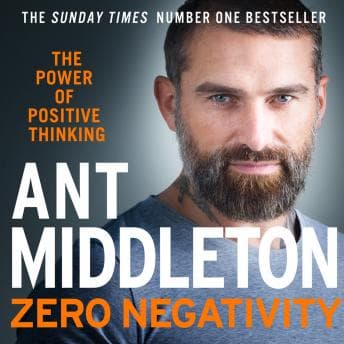

Ant Middleton's mindset book is the kind of thing I'd normally walk right past. I've sat through enough mandatory resilience briefings in 25 years of Army life to last me three lifetimes. But Linda's been on me about my tendency to go full scorched-earth when things go sideways with clients, so I figured eight hours of positivity couldn't hurt. Loaded it up on a late-night drive back from a client site in Houston - just me, Ranger asleep in the back seat, and a former Royal Marine telling me how to think.
Let me cut to the chase: this is a decent listen if you need someone to grab you by the collar and tell you to stop wallowing. It's not a great book. But it's an honest one, and Middleton's got enough credibility from his Special Forces background that when he says "own your situation," it doesn't land like some Silicon Valley guru blowing smoke.
A Squaddie's Self-Help, Not a Therapist's
Middleton narrates this himself, and that's both the book's biggest strength and its limitation. His British accent is straightforward, no polish, no radio voice - he sounds like a bloke talking to you across a pub table. That works. When he's recounting failures, bad decisions, moments where he could've gone dark, the authenticity comes through in a way a professional narrator couldn't replicate. His wife Emily contributes sections too, offering a civilian perspective on living with someone wired for combat. Those parts are actually some of the most grounded moments in the book - hearing her side of things gave it a dimension I wasn't expecting.
But here's where it gets uneven. Middleton's delivery is one-note. Eight hours of the same motivational cadence starts to feel like a long team talk from a sergeant major who doesn't know when halftime's over. There's no modulation, no shift in gear when the material gets heavier versus lighter. By hour five on that drive, I was toggling between engaged and zoning out.
The Good Advice Buried Under the Ego
Some of the core ideas here are solid - embracing failure as data rather than defeat, understanding that change isn't something that happens to you but something you drive. These aren't revolutionary concepts, but Middleton illustrates them with his own life in ways that feel lived-in rather than theoretical. He talks about bullying, about periods where he was his own worst enemy. I've seen this scenario play out in real life with soldiers who can't transition, who let negativity become their default setting after service. So the message lands.
The problem is Middleton can't get out of his own way. Pretty much every lesson circles back to him - his experiences, his successes, his growth. For a book about positivity and self-improvement, it's remarkably self-centered. After a while you start wishing he'd tell someone else's story, bring in a different example, anything to break the pattern. And there's a section on gender roles that feels like it wandered in from a different decade. I'm not easily offended - spend enough time in a TOC and you develop thick skin - but even I raised an eyebrow. It felt unnecessary and pulled focus from the actual message.
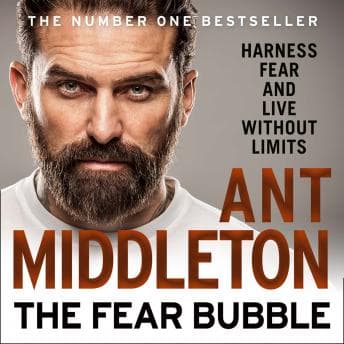
If you've read his previous books (First Man In, The Fear Bubble), expect overlap. This isn't a completely fresh mission brief - it's more like the same briefing with updated slides and a new title on the cover page. I got a similar feeling of retreading familiar ground with Freezing Order, though Browder at least kept adding new layers of danger each time the story circled back. Not a dealbreaker if this is your first exposure to Middleton, but if you're already in his library, you might feel like you're covering familiar ground.
Who Should Load This Up
If you're going through a rough patch and need someone with genuine hard-knocks credibility to tell you to sort yourself out, this will work. It's good windshield material - drives, night shifts, gym sessions where you don't want to think too hard. It's not the kind of book that rewards deep focused attention because the ideas are broad rather than deep.
If you're looking for actual psychological frameworks or evidence-based approaches to negativity, look elsewhere. This is gut-level, experiential wisdom, not science. And if you already bristle at military types dispensing life advice, Middleton won't change your mind.
Mission Debrief
Worth your time? Conditionally. Middleton's authenticity is real, and there are moments where his directness cuts through the noise of the self-help genre in a way I appreciated - particularly when Emily's perspective balances his intensity. But eight hours is a lot of runway for ideas that could've been delivered in five, and the self-focus becomes its own kind of negativity after a while. Ranger slept through the whole thing, which I'm choosing to interpret as peaceful agreement rather than boredom.