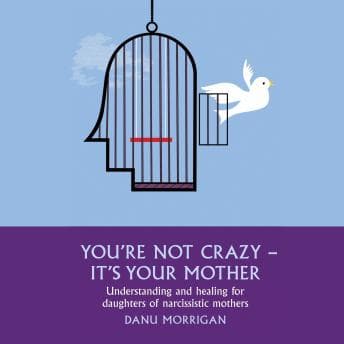

Jenny sent me this one. No context, no explanation, just an Audible gift notification at 2 AM with a text that said "don't overthink it." Which, if you know me, is like telling water not to be wet.
I started it on a red-eye back from a client engagement in Austin - one of those flights where you're too wired to sleep but too fried to work. And look, I need to say this upfront: this is not a business book. This is not my lane. But it hit harder than most business books I've reviewed this quarter, and I've been sitting with that fact for three days now.
The Book My Parents' Generation Would Never Read
Bottom line: Danu Morrigan wrote a 7-hour validation session for adult children of narcissistic mothers, and she narrates it herself in this tone that sits somewhere between a wise older sister and a therapist who actually likes you. It's not clinical. It's not academic. It's someone who's been through it saying "here's what happened to you, here's why it wasn't your fault, and here's what you can do about it."
The conversational quality is the whole selling point here. Morrigan reads her own work, and you can hear that she wrote this to be spoken, not read. Sentences are short. Direct. She'll make a point, then pause like she's giving you room to cry. Which - based on the listener reviews I've seen - a lot of people do.
Now, here's the elephant in the room. Morrigan isn't a licensed therapist. She runs daughtersofnarcissisticmothers.com and positions herself as a coach. Some listeners have flagged this, and they're not wrong to. One reviewer called it feeling like "a dupe" when they realized the coaching pitch underneath the healing. I get that skepticism. In consulting, we call this "thought leadership as lead generation," and I've helped companies build exactly this pipeline. The difference is whether the content actually delivers value independent of the upsell.
And here? It mostly does.
What McKinsey Can't Framework
Growing up in Koreatown, "narcissistic mother" wasn't a phrase anyone used. You had strict parents or you had lenient parents, and strict was considered the correct answer. My mom worked 14-hour days pressing other people's clothes and still made sure I had banchan waiting when I got home at midnight from debate practice. That's not narcissism. That's sacrifice with a side of kimchi.
But I watched other families in our community where the dynamic was different. Where the mother's emotional needs consumed everything. Where kids performed love like it was a job review, and the goalposts moved every quarter. Morrigan names those patterns with a specificity that's almost uncomfortable - the gaslighting, the guilt trips disguised as concern, the way narcissistic mothers recruit flying monkeys (her term, not mine, and it's perfect) to enforce compliance.
This is what my parents did instinctively - building a home where kids could actually breathe. Now it has a TED talk. Or at least, the inverse of it does.
The book walks through identification (does your mother actually have NPD?), impact (what it did to you), and tools (what to do about it). The framework is simple enough that you don't need a psychology degree. Maybe too simple at times - I wanted more depth on boundary-setting strategies, which felt rushed compared to the identification chapters. The ratio is probably 60% validation, 30% education, 10% actionable tools. I'd flip those numbers, but I'm not the target audience here.
Who Needs This (And Who Doesn't)
If you've spent years wondering why phone calls with your mother leave you feeling like you failed an exam you didn't know you were taking - this book is 7 hours of someone finally explaining the test. The emotional validation alone is worth the listen. One reviewer said they'd "never felt so validated in their entire life," and I believe them, because Morrigan is basically narrating the internal monologue a lot of people have been afraid to speak out loud.
If you're looking for clinical rigor or peer-reviewed research, look elsewhere. This is experiential wisdom packaged as self-help, and its authority comes from shared experience rather than credentials. That's not nothing - my parents' business instincts were better than half the MBAs I've worked with - but know what you're getting. The credential question actually reminds me of something Think Like a Freak wrestles with too - how much does the source of an idea matter versus what the idea actually does to your thinking?
At 7 hours, it's lean by self-help standards. I listened at 1.5x (slower than my usual 2.0x, which tells you something about the weight of the content) and finished it on the flight plus one morning run. The production is clean but bare - single narrator, no music, no sound effects. Just Morrigan talking to you like you're sitting across from her at a kitchen table.
Jenny would say I'm being harsh about the credentials thing. Jenny is right. But she'd also say the book matters more than the diploma on the wall, and she's right about that too.
The ROI Nobody Asks About
I rate business books on ROI. Time invested versus insight gained. This isn't a business book, but the ROI framework still applies: if this book helps even one person stop blaming themselves for a dynamic they didn't create, the 7-hour investment pays for itself a thousand times over. Not everything worth measuring shows up on a P&L.