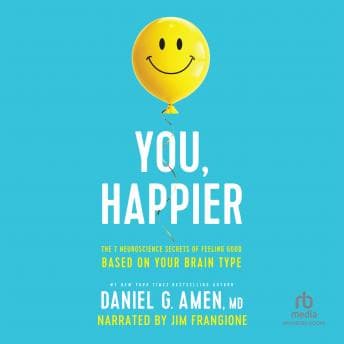

Ten hours. Ten hours of my life I could've spent billing clients or, I don't know, sleeping. And Dr. Amen wants me to take a brain type quiz to figure out why I'm not happy enough.
Look, I get it. I downloaded this during a particularly brutal week - three client crises, Jenny out of town, nothing but cold pizza and spreadsheets. The promise of "30 percent happier in 30 days" felt like exactly the ROI pitch my exhausted brain needed. Spoiler: my brain type is apparently "Spontaneous," which means I'm impulsive and need more dopamine. Revolutionary stuff. My parents could've told you that when I was twelve and blowing my allowance on baseball cards.
The 200,000 Brain Scans Thing
Here's where I'll give Amen credit - the man has data. Two hundred thousand brain scans from 155 countries. That's not nothing. When he talks about how different brain types respond to different happiness interventions, there's actual clinical weight behind it. The five brain types framework (Balanced, Spontaneous, Persistent, Sensitive, Cautious) isn't just pop psychology fluff. It's grounded in SPECT imaging research, which is more than I can say for most books in this genre.
But here's the thing that made me want to throw my AirPods across the room: the book can't decide if it's a clinical textbook or a self-help infomercial. One minute you're getting legitimate neuroscience about prefrontal cortex function, the next you're hearing about Amen Clinics and supplements that - surprise - Amen sells. I've seen this playbook before. Consultant creates framework, consultant monetizes framework, consultant writes book to sell more framework. It's not wrong, exactly. It's just... transparent.
Skip to Chapter 5. Thank Me Later.
The seven "secrets" themselves? Some genuinely useful, some padding. The stuff about optimizing brain health through sleep, exercise, and nutrition - my parents did that instinctively. Now it has a TED talk. The sections on ANTs (Automatic Negative Thoughts) and how to challenge them? Solid cognitive behavioral therapy basics, well-explained. The daily questions framework for building happiness habits? Actually practical.
But then you hit the chapters that feel like extended Amen Clinics advertisements, and your 2.0x speed finger starts twitching. I found myself checking timestamps constantly - not a good sign. The key takeaway is worth the listen. The other 7 hours? Not so much.
Jim Frangione does what he can with the material. His narration is clean, professional, engaging enough to keep you from zoning out during the drier passages. But this isn't a book that needs dramatic interpretation - it's essentially a lecture, and he delivers it like a competent lecturer. Nothing wrong with that. Nothing memorable either.
Who's Actually Going to Use This
If you're new to the brain-health-affects-mental-health conversation, this is a decent entry point. The brain type quiz (available online) is actually kind of interesting, and tailoring happiness strategies to your neurological profile makes more intuitive sense than one-size-fits-all advice.
But if you've read anything by John Ratey, or already know that exercise helps your brain and sugar hurts it, you're going to spend a lot of time nodding along to information you already have. The "seven secrets" aren't really secrets if you've done any reading in this space.
This is a focused listening book, not a commute companion. You'll want to take notes, pause to reflect, maybe actually do the exercises. Treating it like background noise defeats the purpose entirely - and honestly, the textbook-adjacent delivery makes it hard to absorb passively anyway.
The Dry Cleaning Test
My parents never had time for happiness optimization. They had a business to run, kids to raise, a community to serve. Their happiness came from purpose, from seeing their work matter, from Sunday dinners after church. No brain scans required.
Amen actually gets at this - purpose and meaning show up in his framework. But it's buried under so much clinical apparatus and self-promotional content that the simple truth gets lost. Happiness isn't a brain type. It's a life well-lived. That clarity of purpose—finding meaning in the work itself—reminded me of the fierce focus in H Is for Hawk, where grief gets channeled into something tangible and real.
Jenny would say I'm being harsh. Jenny is right. There's genuine value here for the right listener. I just wish Amen had respected our time enough to deliver it in half the runtime.
Bottom line: Worth a credit if you're specifically interested in the neuroscience angle and haven't already read extensively in this space. Otherwise, skim the brain type quiz online, read a summary of the seven questions, and spend your ten hours on something that doesn't feel like a very long PowerPoint presentation.