
We hand out bereavement packets at the hospital. Little folders with pamphlets on "coping" and plastic bags for personal effects. It's clinical. Clean. But grief isn't clean. It's a mess. It's feral.
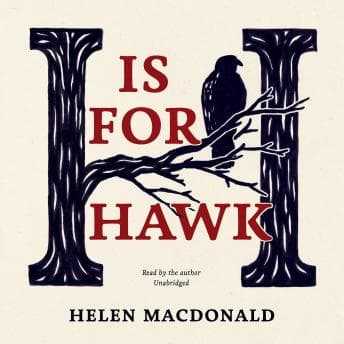
I picked this up because I needed a break from the medical thrillers where the killer is always the hospital administrator. (Seriously, why is it always the admin?) I didn't expect a book about bird training to hit me harder than a Code Blue debrief.
The Voice That Haunted My Drive Home
Usually, when I see "Narrated by the Author," I cringe. Authors are writers, not actors. They usually mumble or read too fast. But Helen Macdonald? She sounds like she's sitting in the passenger seat of my RAV4, staring out the window, telling me a secret she hasn't told anyone else.
Her voice is crisp—very British, very elegant—but there's this underlying tremor. Not fear, exactly. Intensity. When she talks about Mabel (the goshawk), she isn't just describing a pet. She's describing a dinosaur. A monster. A savior.
There were moments on the I-10 where I just let the silence hang after she finished a sentence. She doesn't rush. She lets the heavy stuff sit there. It's hypnotic. Perfect for that 4 AM drive when the sun is just thinking about coming up and your brain is fried.
When Grief Has Talons
Here's the thing about working trauma—you see people try to control death. They can't. So they try to control other things. Helen loses her dad, and instead of going to therapy (which, look, she probably should've done), she buys one of the most vicious predators on earth and decides to tame it.
I get it. I totally get it. It's about focus. If you're staring at a hawk that might gouge your eyes out, you can't think about your dead father. You can't think about the funeral.
The way she describes the hawk... wow. It's not Disney. It's blood and guts and instinct. It's raw. She talks about the "feral anger" of the bird mirroring her own, and I found myself nodding. I've seen that look in family members' eyes in the waiting room. That "I want to tear the world apart" look.
The Parts Where I Zoned Out
Okay, let's be real. It's not all intense bird staring. A big chunk of the book is about T.H. White (the guy who wrote The Once and Future King). She weaves his biography in with hers.
Honestly? I didn't care.
Maybe that makes me uncultured. My mom would probably love the literary history. But for me, every time we left Mabel and Helen to talk about some dead writer from the 1930s, I got impatient. I wanted back in the field. I wanted back in the mud. It felt a bit like when a doctor starts lecturing about the history of the stethoscope while I'm trying to get a line in. Interesting, sure, but can we focus on the patient?
Who's This For?
If you've ever lost someone and felt like you might claw through your own skin—listen to this. If you want something light for your commute or need constant action to stay awake, skip it. The T.H. White sections will lose you. But if you're okay with slow, poetic, and a little weird? This one lands.
Clocking Out
This isn't a light listen. Don't put this on if you want background noise while you vacuum. It demands your attention. It's heavy, poetic, and sometimes a little weird.
But it's real. It captures that foggy, sharp-edged feeling of loss better than any textbook I read in nursing school. Being Mortal gets at that same truth—the messy reality behind the clinical language we use to talk about death. Carlos asked me why I was sitting in the driveway for twenty minutes after my shift ended. I told him I was listening to a lady talk to a bird. He thinks I'm losing it.
Maybe I am. But this book helps.




![Steve Jobs [unabridged audiobook] audiobook cover](/_next/image?url=https%3A%2F%2Fcovers.audiobooks.com%2Fimages%2Fcovers%2Ffull%2F9788499923406.jpg&w=1920&q=75)