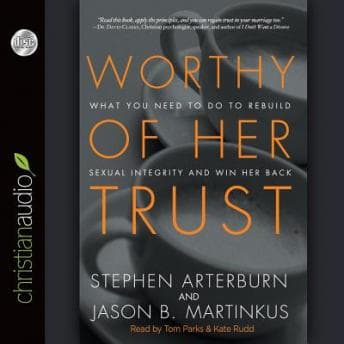

"Trust is rebuilt in moments, not monuments."
I don't remember exactly when this line hit—somewhere around hour three, I think—but I was standing in my kitchen, stirring dal that was definitely about to burn, and I had to put down the spoon. Because that's the thing about this book. It catches you off guard with these sharp little observations that land like a diagnosis.
I'll be honest. I picked this up as research. I'm writing a paper on shame cycles in intimate relationships, and someone on my dissertation committee mentioned Arterburn's work in the addiction recovery space. I expected clinical distance. What I got was something far more uncomfortable—a book that reads like a therapy session you didn't sign up for.
The Protagonist Exhibits Classic Avoidance Patterns (And Knows It)
Jason Martinkus does something psychologically fascinating here. He positions himself as the case study. Not in a performative, look-at-my-redemption-arc way, but with the kind of brutal specificity that makes you wince. He talks about the lies he told himself. The compartmentalization. The way he convinced himself that what his wife didn't know couldn't hurt her.
The research shows that this kind of radical transparency in recovery narratives can go one of two ways: it either builds genuine trust with the audience, or it comes across as self-flagellation masquerading as humility. Martinkus mostly lands on the right side of that line. Mostly. There are moments—particularly in the early chapters—where the confessional tone feels almost too polished. Like he's rehearsed this apology so many times it's become performance.
But then he'll describe something like the "five-minute phone call" strategy—a daily check-in that sounds almost absurdly simple until you realize how much vulnerability it requires—and you understand that this isn't theoretical. This is a man who has done the work.
What Makes This Character Compelling Is His Wife's Silence
Here's what I found myself asking: why does Shelley's voice appear so sparingly? The book promises "insights from Jason's wife," and they're there, but they feel curated. Careful. Which, psychologically, makes complete sense. She's not the one who broke the trust. She doesn't owe anyone her full story.
But it creates an interesting asymmetry. We get Jason's interiority in exhaustive detail—his triggers, his shame spirals, his moment-by-moment recovery process. Shelley appears as witness. As the one who was wronged. And while the book acknowledges her pain, it can't fully inhabit it.
My therapist would have thoughts about this character dynamic. The betrayer gets the narrative arc. The betrayed gets to validate his transformation. It's not wrong, exactly. It's just... incomplete. The book knows this, to its credit. It explicitly tells readers that wives should seek their own support, their own therapy, their own space to process. But I wanted more of her.
The Amends Matrix: Practical Psychology Meets Spreadsheet Energy
Okay, the Amends Matrix. This is either going to be incredibly helpful or make you want to throw your phone across the room, depending on your relationship with structured exercises.
It's basically a framework for cataloging past wrongs and mapping them to specific restorative actions. Sounds clinical. Is clinical. But there's something almost comforting about reducing the overwhelming mess of betrayal into discrete, addressable items. The human mind craves patterns. This gives you one.
The book is full of these tools—concrete, actionable, occasionally exhausting. Internet boundaries. Travel protocols. Office temptation strategies. It's less "feel your feelings" and more "here's your homework." Which will work brilliantly for some couples and feel suffocating for others.
Kate Rudd Reads a Book Written for Men (And It Shows)
Here's the thing nobody's talking about: this book was clearly written by men, for men, about men's recovery. And Kate Rudd is narrating it.
She's competent. The audio is clean. But there's a disconnect I couldn't quite shake. When she's reading Jason's first-person confessions, there's an inherent distance—we're hearing a woman voice a man's most intimate failures. It's not her fault. It's a strange production choice.
Rudd actually fares better when the material leans into female interiority—her narration of Reason to Breathe has that same professional polish, but the emotional register fits the source material far more snugly.She handles Shelley's sections with more natural ease, obviously. But those sections are brief. Most of the six hours, she's channeling masculine shame and recovery, and while she does it professionally, I kept wondering what a male narrator would have brought to the rawer moments.
Who Should Listen (And Who Should Wait)
Let me be direct. This book is for men who have betrayed their partners through sexual infidelity or addiction and who are genuinely committed to repair. Not "I got caught and need to fix this" committed. Actually committed. There's a difference, and the book is surprisingly good at calling out the former.
It's also for wives who want to understand what their husband's recovery process should look like—though I'd recommend pairing it with something that centers her experience more fully.
Emotionally Destructive Marriage does exactly that—it shifts the axis entirely toward the woman's psychological experience, and the contrast between the two is genuinely illuminating if you're trying to hold both perspectives at once.Skip this if you're in active crisis. The book assumes you've already decided to try. If you're still deciding whether to stay, this isn't the place to start.
Diagnosis: Imperfect but Clinically Sound
I finished this while my dal had long since burned (I ordered takeout, it's fine), and I sat with it for a while. It's not a perfect book. The religious framework will alienate some listeners. The gender dynamics are dated in places. Shelley deserves her own book.
But the psychology is sound. The tools are practical. And Jason Martinkus does something rare in recovery literature: he stays specific. He doesn't hide behind generalities. He shows you exactly what rebuilding trust looks like, day by day, phone call by phone call, moment by moment.
That's worth something. Maybe not a monument. But definitely some moments.