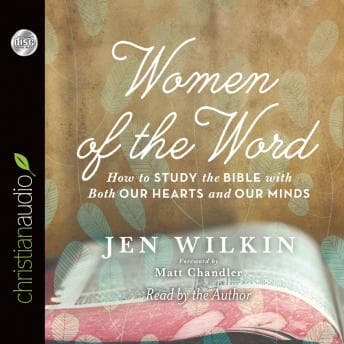

"The Bible is not a book about you." That's Wilkin dropping the hammer somewhere in the first hour, and honestly, I had to pause my walk and just sit with that for a second. I was cutting through the parking lot at Whole Foods on a Sunday morning - Jenny was inside, I had my AirPods in - and this quiet, clear-voiced Bible teacher from Dallas basically dismantled the way most people approach Scripture in one sentence.
Let me be upfront: I'm not the target demographic here. This book is written for Christian women, specifically. But Jenny's been leading a small group Bible study at our church, and she asked me to listen so we could talk about the methodology. And here's the thing - the methodology is actually good. Like, legitimately useful framework-good.
The Consulting Framework Your Church Never Gave You
Wilkin's core argument is that most Bible study approaches are feelings-first. You read a verse, ask "what does this mean to me," journal about your emotions, and move on. She calls this out as insufficient - not wrong, but insufficient. Her alternative is what she calls a "comprehension, interpretation, application" model, and if you've ever built a strategy deck, you'll recognize the structure immediately. Understand the data first. Analyze the data second. Apply the data third.
This is what my parents did instinctively. Now it has a TED talk. My mom didn't read Proverbs and ask how it made her feel. She read it, figured out what it actually said in context, and then decided what to do about it. Wilkin is basically codifying that rigor for a generation that's been given devotional books instead of study tools.
She walks through nine practical approaches to studying the Bible - things like repetitive reading, looking at historical context, mapping the narrative arc of a book before pulling out individual verses. At 3 hours and 46 minutes, this is tight. No bloat. No padding. Finally, a business book that respects your time - except it's not a business book, it's a Bible study book, and the fact that it's this efficient makes me trust her more, not less.
Where Rigor Meets Risk
Here's where the criticism comes in, and I think it's worth addressing honestly. Some listeners have pushed back, saying Wilkin's emphasis on intellectual study feels discouraging. That if you're a new believer or someone who connects with God emotionally, this book might make you feel like you've been doing it wrong.
I get that. And I think the concern is partially valid. Wilkin does spend significant time diagnosing the problem - the "God-as-feelings" approach - before offering solutions. If you're already feeling insecure about your Bible reading habits, the first few chapters could sting. But here's the thing: she's not saying emotion is bad. She's saying emotion without understanding is unstable. That's... just true. In consulting, we'd call that "data-informed decision-making versus gut instinct." Both matter. One is more reliable.
The study questions at the end of each chapter are actually useful, which is rare. The feedback loop built into those questions reminded me of the principles in Thanks for the Feedback — the idea that real growth requires structured reflection, not just exposure to the material. Most books tack these on like homework nobody assigns. Wilkin's questions feel like they're designed for actual group discussion - the kind where someone might disagree and that's okay.
Wilkin Reading Wilkin
She narrates her own book, and it works. Her voice is warm without being saccharine, authoritative without being preachy. There's a confidence in her delivery that comes from someone who's taught this material live, many times, to real people. You can hear the classroom rhythm - the slight pauses before key points, the way she leans into certain words. It's not dramatic narration. It's teaching. Good teaching.
At 2.0x she's perfectly intelligible, which is my baseline test for any narrator. Some author-narrators get mushy at speed. Wilkin stays crisp.
Who Gets ROI Here
If you lead or participate in a Bible study group and you've ever felt like the discussions stay shallow - buy this. If you're a pastor or church leader frustrated that your congregation quotes Instagram theology more than actual Scripture - send this to your small group leaders. If you're Jenny, and you're reading this review before your Wednesday night group - yes, I think you should use chapters 4 through 7 as your framework.
Skip if you want a devotional. This isn't that. Skip if you want emotional comfort reading. Wilkin is kind but she's not coddling you. And honestly, skip if you're not interested in doing the work - she's asking for real engagement with the text, not passive consumption.
Jenny would say I'm being harsh. Jenny is right. But she'd also say this book changed how she prepares for her group. And she'd be right about that too.
The Bottom Line on the Balance Sheet
Three hours and forty-six minutes. No filler. A practical framework you can actually implement. Author-narrated with genuine expertise. At this length and this price, the ROI is strong - even if you only apply two or three of her methods. The key takeaway is worth the listen. And for once, the rest of the book is too.