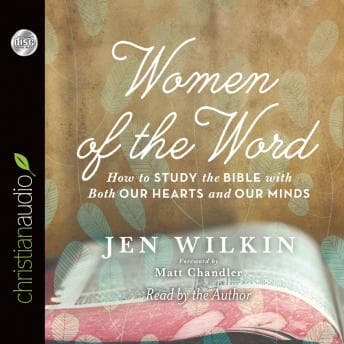
I'll be honest - I almost didn't listen to this one. Theology books and audiobooks have always felt like an awkward pairing to me, like trying to savor a seven-course meal while jogging. You want to stop, underline, argue in the margins. But Denise had been reading Jen Wilkin's stuff with her small group, and she kept quoting bits over dinner until I figured I should just hear it for myself. So I queued it up on a Saturday morning walk along the lakefront, coffee in hand, no grading stack waiting for me at home for once. And I'm glad I did, because Wilkin does something here that I spend entire semesters begging my students to do: she makes an argument with clarity and structure, and she trusts the reader - listener, in this case - to keep up.
The Thesis Statement I Wish My Students Could Write
Here's the setup: ten attributes of God that are His alone. Infinity, omniscience, omnipresence, omnipotence, and so on - the "omni" words that sound like vocabulary quiz fodder until someone actually unpacks them. Wilkin's central move is elegant. She doesn't just define these attributes theologically; she flips each one into a mirror. God is infinite, and you are not - and that's the point. God is self-sufficient, and your neediness isn't a flaw, it's by design. Each chapter follows this pattern, and in lesser hands it would feel formulaic. But Wilkin builds cumulative weight. By the time she gets to God's sovereignty versus our compulsive need to control, the pattern has stopped being a structure and started being a rhythm, almost liturgical.
What struck me most was her treatment of God's omniscience alongside our limitedness. She doesn't just say "God knows everything and you don't" - she walks through the anxiety that comes from our desperate attempts to know everything. The way we scroll, research, anticipate, plan for every contingency. She names a specific modern restlessness without ever sounding like a TED Talk about phone addiction. It's theological anthropology done with a light touch. This reminds me of what Hemingway said about prose being architecture - Wilkin builds something sturdy here, not decorative.
When the Author Is the Narrator (and It Actually Works)
Author-narrated audiobooks are a gamble. I've suffered through brilliant writers who sound like they're reading a tax return. Wilkin, though - she's a Bible teacher by trade, and you can hear it. There's a classroom cadence to her delivery, a conversational precision that comes from years of standing in front of people and watching their faces to see if the point landed. She knows when to slow down before a key distinction. She knows when a pause does the interpretive work that emphasis would ruin. The narrator understands that pause is punctuation.
That said, I want to be fair about what this audiobook isn't. It's not a dramatic performance. There are no characters to voice, no narrative tension to build. It's a woman teaching, and teaching well, but if you're looking for the kind of vocal range that turns an audiobook into theater, that's not what's happening here. What IS happening is warmth without sentimentality, authority without condescension. At four hours, she doesn't overstay. Each chapter is tight enough to digest on a single walk or a single commute. I found myself finishing one chapter and thinking, "Okay, one more," which is about the highest compliment I can pay a nonfiction audiobook.
Who This Is For (and Who Should Probably Skip It)
If you're a Christian reader who's been swimming in self-help theology - the kind that puts you at the center and God somewhere in your supporting cast - this book is a corrective, and a gentle one. Wilkin isn't scolding. She's redirecting. She writes from within a Reformed evangelical tradition, so if that's your world, this will feel like coming home to a well-lit room. The Christian Old Testament sits in similar territory for me - deeply rewarding if you're already oriented toward the material, but less hospitable to the skeptical browser. If it's not your tradition, some of the theological assumptions will feel unexamined, and that's worth noting. She's not writing apologetics. She's writing for the already-convinced who need to be re-amazed.
My students would hate this. I love it. Not because it's difficult - it's actually remarkably accessible - but because it asks you to sit with the discomfort of your own smallness, which is the opposite of what anyone under twenty-five wants to hear. The prose deserves to be savored, even when it's making a point you've heard before, because Wilkin finds new angles on old doctrines the way a good photographer finds new light on a familiar building.
Worth Pausing the Faculty Meeting For
At four hours, this is a lean, focused listen that rewards attention. I wouldn't play it as background noise while cooking or cleaning - you'll miss the architecture of her arguments. But on a quiet walk, during a lunch break, in those ten minutes before sleep when your brain is still churning? It fits. Denise and I actually listened to the last two chapters together on a Sunday afternoon, which led to the best conversation we'd had in weeks that wasn't about whose turn it was to call the plumber. That's what good theological writing does - it gives you a shared vocabulary for the things that matter. Wilkin delivers that in a compact, honest, unpretentious package.