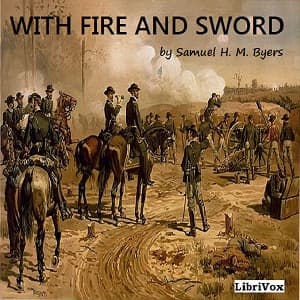

Look, I need to get something off my chest before we start: if you're going to narrate a Civil War memoir where a man watches his regiment - a thousand men - get ground down to nothing, where the author literally becomes the last man standing of his entire unit, you cannot read it like you're reciting a grocery list. And that's my fundamental problem with this LibriVox recording of With Fire and Sword.
But I'm getting ahead of myself.
The Last Man of the Regiment
I picked this one up on a recommendation from a buddy who teaches military history at UT. Free on LibriVox, under five hours - figured I'd knock it out during a round trip to a client site in San Antonio. And the source material? It's the real deal. Samuel Byers kept a diary every single day through four years of war. Four years. His regiment, the 5th Iowa Infantry, mustered in at a thousand strong and lost 777 men to death, wounds, and disease. When Byers finally escaped from a Confederate prison camp, there was no unit left to return to. He was mustered out as a "supernumerary officer" - military speak for "your entire command ceased to exist."
I've seen this scenario play out in real life - not on that scale, thankfully - but I know what it feels like to watch a formation thin out over months and years. Byers writes about it with this strange, almost clinical detachment that I recognize immediately. It's not cold. It's how soldiers actually process things. He doesn't dramatize the horror; he just records it. The diary entries hit different because of that honesty. There's a humility in his voice on the page that you don't get from the generals writing their memoirs to settle scores.
The author clearly did their homework - well, because it's his own life. But what makes Byers stand apart from a lot of Civil War memoir writers is his rank. He's a subordinate officer, not Sherman, not Grant. He's watching the grand strategy unfold from the mud, and his perspective is exactly the kind that gets lost to history. That tension between the man in the arena and the historians who later shape the narrative is something Robert Harris wrestles with too in Cicero, though from a very different century and very different kind of battlefield. He wrote "Sherman's March to the Sea" - the poem, not the operation - while sitting in a Confederate prison. That detail alone tells you everything about the man.
Where the Narration Goes AWOL
This is where it lost me. LibriVox volunteers are doing God's work making these texts available for free, and I respect the mission. But this recording is a case study in why narration matters. The reading is faithful to the text - I'll give it that. Pacing is consistent. But consistent and monotone are not the same thing, and this recording doesn't seem to know the difference.
When Byers describes battlefield casualties, prison escapes, the slow starvation of POW life - those passages demand something from the narrator. Not theatrics. Not a voice actor chewing scenery. Just... recognition that what's being described actually happened to a real person. The flat delivery turns passages that should stop you cold into background noise. I caught myself zoning out somewhere around hour two, which is criminal given the material.
The audio quality is clean, at least. No weird pops or room echo that plague some LibriVox recordings. But there's no music, no production value beyond a microphone and a willing reader. At 1.25x speed it's tolerable, and honestly, bumping the pace up helped fight the monotone more than anything.
Worth Your Time? Here's the Debrief
Here's the thing - the text itself is a solid 4 out of 5. As a primary source document, as a soldier's memoir, as a window into what the Civil War actually felt like at the company level, Byers delivers. His account of imprisonment and escape alone would make this worth reading. The diary format keeps things grounded and moving - no grandstanding, no revisionist heroism.
But this is an audiobook review, not a book review. And the narration drags the experience down. If you're a Civil War history buff and you can handle volunteer narration that treats every paragraph with the same emotional weight - whether it's describing a supply wagon or a friend dying - then stream this for free and consider it a win. It's under five hours, it's legitimate history from someone who lived it.
If you want a Civil War audiobook that'll actually keep you locked in on a long drive? This isn't it. Read the text instead.
Ranger slept through this one, which is his way of voting.
Who Should Form Up
Civil War historians, military history students, anyone building a library of primary source accounts. If you've read Ambrose or McPherson and want to go deeper into the enlisted perspective, Byers is your man. Skip if you need your narration to have a pulse.





![Steve Jobs [unabridged audiobook] audiobook cover](/_next/image?url=https%3A%2F%2Fcovers.audiobooks.com%2Fimages%2Fcovers%2Ffull%2F9788499923406.jpg&w=1920&q=75)