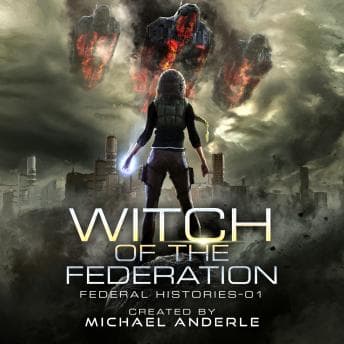

I was stuck on the Caltrain just outside San Bruno—signal dead, AC broken, and a "police activity" delay that the conductor announced with the enthusiasm of a damp sponge. I needed something long enough to outlast the delay and loud enough to drown out the guy talking about his crypto portfolio three rows back. Enter Witch of the Federation.
At 19 hours, this isn't a book; it's a deployment. And honestly? It saved my sanity.
The "Competence Porn" Dopamine Hit
Quick rundown on the plot: It's basically Harry Potter meets Starship Troopers, but if Hermione was the protagonist and also knew Kung Fu. Stephanie Morgana is the classic "genius who doesn't know it" archetype. Usually, I hate that trope—it feels lazy. But Anderle leans into it so hard it actually works.
Stephanie isn't just lucky; she creates solutions. Watching her navigate the Federation's Academy system triggers the same part of my brain that lights up when I finally optimize a sluggish SQL query. It's competence porn. The premise—humans using tech to understand alien magic—is the kind of system integration nightmare I deal with at work, but here, it actually succeeds. The AI running the virtual world has to test Stephanie without any baseline data (an edge case that would definitely crash production in real life), and their interactions are the highlight. It's the ultimate "User vs. System" battle, and for once, the user isn't an idiot.
Vilinsky vs. The Alien United Nations
Jesse Vilinsky earned her paycheck on this one. When you have a single narrator tackling a 19-hour sci-fi epic involving multiple alien species, you usually end up with "Generic Gruff Voice #4" by chapter ten. Vilinsky avoids that trap.
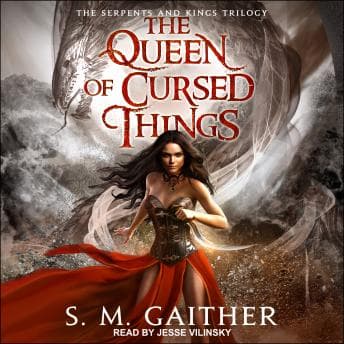
She gives Stephanie a grounded, slightly skeptical tone that anchors the weirdness, but it's the side characters where she flexes. Vilinsky brings that same range to Queen of Cursed Things, where the character work is just as distinct even without a sprawling alien roster to differentiate. There are distinct accents and cadences for the different alien races—some guttural, some clipped—that make the "Federation" feel like an actual political entity rather than a monolithic background blob. She manages to make the magical exposition dumps (and there are a few) sound like necessary tactical briefings rather than a Wikipedia reading.
Debugging the Experience
Is it perfect? No. It's Michael Anderle, so expect the pacing to move at 1.75x speed even if you're listening at 1.0x. The dialogue can be a bit "quippy Joss Whedon" at times, and Stephanie is borderline overpowered early on. If you prefer your protagonists to suffer endlessly before succeeding, this might feel too easy.
But for a commute? It's gold. Engaging enough to keep you awake but linear enough that if you zone out for 30 seconds to dodge a tourist's backpack, you won't lose the plot. It's popcorn sci-fi with high production value.
Oblivion scratches a similar itch—same genre, same breezy momentum, though it clocks in at a much more manageable commute length.Who's This Build For?
Listen if you want a long, satisfying progression fantasy that rewards competence over angst—perfect for commutes, road trips, or any situation where you need reliable entertainment that won't punish you for brief attention lapses. Skip if you need your protagonists to struggle more before winning, or if quippy dialogue makes you cringe.