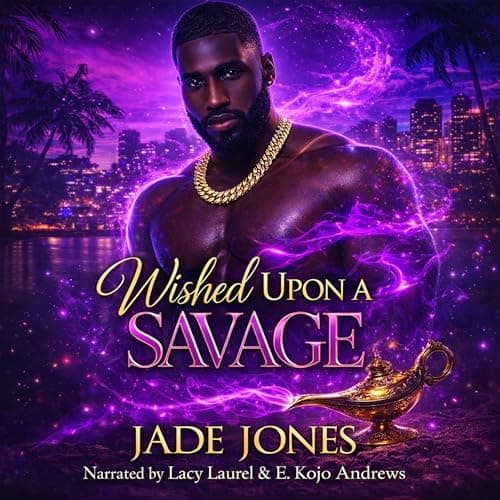
A genie romance with a body count is not a sentence I expected to say this week, but here we are.
I found this one while digging through new releases at 1 AM, Shirley curled on my chest like a furry little anchor, and the premise just — grabbed me. A home-based hairstylist accidentally frees a savage genie from a thrift store lamp? That's the kind of setup that either goes gloriously right or spectacularly wrong. And honestly? Jade Jones threads a needle I didn't think was threadable.
The Lamp That Wasn't Just Décor
Let's talk about what this book actually is, because the cover and the tagline might have you thinking this is a straightforward paranormal romance with some urban fiction flavor. It's not. Or rather, it's not just that. There's a genuine horror undercurrent here — dangerous magic, deadly consequences, a domestic violence thread that hits with real weight — and the fantasy elements aren't decorative. Esco isn't your sparkly wish-granting Disney genie. He's volatile. He's got centuries of resentment baked into him. And the power dynamic between him and Haze is genuinely uncomfortable in ways that feel intentional rather than careless.
Haze herself is what kept me locked in. She's hustling — doing hair out of her apartment, juggling bills, zero time for nonsense — and when this impossible thing happens to her, she doesn't just fold into the love interest's orbit. She pushes back. She challenges Esco constantly. And there's a moment (you'll know it when you get there) where she sends him back into the lamp out of fear, and I actually sat up in bed and said "no" out loud. Like, to my phone. At 2 AM. Shirley was unimpressed. I was invested.
That decision — Haze choosing safety over connection — is the emotional spine of this book. Some listeners hated it. I get why. But it's also the most honest character beat in the whole story. Fear doesn't operate logically. It eats you until the very end, and Jones understands that.
Two Narrators, Two Worlds
Lacy Laurel and E. Kojo Andrews handle the dual narration here, and I want to be transparent — I couldn't find a ton of detail about their specific performance choices, so I'm working from my own listen. The dual narrator setup works for this story because Haze and Esco come from such fundamentally different places — literally different worlds, different centuries, different everything. Having two distinct voices selling that gap matters.
The narration doesn't do anything revolutionary. It's solid. Competent. The pacing feels natural, nobody's rushing through the emotional beats, and the chemistry between the two performances translates even though they were presumably recorded separately. But I wasn't getting chills from vocal performance alone the way I do with, say, a really committed horror narrator who understands silence as a tool. This is more straightforward — character-driven, dialogue-heavy delivery that serves the story without trying to steal focus from it.
At 11 and a half hours, it's a real commitment, and the middle section does ask for your patience. The push-pull between Haze and Esco is the engine, but sometimes that engine idles a bit too long before the next turn.
Be Careful What You Wish For (No, Really)
Jade Jones came up through urban fiction, and you can feel that DNA here — the voice, the rhythm of the dialogue, the way Haze's world is rendered with specificity and respect. But this is her playing in paranormal territory, and what surprised me is how seriously she takes the fantasy worldbuilding. The rules of genie magic, the cost of wishes, the history Esco carries — none of it is window dressing. The horror elements are real, the content warning for domestic violence is earned, and the "twisted fate" marketing line undersells how dark some of this gets.
Is this the scariest thing I've listened to? No. But it understands that horror isn't about gore — it's about dread. The dread of wanting something you can't control. The dread of needing someone who might destroy you. The toxic-tender dynamic the marketing promises? It delivers, and it doesn't flinch from the toxic part. That same willingness to sit inside dread without resolving it is something I noticed in The Inmate — a very different book, but one that also understands how much horror lives in attachment to the wrong person.
My podcast listeners are going to have opinions about this one. It sits in a weird, wonderful space between urban romance and dark fantasy that doesn't have a clean shelf at my library. And I kind of love that about it.
Leave the Lamp on the Shelf — Or Don't
If you're coming in expecting pure horror, recalibrate. If you're expecting pure romance, also recalibrate. This lives in the tension between those things, and your enjoyment depends entirely on whether you find that tension exciting or frustrating. Listeners who crave genre-blenders — dark paranormal romance with real stakes and real consequences — this is your lamp to rub. If you need clean genre lines, or if the content warnings for domestic violence give you pause, absolutely skip it. No shame in that. I found it exciting. I also found myself yelling at a fictional woman for making the wrong wish at 3 AM, so take my judgment with appropriate skepticism.