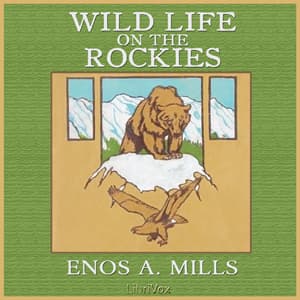
Three AM in the trauma center, the unit finally quiet after a rough code. I'm charting, exhausted, and I put this on expecting... I don't know. Something gentle to decompress with. What I got was a man from 1909 describing how he climbed peaks in winter storms without modern gear, tracked mountain lions through snow, and befriended wild birds until they'd land on his hands.
I sat there thinking: this guy was absolutely unhinged. And I mean that with complete respect.
When "Crazy" Was Just Called "Tuesday"
Enos Mills wasn't just a nature writer. He was a government snow observer who scaled 14,000-foot peaks in blizzards. Alone. Without GPS. Without synthetic fabrics. In the early 1900s. The man describes getting caught in avalanche conditions like I'd describe a slightly inconvenient commute. There's a chapter where he's essentially snowblind and lost on a mountain at night, and his tone is... calm? Almost cheerful?
As someone who's actually worked a code on a hypothermia patient, I kept thinking about what his vitals would've looked like after these adventures. The medical professional in me was screaming. The exhausted night-shift nurse in me was weirdly soothed by his complete lack of panic.
The nature observations are genuinely beautiful—his descriptions of watching bighorn sheep, his relationship with a pet mountain lion cub, his patient studies of how trees grow at timberline. Mills was doing environmental science before that was really a field. He advocated for what would become Rocky Mountain National Park. This isn't just pretty nature writing. It's primary source material from a man who shaped American conservation.
The Voice Question (Let's Just Address It)
Laura Caldwell narrates this, and yes, she's a woman reading a man's first-person account of his mountain adventures. Some listeners get hung up on this. I get it—when Mills writes "I" and describes his rugged expeditions, there's a cognitive adjustment.
But here's the thing: Caldwell's narration is really, really good. Calm, clear, steady pacing. She doesn't try to do a deep "man voice" or anything awkward. She just reads it well. After about twenty minutes, my brain stopped caring about the gender mismatch and just... listened. Her steady delivery actually works for Mills' matter-of-fact descriptions of near-death experiences. There's something almost meditative about it.
Is it the perfect match? No. Would a grizzled male narrator with a Western accent add something? Probably. But Caldwell's quality is high enough that it's not a dealbreaker. This is a LibriVox recording, so we're talking free audiobook territory—the narration quality punches way above that weight class.
Who Should Queue This Up (And Who Should Skip)
This isn't background listening. Mills' prose is from 1909, so the language requires attention. Sentences are longer, vocabulary is different. You need to actually listen, not half-hear it while doing something else.
Perfect for: that post-shift decompression when you want something calming but substantial. Parents looking for genuinely wholesome content for older kids (no violence, no romance, just mountains and wildlife). History buffs curious about early conservation. Anyone who needs a reminder that humans used to do absolutely wild things without safety equipment.
Skip if: you need fast pacing, you can't handle older writing styles, or the female-narrator-for-male-author thing will genuinely bother you the whole time.
Clocking Out With This One
I finished this over three shifts. Carlos asked why I kept talking about mountain lions at breakfast. I told him I found a new hero—a guy who'd probably give our modern safety culture a heart attack.
At four hours and change, it's not a huge commitment. It's free through LibriVox. And honestly? After fifteen years of trauma nursing, there's something healing about listening to a man describe befriending wild birds and studying snowdrifts. Mills found peace in places that would kill most of us. That's either inspiring or concerning. Maybe both. Lost World: A Novel has plenty of the drama she'd want—though it trades Mills' quiet observation for full-throttle adventure.
My mom would hate this. Too quiet, no drama, no romance. But she'd respect that Mills became something—made his mark, changed policy, got a national park named after his work. That's the immigrant parent dream, just with more hypothermia.





![Steve Jobs [unabridged audiobook] audiobook cover](/_next/image?url=https%3A%2F%2Fcovers.audiobooks.com%2Fimages%2Fcovers%2Ffull%2F9788499923406.jpg&w=1920&q=75)