
I started this audiobook during my 6 AM jog through Cambridge. By mile two, I was genuinely angry at myself for every late night I'd ever pulled finishing a research paper. By mile three, I was mentally composing an apology letter to my circadian rhythm.
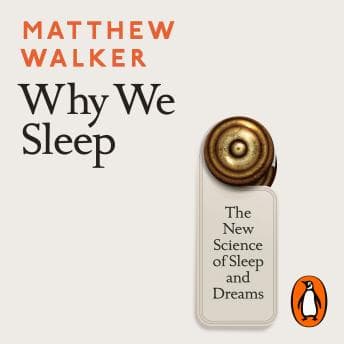
Look, here's the thing about Matthew Walker's Why We Sleep: it's basically a 13-hour intervention disguised as a science book. And I mean that as a compliment. The research actually shows—and Walker hammers this home repeatedly—that we've been treating sleep like it's optional when it's literally the foundation of cognitive function, emotional regulation, and physical health. As someone who studies why people make terrible decisions, I found myself asking: why do we collectively ignore something this fundamental?
The answer, Walker argues, is cultural. We've built societies that actively punish adequate sleep. And he's not wrong. (My therapist would have thoughts about this entire book, honestly.)
The Science That Kept Me Up at Night (Ironic, I Know)
Walker's strength is making neuroscience accessible without dumbing it down. He walks you through REM cycles, the glymphatic system cleaning metabolic waste from your brain, how caffeine blocks adenosine receptors—and somehow it never feels like a lecture. The man uses metaphors like a novelist. Sleep debt isn't just accumulated tiredness; he frames it as a biological loan shark that always collects.
What makes this compelling from a psychological standpoint is the behavioral implications. The research on sleep deprivation and emotional reactivity? Devastating. Walker describes studies showing that sleep-deprived individuals have amplified amygdala responses—basically, your brain's fear center goes haywire without adequate rest. This is a fascinating case study in how biology constrains psychology. We talk about emotional intelligence like it's purely a skill, but Walker's data suggests you literally cannot regulate emotions properly on insufficient sleep. It's the kind of biological constraint that reminds me of the strategic thinking in Art of War—you can't win battles if you ignore fundamental limitations.
The section on memory consolidation hit different for me. As an academic, I've done the all-nighter thing. We all have. Walker basically says that's the intellectual equivalent of setting your notes on fire. Sleep is when your brain moves information from short-term to long-term storage. Skip it, and you're not just tired—you're actively undermining the learning you just did.
John Sackville's Voice: A Double-Edged Pillow
Okay, so. The narrator situation is... interesting.
John Sackville has this incredibly calm, measured delivery. Pleasant tempo. Clear enunciation. It's the voice of a BBC documentary about gardens, or maybe a meditation app. Which is great! Except this is a book about sleep. And sometimes—especially in the middle sections where Walker discusses sleep stages in detail—that soothing quality works a little too well.
I'm not saying I almost fell asleep during a chapter about falling asleep. But I'm not not saying that either.
The irony isn't lost on me. Sackville's narration is genuinely good; he handles the scientific terminology smoothly and never sounds condescending. But if you're listening during a commute or while cooking (my usual contexts), you might need to bump the speed to 1.25x to stay engaged during the denser passages. The pacing drags a bit in the middle third—there's only so many ways to say "sleep is important" before it starts to feel repetitive, and Sackville's calm tone doesn't inject urgency where the text itself lacks it.
Also, fair warning: Walker references charts and graphs throughout, and there's apparently a PDF included with the audiobook. I didn't have easy access to it while jogging (obviously), and those moments where he says "as you can see in the figure" were mildly frustrating. It's not a dealbreaker, but it's worth knowing going in.
The Protagonist Exhibits Classic Passionate Expert Syndrome
I mean this affectionately. Walker clearly cares about this topic in a way that borders on evangelical. He's not just presenting research; he's pleading with you to take it seriously. The author understands human nature well enough to know that data alone doesn't change behavior—you need emotional stakes. So he gives you cancer statistics. Alzheimer's correlations. Car accident rates.
Psychologically, this tracks. Fear appeals work when paired with actionable advice, and Walker delivers both. By the end, I'd already started adjusting my bedtime. (Okay, I've adjusted it twice in the three weeks since. Progress.)
The book isn't perfect. Some of the claims have been disputed in subsequent research, and Walker occasionally overstates causation from correlational data. But as a behavioral intervention wrapped in science writing? It's pretty effective.
Would I Listen Again?
Honestly, probably not cover-to-cover. But I've already recommended it to three colleagues and my sister. It's the kind of book that changes how you think about a basic human function—and that's rare.
If you're interested in neuroscience, health optimization, or just understanding why you feel like garbage after a few bad nights, this is worth your time. Just maybe don't listen right before bed. The irony might kill you.