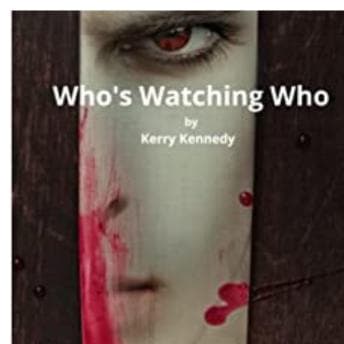

Look, I need to talk about something that drives me absolutely up a wall. When a book describes someone as a "psychopathic abuser" and then proceeds to lay out behavior that's textbook narcissistic personality disorder - those are not the same thing. I've sat with patients in the ER at 4 AM who are fleeing exactly these situations, and the language matters. It matters a lot. So when Kerry Kennedy's Who's Watching Who throws around clinical terms loosely in its description, I went in with my guard up.
And then the story pulled me in anyway.
The Coercive Control Part Is Uncomfortably Real
I was making breakfast - eggs, longanisa, garlic rice, the works - trying to wind down after a brutal Thursday night shift. Carlos and the kids were still asleep, and I had my earbuds in while Clare was describing the slow erosion of her autonomy under Jonathan. The financial control. The isolation from friends. The way he'd flip between charm and cruelty so fast she couldn't trust her own memory of what just happened.
That part? Kennedy gets right. Not in a clinical textbook way, but in the way survivors actually describe it when they're sitting in a hospital gown under fluorescent lights, finally safe enough to talk. The emotional delivery here carries real weight - you can hear it in Kennedy's voice when she's narrating Clare's internal justifications, the way abuse victims minimize what's happening to them because the alternative is admitting you're trapped.
At under six hours, this is a compact listen, and the domestic abuse setup doesn't waste time. You understand Clare's prison within the first hour. That efficiency works.
Where the Revenge Fantasy Gets Complicated
Here's where I got conflicted. The book pivots from victim narrative to revenge thriller - Clare isn't just running, she's planning. And I wanted to root for her. I did root for her, mostly. But the "web unfolds" structure means we're watching Clare set traps while Jonathan hunts her, and the cat-and-mouse dynamic sometimes felt like it was prioritizing plot twists over the psychological realism that made the first act hit so hard. I Am Pilgrim manages that same cat-and-mouse structure without sacrificing character depth in the back half - it's a good benchmark for what tight psychological thriller architecture can look like when the mechanics don't swallow the humanity.
Kennedy narrates her own work, which is a choice that cuts both ways. She clearly knows Clare's emotional landscape intimately - the fear, the fury, the moments of shaky courage. You can hear that authorial ownership. But author-narrated audiobooks carry a risk: when you've lived inside your own sentences for months or years, you sometimes lose the ability to hear where an outside voice might have brought a different texture. Jonathan, for instance, could use a sharper edge, something that makes your skin crawl independent of what he's saying. The menace needs to live in the voice, not just the words.
I don't have enough data to tell you whether the audio production has technical issues - no one's flagged anything specific, and I didn't catch obvious problems. Clean enough for a kitchen listen with sizzling longanisa competing for my attention.
Who This Is Actually For (And Who Should Know What They're Getting Into)
Content warnings are real here: abuse, violence, sexual content, language. This is not a cozy mystery. If you've lived through a controlling relationship, this book will feel familiar in ways that might be cathartic or might be triggering, and only you know which side of that line you're on.
For thriller readers who want the domestic suspense angle - think more along the lines of a survivor reclaiming power than a whodunit - this delivers a specific kind of satisfaction. The "who's watching who" premise promises a reversal of the power dynamic, and Kennedy follows through on that promise.
But I'll be honest: I wanted more. More psychological depth in the back half. More specificity in how Clare executes her plan. At 5 hours and 53 minutes, there's room for a tight, controlled burn, but some of the revenge mechanics felt rushed where the abuse dynamics felt lived-in. The book is strongest when it's sitting in the uncomfortable quiet of a relationship where love has been weaponized. It's less sure-footed when it's trying to be a page-turner.
I didn't yell at my dashboard during this one. But I did stand in my kitchen holding a spatula, not flipping anything, just listening to Clare decide she was done being afraid. That's worth something.
Night Shift Prescription
This is a borrow-and-listen situation. If your library app has it, grab it for a post-shift decompress or a solo drive. The emotional core is genuine and Kennedy's personal connection to the material comes through. But at this price point and length, I'd wait for a sale rather than spend a full credit - the narration needs more range to justify the premium, and the back half doesn't quite match the promise of that devastating first act. Solid for what it is. Just know what you're getting into.









