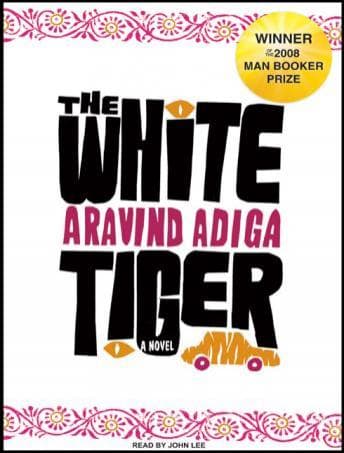

Balram Halwai is a murderer. He tells you this upfront, in the first few pages, with the casual confidence of someone explaining how to parallel park. And somehow, by hour eight, you're rooting for him anyway.
I finished this one grading sophomore essays on The Great Gatsby - fitting, really, since Adiga has essentially written the anti-Gatsby. Where Fitzgerald gave us the green light and romantic longing, Adiga gives us cockroaches, corruption, and a protagonist who claws his way up India's caste system with nothing but cunning and a willingness to do the unthinkable. This is why we still read the classics - so we can recognize when someone's written a new one that spits in their face.
The Rooster Coop Has a Voice
Adiga's central metaphor - the rooster coop, where chickens watch their fellow birds get slaughtered but never revolt - is the kind of literary device I'd spend a full class period dissecting. But what makes the audiobook version work is how John Lee delivers Balram's philosophy. The character isn't just telling a story; he's giving a TED talk on class warfare to the Chinese Premier, and Lee captures that strange mix of servility and seething intelligence.
The prose deserves to be savored. Adiga writes with a blade, not a brush. "The story of a poor man's life is written on his body, in a sharp pen." Lines like this hit differently when spoken aloud, when you hear the bitter poetry of poverty articulated by someone who escaped it through violence.
The Accent Question (And It's Complicated)
Here's where I have to be honest with you. John Lee's East Indian accent has divided listeners like few narration choices I've encountered. Some praise it as nuanced and authentic. Others - particularly some Indian listeners - find it cringeworthy, even offensive. One reviewer specifically called out his pronunciation of "ganja" as evidence of minimal effort.
I'm a white guy from Chicago. I'm not the arbiter of whether a British narrator's Indian accent passes muster. What I can tell you is this: Lee commits fully to the performance. His Balram sounds like a man who's educated himself through eavesdropping, whose English carries the weight of self-invention. Whether that rings true or false may depend entirely on your own ears and experience.
The AudioFile Earphones Award and Audies nomination suggest the industry found merit here. But awards don't silence the listeners who felt the accent was "over the top, almost comical." If you're sensitive to accent performance - particularly if you're Indian or have strong feelings about representation - sample before committing.
What Adiga Is Really Saying
Hemingway said the dignity of movement of an iceberg is due to only one-eighth of it being above water. Adiga's novel reads like a crime confession but functions as economic theory. Balram's journey from village darkness to Bangalore entrepreneur isn't just personal - it's a dissection of how modern India manufactures both poverty and the desperate ambition to escape it.
My students would hate this. I love it.
The book won the 2008 Booker Prize, and you can feel why. Adiga, a former Time magazine correspondent, writes with journalistic precision about things most journalists would never touch. The call centers and the corruption. The Pomeranians named Puddles and Cuddles riding in luxury while servants sleep in hovels. The casual violence that wealth both enables and ignores.
Who Should Enter the Rooster Coop (And Who Should Stay Out)
If you loved The Kite Runner for its unflinching look at class and complicity, this is its angrier, funnier cousin. There There operates in that same uncomfortable space, refusing to romanticize survival or offer easy redemption. If you need heroes to be heroic, skip it - Balram will disappoint you, and he won't apologize. If you're looking for the India of Eat Pray Love, Adiga's opening lines explicitly reject you: "No saris. No scents. No spices. No music. No lyricism. No illusions."
At eight hours, it's a focused listen. I'd recommend dedicated attention rather than background - there's too much happening beneath the surface to catch while distracted. Good for walks, hikes, any activity where your hands are busy but your mind is free.
Worth Pausing the Faculty Meeting For
Here's my honest assessment: the book is brilliant. The narration is polarizing. If Lee's accent works for you, this is a genuinely outstanding audiobook experience - evocative, darkly funny, intellectually demanding. If it doesn't, you might be better served reading the print edition.
I landed on the side of appreciation. Lee's performance made me feel Balram's rage and ambition in a way I'm not sure reading alone would have achieved. But I also understand why others had the opposite reaction.
The White Tiger asks uncomfortable questions about what we're willing to do - and who we're willing to step on - to escape the cages we're born into. It doesn't offer easy answers. It doesn't offer comfort. What it offers is the truth, or at least one version of it, told by a man who killed his way to freedom and feels no guilt about it.
That's not a story everyone wants to hear. But it's one worth hearing anyway.