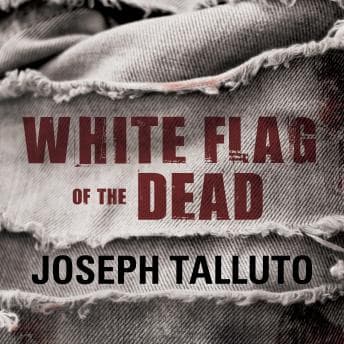

So here's the thing - everyone says this is "zombie book by numbers" and honestly? They're not wrong. But they're also kind of missing the point.
I picked this one up at like 5:45AM on Monday, one of those mornings where the Caltrain is already packed and I'm standing because some dude's backpack needs its own seat. I wanted something I could follow without thinking too hard, something with forward momentum that wouldn't punish me for zoning out when the train lurches through Millbrae. White Flag of the Dead delivered exactly that. Ten hours, done in about five commutes at 1.5x.
The Dad-With-A-Baby-During-The-Apocalypse Hook
TL;DR: Worth your commute if you're not already saturated on zombie fiction.
The setup is what separates this from the Walking Dead clones: John Talon is navigating the zombie apocalypse with an infant son, Jake. Not a tough teenager. Not a capable partner. A baby. That constraint drives basically every decision in the first half of the book - where to scavenge, how fast to move, when to fight vs. when to hide. It's a systems problem, really. You've got limited resources, a dependency that can't contribute, and threats that scale unpredictably. As someone who debugs distributed systems for a living, I appreciated that Talluto thinks through the logistics. Where does the formula come from? How do you keep a baby quiet when the dead are outside? The book earns its tension from these practical constraints more than from any big action setpiece.
The Enillo Virus itself is fairly standard - infection, death, reanimation, the usual pipeline. If you've consumed any zombie media in the last fifteen years, the worldbuilding won't surprise you. But the pacing is solid. Talluto doesn't waste chapters on exposition dumps about how the virus works. He drops you into the survival loop and lets context fill in the gaps.
Graham Halstead Carrying the Weight
Graham Halstead has Audie and AudioFile Earphones Awards, and you can hear why. His delivery hits this sweet spot between practical and emotional - when John is figuring out how to fortify an apartment complex, Halstead sounds like a guy actually problem-solving, not an actor reading stage directions. When things get bleak (and they get bleak), there's a weariness in his voice that feels earned, not performed.
I don't have specifics on how he differentiates individual characters - I'll be honest, nobody stands out as having a wildly distinct voice the way Ray Porter does character work. But Halstead's strength here is carrying the emotional register of a solo dad trying not to die. The comedic timing people mention? It shows up in John's internal monologue, these dry observations about the absurdity of his situation. It's not laugh-out-loud funny, but it keeps the tone from becoming relentlessly grim.
The production is clean. Solo narrator, no sound effects, no music. Straight narration. Sometimes that's exactly what you want.
Where the Formula Shows
Look, if you've read Day by Day Armageddon, The Remaining, or Mountain Man, you know the beats. Lone capable guy. Gradual community building. Supply runs that go sideways. Encounters with humans who are worse than the zombies. This is basically The Walking Dead but for preppers who actually think about logistics.
The "zombie book by numbers" criticism is fair for genre veterans. You won't find anything here that reinvents the formula. Some of the secondary characters blur together, and there are moments in the back half where John makes decisions that feel more like plot necessities than organic choices. Woman in Cabin 10 has the same issue in spots - characters doing what the plot needs rather than what they'd actually do - though that one at least keeps you guessing about who to trust. The guy goes from cautious single dad to efficient zombie killer a bit too smoothly for my taste - I wanted more friction in that transition, more cost.
But here's the counterpoint: not everything needs to be a deconstruction. Sometimes you want comfort-genre fiction that executes the formula well. And Talluto executes it well. The ROI on this audiobook is solid if you're in the right headspace for it.
Perfect For: Train, Gym, Housework. Skip For: Literary Fiction Snobs.
If you're new to zombie fiction and want a competent entry point with a good narrator, this is a strong pick. If you've already consumed twenty zombie series and you're looking for something that pushes the genre forward, manage your expectations. The dad-and-baby angle genuinely differentiates the first act, but by the midpoint it starts conforming to type.
Kevin would probably like this. He's been on a post-apocalyptic kick since finishing The Bobiverse (again). I'll probably throw Book 2 in the queue for a week when I need low-effort listening. That's not an insult - sometimes "reliably good" is exactly the right call for a 6AM commute.
Commute-Worthiness: Approved With Caveats
I finished this in 5 commutes. Could've been 3 if I hadn't kept falling asleep on that Thursday afternoon train (not the book's fault - I'd been on-call and running on caffeine fumes). It's easy to follow, well-paced, and Halstead keeps you locked in. It won't blow your mind, but it'll make your commute disappear. And some weeks, that's the whole point.