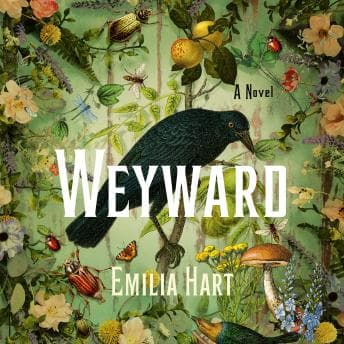
What happens when three women across five centuries share the same blood, the same cottage, and the same dangerous gift?
I started this one during Sophie's nap - you know, that precious window where you're afraid to breathe too loud - and honestly? I almost woke her up gasping at the trial scenes. Altha in 1619, accused of witchcraft because she understood herbs and animals better than the men around her? My heart was in my throat. And the narrator for her timeline, Nell Barlow, delivers this quiet, fierce dignity that made me want to reach through my earbuds and hug this woman who's been dead for four hundred years.
Three Voices, Three Centuries, One Bloodline
Here's what sold me on the audiobook format: each narrator owns her timeline completely. Aysha Kala voices Kate in 2019 with this raw, shaky quality - she's fleeing an abusive relationship and every word carries that hypervigilance, that "am I safe yet?" tension. Helen Keeley takes Violet in 1942, trapped in her crumbling estate by wartime and worse - the expectations of being a "proper" woman. Her voice has this corseted frustration, if that makes sense. Like she's speaking through clenched teeth half the time.
The transitions between timelines could've been confusing (I've abandoned audiobooks for less), but having distinct voices meant I always knew exactly where I was. Even when Sophie woke up mid-chapter and I had to pause for a diaper emergency and snack negotiation, I could jump back in without that "wait, who is this again?" panic.
The Weyward Women Made Me Cry At School Pickup (Worth It Though)
I'm not going to pretend this is a light read. Content warnings for abuse - both the domestic kind Kate endures and the historical violence against women accused of witchcraft. There were moments I had to pause, not because I was confused, but because I needed to breathe. The witch trial scenes are tense in a way that feels sickeningly relevant. Women punished for knowing too much, for being too connected to nature, for not fitting the mold.
But here's the thing - it's also deeply hopeful? The Weyward women aren't victims. They're survivors who pass down their knowledge like a secret inheritance. The connection to nature isn't portrayed as supernatural mumbo-jumbo but as this profound understanding of the world around them. Crows, moths, herbs - the natural world becomes almost a character itself.
I finished the last hour in my car, sitting in the garage (don't judge me, that's sacred time), and yes, I ugly-cried. The ending earns its emotion. It doesn't cheat you with a neat bow, but it gives you something to hold onto.
At Nearly 11 Hours, It's A Commitment
Let's be real: 10 hours and 52 minutes is a lot for a busy mom. This isn't a quick weekend listen. I stretched it over almost two weeks - school drop-offs, nap times, and a lot of car-sitting. But it never felt like a slog. The pacing moves between timelines in a way that keeps you hooked. Just when Violet's story gets unbearably tense, you shift to Kate discovering something new in the cottage. Just when Kate's situation feels hopeless, Altha's trial takes a turn.
I listened at my usual 1.25x and it worked perfectly. The narrators are clear enough that speeding up doesn't muddy the emotional moments.
Who Should Listen (And Who Should Skip)
If you loved Practical Magic or The Familiars, this is your next listen. Though honestly, if you're craving something lighter after all that intensity, Walk to Remember gave me that same emotional payoff without quite as much heaviness. If you need stories about women finding their power - especially after being told they're too much, too strange, too wild - this one's for you. My book club would devour this (if I ever have time for book club again).
Skip it if you want something light and fluffy. This isn't comfort food - it's the kind of meal that fills you up and makes you think. Also skip if you're sensitive to abuse depictions; they're not gratuitous but they're definitely present.
Car Time Approved, Tissues Required
Weyward survived 47 pauses and still made sense. It made me cry in public. It made me want to plant a garden and learn about herbs and maybe get a little wild myself. Not groundbreaking in its structure - the multi-timeline women's fiction thing has been done - but the execution? The narration? The way it made me feel connected to generations of women who refused to be small?
Exactly what I needed.