
"This just might be a season of miracles after all."
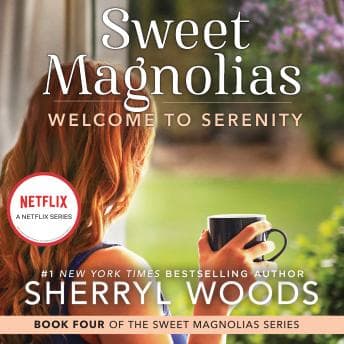
I heard that line somewhere around hour eleven, and I literally paused my work — just sat there with my stylus hovering over a half-finished logo, Frida curled on my keyboard, Diego judging me from the bookshelf — and thought: okay, Sherryl Woods, you got me. Not with a grand gesture or some devastating twist. With a quiet little moment of two broken people deciding to try.
But let me back up. Because getting to that point? It was a journey, and not always the smooth kind.
Two People Who Hate Christmas Walk Into a Town Square
The premise is kind of perfect for someone like me who grew up watching Abuela cry over telenovela Christmas specials. Jeanette Brioche is carrying this enormous weight — estrangement from her family, a deep-seated hatred of the holidays that isn't played for quirky rom-com laughs but actually stems from real pain. And Tom McDonald, the new town manager, has his own holiday baggage. Woods pairs them up to run Serenity's annual Christmas festival, which — yes, we've seen the forced-proximity-holiday-committee setup before. I know. I KNOW.
But what worked for me is how Woods takes her time letting these two peel back their defenses. Jeanette doesn't just have a tragic backstory for flavor; her fractured relationship with her family is genuinely ugly and complicated. There's a scene where she's talking about her mother — not crying, not dramatic, just this flat, exhausted acceptance — and it hit me somewhere in the ribs. That quiet, undramatic grief — the kind that just sits in you — is something Two Lives of Lydia Bird also captures with this same bone-deep honesty, and it wrecked me in a completely different way. Because that's what real family wounds sound like. Not screaming. Just... tired.
The Sweet Magnolias crew (Maddie, Dana Sue, Helen) orbit around Jeanette like a protective solar system, and while some of their meddling edges toward forced — like the town collectively conspiring to throw these two together — there's warmth in it that felt genuine. Abuela would have loved this one. She would've said "esa Jeanette necesita amor" about forty minutes in and been right.
The Narration Situation (We Need to Talk)
Okay. Eve Passeltiner.
I listen at 1.0x. I'm a 1.0x girl. I savor. I've said this. But even I — the queen of "let the words breathe" — found myself reaching for the speed controls by hour two. Passeltiner reads so slowly that pauses between sentences start to feel like she's waiting for you to respond. It's like listening to someone tell a story while also trying to remember if they turned off the stove.
At 1.0x, a 13-and-a-half-hour book starts to feel like 20. I bumped it to 1.15x (a compromise for my stubborn soul) and suddenly the pacing felt... normal. Human. Like someone actually talking to you instead of dictating a will.
Here's the thing that really got me though — the emotional delivery is flat in places where it shouldn't be. That scene with Jeanette and her mother I mentioned? Passeltiner reads it with the same energy as Jeanette discussing festival permits. And when Tom finally opens up about his own family, there's this vulnerability in Woods' writing that the narration just... doesn't match. I kept thinking about what Julia Whelan would've done with this material, and honestly that's an unfair comparison but my brain went there anyway.
Some listeners have said the narration outright spoiled the story for them, and while I wouldn't go that far, I understand it. When you're spending 13+ hours with one voice, the voice matters. A lot.
The Sweet Magnolias Formula (Comfort Food with a Side of Predictable)
Let me be honest: this book is not trying to reinvent anything. The small-town-romance beats are all here — the nosy neighbors, the will-they-won't-they, the community rally, the Big Emotional Revelation near the end. Some of the secondary character drama felt like setup for future books in the series rather than organic to this story. And the ending wraps up a little too neatly — like Woods was running out of yarn and just tied a bow.
But.
The core relationship between Jeanette and Tom has this quiet, bruised quality that I genuinely cared about. These are two people who aren't broken in glamorous ways. They're broken in boring, real ways — avoidance, distance, choosing work over feeling. And watching them slowly choose each other, choose warmth, choose the terrifying possibility of belonging somewhere? My heart. MY HEART.
I cried once. Just once. (Adding it to the spreadsheet.) It was during the festival scene near the end when Jeanette finally lets herself enjoy something without bracing for it to be taken away. That hit different.
Who Gets an Invitation to Serenity
If you're already a Sweet Magnolias fan, this is better than some of the earlier volumes and you'll eat it up. If you love small-town holiday romance with actual emotional stakes beneath the tinsel — come on in. But if flat narration pulls you out of a story, bump the speed to 1.25x minimum or honestly consider the print version instead. This is a rainy Sunday book — curl up, lower your expectations for plot fireworks, and let the feelings do the work.
The Feeling I'm Left With
This book felt like reheating your abuela's tamales at midnight — not the same as fresh, not perfect, but warm in a way that matters. Woods knows how to write emotional truth even when the plot around it creaks. I just wish the audio had honored that truth a little better.