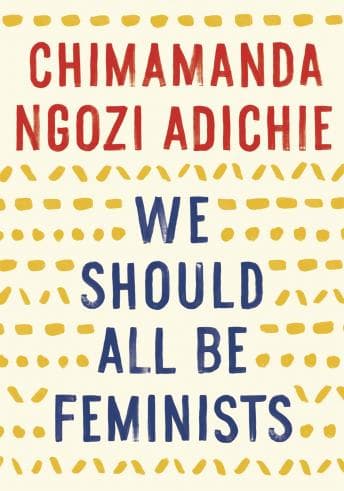

Everyone told me this was essential listening. Required reading for the modern era. The essay that launched a thousand think pieces. So I went in expecting something academic, something that would feel like homework—the kind of thing I assign my students and then feel guilty about.
I was wrong.
I listened to this during a rare quiet Saturday morning, coffee going cold because I kept forgetting to drink it. Denise was still asleep, and I had forty-six minutes before the day demanded anything of me. Perfect timing, as it turns out, because this is exactly the kind of listening that rewards stillness.
When the Author Becomes the Text
Here's what you need to understand: Chimamanda Ngozi Adichie reading her own words is not the same as someone else reading them. Her Nigerian accent carries a specific weight—there's a musicality to how she pronounces certain words, an emphasis that feels intentional in ways a hired narrator might miss. When she describes being called "too feminist" at a party in Lagos, you hear the exact cocktail of amusement and exhaustion in her voice. That pause before she says "too feminist, as if feminism had degrees" isn't just punctuation. It's performance.
I've listened to hundreds of author-narrated audiobooks. Most of them make me wish the author had stayed behind the keyboard. Not this one. Adichie understands that reading aloud is interpretation, not transcription. She knows which words to lean into. She knows when silence does more work than emphasis.
The Anecdote That Stuck
There's a moment—and I keep coming back to it—where she talks about a friend who told her not to call herself a feminist because "feminists are unhappy women who can't find husbands." Adichie's delivery here is almost gentle. She's not outraged. She's tired. And that tiredness communicates something an angry reading never could: this is the thousandth time she's had this conversation.
This reminds me of what Hemingway said about the iceberg theory—what's left unsaid carries the weight. Adichie's restraint in these moments, her refusal to perform righteous anger, makes the argument more devastating. She's not trying to convince you. She's just telling you what happened. That restraint—letting the story do the work—is something I wish more authors understood, though Two Truths and a Lie: A Novel manages it in fiction form, building tension through what characters don't say.
My students would probably find this too short. They'd want more examples, more data, more receipts. But that's exactly what makes it effective. The brevity is the point. She's not writing a dissertation. She's starting a conversation.
The Forty-Six Minute Question
Let's address the elephant: this audiobook costs a credit, and it's under an hour. Is that worth it?
Honestly? I'd say wait for a sale, or catch it on a streaming service. Not because it isn't excellent—it is. But the economics of audiobook credits don't favor short-form work. You can find the TED talk for free. The text is widely available. What you're paying for here is the intimacy of Adichie's voice in your ears, the particular experience of having her speak directly to you.
And that experience is worth something. Just maybe not fifteen dollars.
Who Needs This in Their Ears (And Who Doesn't)
If you've never engaged with feminist thought and you're genuinely skeptical—not performatively hostile—this is your entry point. Adichie doesn't lecture. She tells stories. She admits complications. She's funny in unexpected places. (Her bit about her male friend who "simply could not understand" why a woman might be angry about catcalling is delivered with such weary precision.)
If you're already well-versed in feminist theory, you might find this too introductory. That's fair. This was adapted from a TEDx talk, and it has that energy—accessible, personal, designed to open doors rather than walk through them. Skip it if you're looking for deep theoretical engagement.
If you teach—and I say this as someone who's been doing it for two decades—this is the kind of text that makes students actually engage. Short enough to assign without guilt. Personal enough to spark discussion. Clear enough that they can't hide behind "I didn't understand it."
Worth Pausing the Faculty Meeting For
I've been thinking about why this essay, adapted from a talk given over a decade ago, still circulates the way it does. Adichie did something rare: she made an argument that feels like a conversation. She doesn't position herself as an authority dispensing wisdom. She positions herself as someone who's been thinking about this, living this, and wants to share what she's figured out so far.
At forty-six minutes, you can afford to listen at 1.0x. Let her sentences land the way she intended. The author chose those words—and more importantly, she chose how to say them.
This is why we still read the classics, or in this case, why we still listen to essays that have already made their cultural rounds. Not because they tell us something new, but because they remind us of something we keep forgetting.