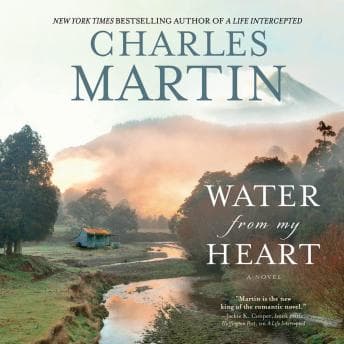

What do you do with a man who's made a fortune running drugs off the coast of Miami but still somehow makes you root for him by chapter three?
That's the question I kept turning over during nap time — and yes, Sophie actually napped for once, so I got a solid hour and forty minutes of uninterrupted listening, which felt like winning the lottery. Charles Martin drops you into Charlie Finn's world fast: a kid who was basically raising himself by sixteen, brilliant enough to claw his way into Harvard, and then smart enough (or dumb enough, depending on your moral compass) to use that brain for some very illegal coastal enterprises. The setup isn't cozy. It's not my usual fare. But Martin does this thing where he writes broken men so specifically that you can't look away.
A Drug Runner With a Conscience Shouldn't Work, But It Does
Here's what surprised me — I expected this to feel heavy the whole way through. And parts of it are. Charlie's involvement in drug running and the violence that comes with it caught me off guard a few times. The coastal crime atmosphere actually reminded me of Great Train Robbery — that same feeling of being fully complicit in rooting for someone you probably shouldn't. I was folding laundry during one of the darker Miami scenes and actually stopped mid-fold because I wasn't sure where Martin was taking this. But the pivot to Nicaragua changes everything. Once Charlie lands in Central America and starts confronting the real human cost of his choices, the book shifts from thriller-adjacent to something much more personal. His encounter with Paulina and her young daughter is where Martin finds his footing — this quiet, devastating meeting between a man who destroyed things and a woman who's been living in the wreckage.
I'll be honest, some of the coincidences that get Charlie to that exact moment are... a lot. Like, the universe really bends over backward to put these people in the same room. If you need your plots airtight and realistic, you might twitch a little. But I've read enough Charles Martin to know that's kind of his thing — he writes in the language of grace and providence, and if you buy into that framework, the coincidences feel intentional rather than lazy.
Kevin Stillwell Made My Car Time Disappear
I need to talk about Kevin Stillwell's narration because it's doing a lot of quiet heavy lifting here. His voice has this warm, steady quality — like a guy telling you a story on a porch at dusk — and it perfectly matches Charlie's first-person narration. Charlie is someone who's learned to keep his emotions locked down, and Stillwell captures that controlled delivery with just enough cracks showing through. When Charlie finally starts to break open emotionally in the Nicaragua sections, Stillwell doesn't go big and dramatic. He just... lets the walls thin. You hear the shift. It's subtle and it got me.
I spent most of this book in my car — the sacred 45-minute garage sessions — and Stillwell's voice is exactly right for that cocoon of quiet. Not so soothing that I drifted off, but calm enough that I could transition from the chaos of dinner and baths into actually absorbing the story. This book survived being paused 47 times and still made sense, which at 12+ hours is no small feat.
The Last Chapter That Made Me Sit in My Driveway
Okay so here's the thing I didn't expect: the last chapter. Martin steps out of the fiction entirely and explains his real-life experience in Nicaragua — the actual wells, the actual people. And I just... sat there. Engine off. Kids inside with my husband (bless him). I know I said bonus points for books that don't make me ugly-cry at school pickup, and technically I wasn't at school pickup. I was in my garage. So it counts as a loophole. Made me cry at school pickup. Worth it though. (Fine, it was the garage. Same energy.)
The redemption arc isn't groundbreaking — man does bad things, man finds purpose, man learns to love. You can see where it's headed from about hour four. But sometimes you don't need groundbreaking. Sometimes you need the version of that story told with enough specific, grounded detail that it earns its ending. And Martin earns it. The clean water motif — water as life, water as baptism, water as the thing Charlie's been withholding from people — runs through everything without being preachy about it.
Who Should Grab This (And Who Should Scroll Past)
If you like Emily Giffin's heavier stuff or Kristin Hannah's war-adjacent novels, this hits a similar emotional register. It's for readers who want their romance embedded in something bigger — consequence, faith, and the long road to making things right. If you need your romances light and breezy with zero drug cartels, this is not your book. The content gets dark in spots. Real dark.
But if you're a mom sitting in her car needing a story that reminds you people can change — that the worst thing you've done doesn't have to be the last thing you do — this one delivers. Satisfying ending, exactly what I needed.
My book club will love this. If I ever have time for book club again.