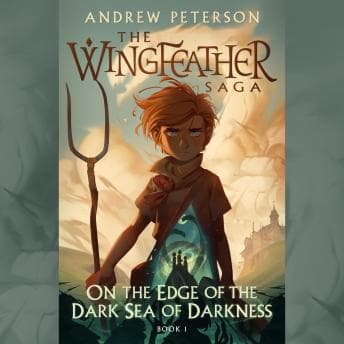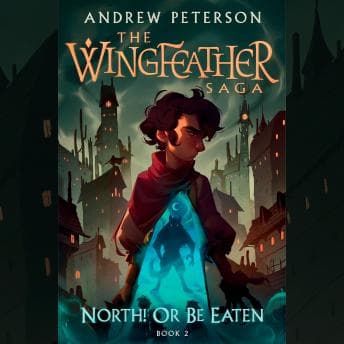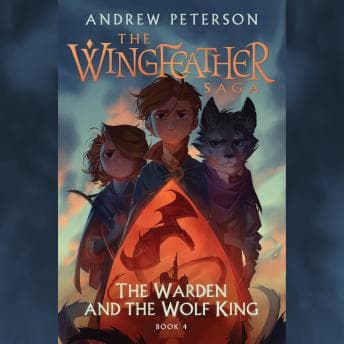

Look, I'm a management consultant who listens to business books at 2x speed and judges everything against my parents' 14-hour days at a dry cleaning shop in Koreatown. I was not the target audience for a fantasy saga about three kids fighting something called "Gnag the Nameless" and creatures called "Fangs of Dang." And yet here I am at 1:30 AM, sitting in my home office with a cold cup of coffee, genuinely emotional about a fictional wolf king. Jenny walked in, saw my face, and just quietly closed the door.
So how did this happen?
The Business Case for a Children's Fantasy (Stay With Me)
My buddy runs a faith-based publishing startup. He's been telling me for two years that the Wingfeather Saga is "Narnia for the modern family" and that I needed to understand the brand Andrew Peterson built around it - the books, the animated series, The Rabbit Room community. Fine. I'll listen to the final book in the series to see what the fuss is about. Professional curiosity.
Here's what I didn't expect: this book operates on a narrative structure that's actually tighter than most business books I review. Three siblings get separated in the opening act - Janner alone in the hills, Leeli fighting from rooftops, Kalmar carrying a secret toward the Deeps of Throg - and Peterson weaves their storylines back together with the kind of strategic convergence I've seen in maybe two or three good case studies. Except instead of quarterly earnings, the stakes are whether a boy can save his brother from becoming a monster. Which, honestly? Higher stakes.
At nearly 14 hours, this is a commitment. I'll be straight with you - I didn't listen to Books 1-3, and I could feel the weight of accumulated story I was missing. Characters reference events and relationships with the gravity of shared history, and I was occasionally the new guy in the meeting who doesn't know why everyone's tense. But Peterson's narration carries enough emotional context that I never felt completely lost. Just occasionally aware I was missing layers.
When the Author Reads His Own Work and It Actually Works
Author-narrated audiobooks are a coin flip. Half the time you get someone who can write but can't perform, and you're stuck listening to monotone genius for 10 hours. Peterson is a singer-songwriter by trade, and you can hear it. His pacing has a musician's instinct for when to slow down, when to let silence do the work. The battle sequences have genuine urgency. The quiet moments between Janner and Kalmar - where one brother is trying to hold the other together - Peterson reads those with the kind of restrained emotion that tells you he knows these characters from the inside out. Because he literally invented them.
I won't pretend he does wildly distinct character voices. He doesn't. This isn't a full-cast production with accents and sound effects. It's one guy reading a story he clearly loves, and the emotional authenticity compensates for the lack of vocal pyrotechnics. Think of it like a founder pitching their own company versus a hired spokesperson - less polish, more conviction.
What My Parents' Dry Cleaning Shop Has to Do With the Wingfeather Saga
Here's the thing that got me. The core engine of this story isn't magic or battles or fantasy world-building. It's sacrifice. Specifically, the kind of sacrifice where you pour yourself out for your family knowing you might not get anything back. Janner spends this entire book choosing the harder path for his brother's sake. Not because it's strategic. Not because there's a return on investment. Because that's what you do. The closest I've seen a non-fiction book come to capturing that same instinct without turning it into a framework is Achievement Habit — and even that one eventually reaches for the slide deck.
This is what my parents did instinctively. Now it has a TED talk. Except Peterson doesn't give it a TED talk. He gives it a fantasy epic where the cost of loving someone is real and visible and sometimes devastating. I listened to the final two hours at 1x speed - first time I've done that in months - because I didn't want to miss the weight of what was happening.
Jenny says I'm being soft. Jenny is right. But she also cried at the animated series, so she doesn't get to talk.
Who Gets the Most Value Here
If you've listened to Books 1-3, this is a must. Full stop. The payoff is earned. If you're coming in cold like I did, you'll appreciate the craft but miss the accumulated emotional investment that clearly makes the ending land like a freight train for series fans.
Parents looking for something to listen to on road trips with kids - this is genuinely one of the better options I've encountered. It doesn't talk down to children, and it doesn't bore adults. That's a rare intersection.
If you need explosions every five minutes and can't handle a story that takes its time building toward an emotional climax rather than just an action one - skip to something else. This book earns its runtime, but it earns it through character, not constant plot acceleration.
The Consultant's Recommendation
Bottom line: I came in as a skeptic doing market research and left genuinely moved by a children's fantasy about sacrifice, family, and the cost of doing the right thing. Peterson's narration won't win any voice-acting awards, but it carries something more valuable - the unmistakable sound of someone who means every word. At 14 hours it's a real commitment, and I'd strongly recommend starting with Book 1 instead of doing what I did. But the fact that this landed for me - a guy who DNFs 70% of his Audible library - tells you something.
I'm buying the first three books this weekend. Don't tell Jenny. She'll be insufferable about it.