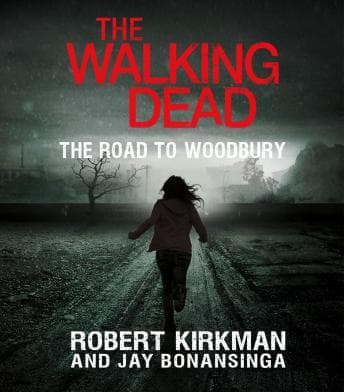

So I'm up at 2 AM debugging a procedural terrain generator that keeps spawning trees inside mountains, and I figure hey, let me throw on something that matches this energy — exhausted, frustrated, surrounded by things that shouldn't exist but do. The Walking Dead: The Road to Woodbury felt appropriate.
Here's the thing about zombie fiction in audio form: it either works because you're fully locked in, or it falls apart because you realize you've been staring at your IDE for twenty minutes hearing words but processing none of them. This one mostly kept me locked in. Mostly.
Lilly Caul Hits Different When You're From Rural Georgia
Okay, confession time — this book is set in the suburbs of Atlanta and the fictional town of Woodbury, Georgia, and as someone who grew up in rural Georgia, there's a weird comfort in hearing these place names while zombies are eating people. It's like a hometown tourism ad written by a nihilist. Lilly Caul as a protagonist is interesting because she's not your typical action hero. She's scared. Like, genuinely, persistently scared in a way that would be annoying in a lesser book but here feels honest. That kind of grounded, unglamorous fear in survival fiction is something I ran into again in Last Call at the Nightingale, where the protagonist's anxiety feels earned rather than performed. The early sections have her bouncing between ragtag encampments, relying on whoever seems least likely to get her killed, and that survival-through-dependency thing hits harder than the usual "lone wolf with a machete" zombie trope.
But — and this is where I started having mixed feelings — the book has this structural split that caught me off guard. The first half is action-heavy, desperate, breathless survival stuff. Then it transitions into this slower, almost political thriller vibe once Woodbury enters the picture. The Governor's rise, the squatter economy, the barricades getting stronger while the moral fabric gets weaker. It's not bad. It's actually kind of smart world-building for a tie-in novel. But the tonal whiplash between "sprint for your life" and "watch a small-town dictator consolidate power" might lose some people.
(My D&D group would love the Woodbury sections, honestly. It's basically what happens when the charismatic NPC with a 20 in Persuasion turns out to be running a lawful evil regime.)
Fred Berman Does the Heavy Lifting
Fred Berman is not Steven Pacey — nobody is, Steven Pacey walked so other narrators could run — but he's genuinely good here. What surprised me is how much emotional range he brings to Lilly specifically. Her fear has texture. There's a difference between how she sounds when she's scared of walkers versus scared of what the Governor represents, and Berman nails that distinction. The action sequences hit crisp and fast, and then the quieter moments where Lilly is processing trauma slow down into something almost intimate.
The character differentiation is solid without being showy. He's not doing wildly different accents for everyone, but you can track who's talking. The Governor gets this calm authority that curdles into something unsettling as the story progresses. It's subtle work.
One thing I noticed: because this is single narrator with no sound effects or music, it lives or dies on Berman's pacing choices. And there are stretches in that second half where the slower pace of the writing combined with the slower narration tempo means you're really committing to some contemplative zombie fiction. I didn't mind it at 1x speed, but I can see why some folks recommended the print version — reading, you control the pace. Here, you're on Berman's clock.
The Tie-In Novel Problem (And Why This One Mostly Escapes It)
Let's be real: Walking Dead tie-in novels could easily be cash grabs. And this book has moments where you feel the seams — where it's clearly bridging comic lore rather than telling its own story. The rebellion against the Governor in the final act feels rushed compared to the patient setup. Bonansinga spends chapters building this claustrophobic community tension and then resolves it at a sprint.
But the character work with Lilly saves it. She's frustrated, angry, sad — sometimes all in the same chapter — and she feels like a person rather than a vehicle for plot. The content gets genuinely dark in places (violence, abuse themes, the kind of human ugliness that makes the zombies seem polite by comparison), so heads up if you need that warning.
Roll Initiative or Take a Long Rest?
If you're a Walking Dead fan who wants the Governor's backstory fleshed out and you liked Rise of the Governor, this is the obvious next listen. If you're coming in cold to the franchise — honestly, you could do worse, but you'd be missing context that makes the Woodbury sections land harder.
At 11 hours, it's a reasonable commitment. Not the 40-hour Sanderson marathons I usually champion, but a solid two or three nights of listening. Fans of zombie horror with actual character development over pure gore will find something here. If you want nonstop action with no breathing room, this isn't for you — and I mean that as a compliment to the book, even if the pacing wobbles.
I read this instead of writing my thesis. Dr. Patel remains concerned. Lilly Caul remains more interesting than procedural generation algorithms.