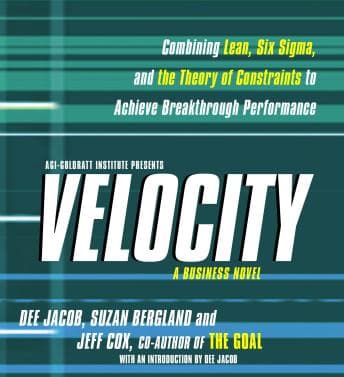

Everyone told me this was The Goal 2.0. That Jeff Cox was back, that the AGI-Goldratt Institute had finally cracked the code on integrating Lean, Six Sigma, and Theory of Constraints into one unified framework. The Navy uses this approach. Procter & Gamble. Northrop Grumman. Big names, serious operations.
So I'm driving to a client site in Orange County—one of those startups burning cash like it's a competitive sport—and I'm thinking: finally, a business book that'll give me something concrete to work with. Six hours. Tight. Efficient. My kind of commitment.
I was half right.
The Amy Cieolara Problem
Here's the setup: Amy gets thrust into a subsidiary presidency, corporate mandates Lean Six Sigma implementation to appease a key customer, and she's paired with a Master Black Belt named Wayne Reese. Classic business novel structure. Fish out of water. Mentor figure. Organizational resistance. Stakes that feel real because they involve actual jobs and quarterly targets.
The problem? Three and a half hours in, I knew Amy's personality quirks, her management style, her relationship dynamics with Wayne. What I didn't know—and this is genuinely frustrating—was how to actually implement any of the three methodologies the book promised to integrate.
My parents ran their dry cleaning operation on pure instinct. They understood constraints before Goldratt gave it a name. They knew which pressing machine was the bottleneck, which customer orders to prioritize, when to say no to rush jobs. They'd have listened to this audiobook and said, "When does she get to the point?"
A Book About Lean That Isn't
There's a listener complaint that stuck with me: the book is "flabby and out of sync with the lean systems it focused on." That's... painfully accurate. For a book about eliminating waste and improving velocity, there's a lot of narrative padding. Character development that doesn't advance the methodology. Meetings about meetings.
Linda Weber's narration is fine. Clear, professional, gets the job done. But she's working with material that doesn't give her much to differentiate. Amy sounds like Amy. Wayne sounds like Wayne. The corporate antagonists sound like corporate antagonists. No accent work, no vocal flourishes—just steady, workmanlike delivery. At 2.0x speed, it's perfectly listenable. At 1.0x, I'd have lost patience somewhere around hour two.
The dice games and "reality tree" techniques the description promises? They're there, but buried. You have to wade through a lot of organizational drama to get to the operational insights. And when they arrive, they're... fine. Not breakthrough. Not the kind of thing that makes you pull over to take notes.
Where the ROI Actually Shows Up
Credit where it's due: the integration framework is real. The book does explain how Theory of Constraints identifies your system's bottleneck, how Lean eliminates waste around that bottleneck, and how Six Sigma reduces variability in your constraint. That's genuinely useful conceptual architecture. I've seen companies implement these three disciplines in silos—different consultants, different departments, different metrics—and they end up fighting each other. Velocity's unified approach solves that.
The business novel format also makes the political realities of implementation feel authentic. Amy's corporate overlords don't actually care about operational excellence; they care about checking boxes for customers. That resistance to change—the organizational inertia that kills good ideas—is exactly what Who Moved My Cheese? tries to address, though with a lot less operational rigor. Her plant managers resist change because they've been burned before. Wayne's Black Belt certification gives him theoretical knowledge but not organizational credibility. The gap between technical expertise and leadership authority reminded me of the core tension in Extreme Ownership—though Jocko would probably tell Wayne to stop waiting for permission and just lead. These dynamics are real. I've lived them at three different client engagements.
But here's my problem: I can get this same insight from a 45-minute podcast or a well-written white paper. The narrative wrapper adds six hours of commitment for maybe 90 minutes of actionable content.
The Spreadsheet Version
Listen if: You loved The Goal and want more of that storytelling approach to operations management. The writing is competent, the characters are believable, and the core methodology is sound. It's an improvement on many constraints-based business novels—that comparison is fair.
Skip if: You're like me—listening to business books because you need frameworks you can apply next quarter. Jump to the sections where Amy actually implements changes. The character development won't be missed.
Jenny would say I'm being harsh. Jenny is right. But I'm also right that a book about velocity shouldn't feel this slow.
The core framework is worth the listen. The other five hours? That's waste Lean would tell you to eliminate.