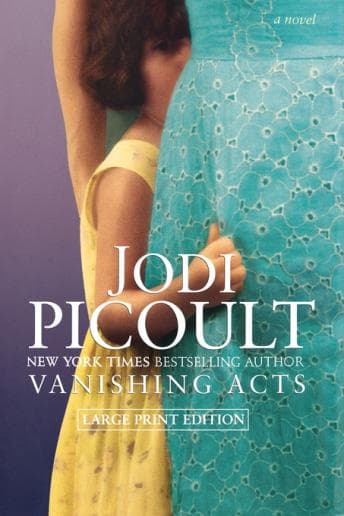

Memory is a tricky beast. There's a moment in Vanishing Acts—somewhere around hour two, while I was aggressively grading a stack of Great Gatsby essays—where the protagonist, Delia, realizes her entire history is a fabrication. It hit me harder than a student asking if Shakespeare is "still relevant." (He is, Kevin. Sit down.)
I usually preach that the book is always better than the movie. But audiobooks? They occupy this weird middle ground. And honestly, this production proves why we listen.
The Chorus in the Courtroom
Here's the thing—Picoult writes from multiple perspectives. In print, that means checking chapter headers. In audio, it means we get a full cast. Jim Jenner, Jonathan Davis, Julia Gibson, Robert Ramierez, Sharon Washington. It sounds like a lot. It is a lot.
But it works. Mostly.
Because the story shifts between Delia, her father, her fiancé, and others, having distinct voices stops you from getting lost. It feels less like someone reading to you and more like eavesdropping on a very sad, very complicated family therapy session. The emotional delivery for Delia's parents? Spot on. You can hear the weight of the secrets in the pauses. (And you know I believe the pause is punctuation.)
Let's be real for a second, though. One of the male narrators (I won't point fingers, but you'll know him when you hear him) leans hard into a "whiny" tone. It sounded a bit like a sophomore explaining why he didn't do the reading. It grated on me. I almost switched to a podcast. But the other performances were strong enough to keep me hooked.
The Slow Burn of Stolen Lives
This isn't a thriller. I know the description says "kidnapping" and "police," but don't go in expecting Gone Girl. This is a character study. A 16-hour character study.
It drags in the middle. I'm not gonna lie. There were moments during my lakefront walk where I zoned out, watched a seagull fight a pigeon over a french fry, and realized I hadn't missed anything crucial. Picoult loves to let her characters ramble about their feelings.
But when the gavel drops? When the moral dilemma actually hits? It's gut-wrenching. The central question—can a kidnapper be a good father?—is the kind of stuff I wish my students would actually discuss instead of asking for extra credit. It's messy. It's uncomfortable. And the audio format makes that discomfort feel very, very close.
That same moral messiness lives in Second Wife, though the stakes are more domestic than courtroom drama.
Who This Is (and Isn't) For
If you want a fast-paced kidnapping thriller, skip this one. But if you're the type who likes sitting with uncomfortable questions—the kind without clean answers—and you've got patience for a slow build, this one will reward you. Picoult fans already know what they're getting. Newcomers should know: bring tissues and maybe some wine.
Closing the Gradebook on This One
Is it perfect? No. The pacing wobbles and that one voice actor made me grind my teeth. But the story lands. It's a heavy listen—maybe don't queue this up for a sunny beach vacation. It's more of a "staring out the window while it rains" vibe.
My mom would probably cry through the whole thing. I just poured another glass of wine and stared at the wall for ten minutes after it ended. So, yeah. It did its job.