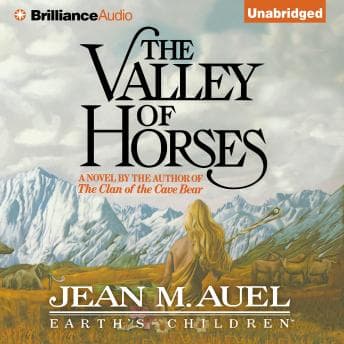

Jean Auel wrote the novel that made anthropology sexy before anyone knew they wanted that. And Sandra Burr narrates it like she genuinely cares whether you understand what it meant to be utterly, devastatingly alone in the Pleistocene.
I finished this one during a week when Denise was visiting her sister in Milwaukee. The house was too quiet. The grading was piling up. And somehow, spending twenty-four hours with Ayla in her solitary valley felt like the right kind of company. This reminds me of what Hemingway said about the dignity of loneliness—except Auel gives us something Hemingway never could: a woman surviving not despite her isolation but through radical adaptation to it.
When Survival Becomes Character Development
The first half of this book is essentially a one-woman show. Ayla, cast out from the only family she's known, wanders into a valley and proceeds to... figure things out. Trap a horse. Adopt its orphaned foal. Discover a faster way to make fire. Nurse a cave lion cub. The prose deserves to be savored here because Auel isn't just describing survival skills—she's showing us a mind working through trauma by staying relentlessly busy.
Burr captures this beautifully. Her Ayla sounds young but not naive, determined but genuinely frightened. When Ayla talks to her horse (and she does, constantly, because humans need to talk to something), Burr doesn't make it cute. She makes it desperate. The loneliness comes through in the rhythm of those one-sided conversations.
My students would hate this. They'd call it slow. They'd ask why there's no dialogue for chapters at a time. But this is why we still read the classics—or in this case, why we still listen to historical fiction that takes its time. The pacing is deliberate. You feel those winters stretching out.
The Jondalar Problem (And It Is a Problem)
Then the second half happens, and we get Jondalar's parallel journey with his brother, and honestly—the tonal shift is jarring. Burr handles it well, giving the brothers distinct enough voices that you can track who's speaking, but the narrative itself becomes something different. More conventional. More... romance novel.
I'm not saying that's bad. I'm saying if you came for the anthropological survival story, the extended romantic awakening sequences might test your patience. Blood Meridian never flinches from its violence the way Auel never flinches from her subject matter—both authors committed fully to their visions, consequences be damned. Auel researched Ice Age sexuality with the same rigor she applied to flint-knapping, and it shows. Content warning: this book earns its reputation. Denise walked in during one of those scenes and I had to explain that I was listening to "serious historical fiction." (She didn't believe me. She's known me for twenty-three years.)
Burr navigates the intimate scenes professionally—no awkward emphasis, no theatrical gasping. She reads them like what they are in Auel's vision: natural, matter-of-fact, part of the human experience Auel is documenting.
Sandra Burr Knows That Pause Is Punctuation
Some listeners complain Burr reads too fast. I didn't find that, but I'm also the dinosaur who listens at 1.0x. What I noticed instead was her handling of the quieter moments—Ayla's grief, her fear, her gradual bonding with the foal. Burr doesn't rush the emotional beats even when the plot is moving.
Her accent work for the different tribes is subtle but effective. The Clan members she references have a different cadence than the Others Ayla eventually meets. It's not cartoonish differentiation—more like the way you can tell someone's background from their speech patterns without being able to name the accent.
At twenty-four hours, this is a commitment. Worth pausing the faculty meeting for, but you'll need several faculty meetings.
Who Should Press Play (And Who Should Skip)
If you loved Clan of the Cave Bear, this is its spiritual successor—literally, since it's the sequel. But it's also a different book. Less ensemble, more character study. Less trauma, more... other things.
This works for readers who want immersive historical world-building and don't mind when plot takes a backseat to process. Before We Were Yours operates on similar patience—both books trust you'll stay for the emotional journey even when the pacing slows. If you're the type who watches those YouTube videos of people building shelters with primitive tools, you'll be in heaven.
Skip this if explicit content bothers you—it's not brief or subtle. Also skip if you're impatient with detailed descriptions of leather-working, horse-training, and fire-starting techniques. Auel never met a survival skill she didn't want to explain thoroughly.
The Assignment I'd Give My Students
I'd ask them why Ayla's loneliness feels different from, say, Robinson Crusoe's. Why a woman alone in prehistory reads as something other than adventure. They'd probably give me blank stares. But Burr's performance would help them hear it—the way isolation sounds different when you're not sure anyone like you exists in the world.
This isn't a perfect audiobook. The pacing issues in the second half are real, and the romance elements haven't aged as gracefully as the anthropology. But Burr's narration elevates it, and Auel's research still impresses. I finished it the night before Denise came home, and I was genuinely sad to leave that valley.