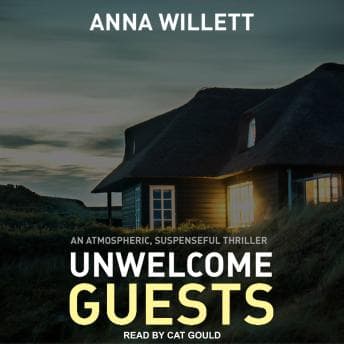

I was reorganizing the horror section at work—we'd gotten a donation of vintage paperbacks that smelled like someone's grandmother's basement—when I realized I hadn't finished this one. Popped my earbuds back in, resumed playback, and promptly dropped an armful of Dean Koontz novels when Cat Gould delivered a line that made my skin crawl. The elderly patron at the circulation desk gave me a look. Worth it.
Unwelcome Guests operates on a premise so deceptively simple it almost feels like a trap. Couple with marital problems. Remote house. Weekend getaway. Brother tags along. Someone finds something in the wine cellar they shouldn't have. And then—well. Then the house becomes a cage.
The Wine Cellar Problem
Anna Willett understands something crucial about horror that too many authors forget: the monster isn't what's in the dark. The monster is what the dark reveals about the people standing in it. Caitlin's discovery in that cellar doesn't just introduce external danger—it strips away every polite fiction her marriage has been running on. Eli's coldness, which reads as garden-variety relationship strain in the opening chapters, takes on an entirely different texture once survival enters the equation.
This is a short audiobook. Six hours and change. Willett uses every minute. There's no fat here, no meandering subplots about the history of the house or flashbacks explaining everyone's childhood trauma. The setup is efficient—maybe twenty minutes of barbecue-and-beers normalcy before Caitlin heads downstairs and everything goes sideways. I appreciated that. Horror shouldn't waste time getting to the horror.
The claustrophobia is real. Not just physical—though the house becomes increasingly suffocating as the situation escalates—but psychological. Three people. Dwindling trust. The violence, when it comes, is genuinely gruesome. Willett doesn't flinch, and neither does the narration.
Cat Gould Gets It
Here's the thing about narrating horror: you can't oversell it. The moment a narrator starts chewing scenery during tense moments, the spell breaks. Cat Gould understands this. Her performance stays grounded even when the content goes dark—and it goes dark. She conveys Caitlin's mounting panic without tipping into melodrama, which is harder than it sounds. The emotional beats land because Gould trusts the material.
I've heard her work on Willett's Retribution Ridge, and there's a consistency here that suggests a genuine collaboration. That same commitment to character-driven suspense shows up in If It Bleeds, where the narration carries just as much weight as the prose. She knows how this author builds tension. The pacing of her delivery matches the prose—deliberate during the quiet moments, accelerating when the walls start closing in.
My one note: the male characters occasionally blur together vocally. Eli and his brother are distinguishable, but not dramatically so. In a story where trust between characters is central, I wanted slightly more differentiation. Minor complaint. The emotional truth of each scene still comes through.
Shirley Jackson Walked So Anna Willett Could Sprint
Look, I'm not saying this is literary horror. It's not trying to be. What it IS—and what it does exceptionally well—is deliver a tight, mean little thriller that uses its isolation setting to maximum effect. The "will anyone get out alive" question from the description isn't hyperbole. Willett puts her characters through hell and doesn't guarantee anyone's survival.
The violence is graphic enough that I'd skip this if you're squeamish about gore. There are scenes that made me wince, and I host a horror podcast. Kill Alex Cross pushed similar boundaries with its unflinching brutality. I've read the Crossed comics. I've listened to The Troop at 2 AM. This still got me in places.
What elevates it beyond torture-porn territory is the character work. Caitlin isn't just a victim. She's complicated—her drinking, her desperation to save a marriage that might not be worth saving, her choices under pressure. Willett gives her agency even when the situation strips away her options. That's the difference between horror that respects its audience and horror that's just trauma for trauma's sake.
Who's This For (And Who Should Run)
Listen if: You want lean, brutal domestic horror with no supernatural safety nets. If you loved the slow-burn dread of isolated-setting thrillers and don't mind graphic violence that earns its place in the story.
Skip if: Gore makes you queasy, or you need likeable characters to root for. This one's mean, and it doesn't apologize.
The Wine Cellar Door Closes
I finished this in two sessions. Would have been one if the library hadn't needed me back on the floor. At under seven hours, it's the perfect length for a weekend binge—though maybe don't listen while you're actually at a remote cabin. Shirley (my cat, not Jackson) was unimpressed by my occasional gasps. I was appropriately unsettled.
Anna Willett has apparently written fifteen of these. I've got some catching up to do.
My podcast listeners are going to love this one. Finally, horror that respects the genre—no supernatural cop-outs, no last-minute saves, just people making terrible decisions in an impossible situation and paying for them. The narrator commits. That's rare. And when the wine cellar door opens, you'll understand why some weekends aren't worth saving.