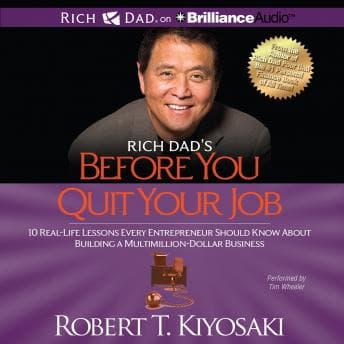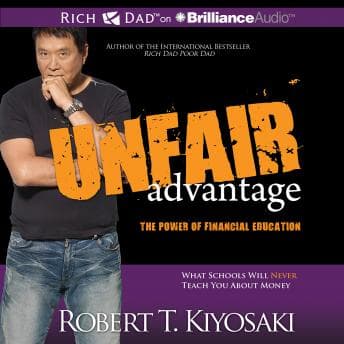

Everyone seems to love Kiyosaki. My LinkedIn feed is full of people posting Rich Dad Poor Dad quotes like they've discovered fire. So when I queued up Unfair Advantage during a particularly brutal week of on-call rotations - the kind where you're eating cold ramen at your desk at 11PM waiting for alerts - I figured some financial motivation might hit different.
It didn't. Or rather, it hit exactly the way I expected, which is the problem.
The Blog Post That Ate Nine Hours
TL;DR: Could've been a blog post. A long one, sure, but a blog post.
Kiyosaki's central thesis is solid and genuinely important: traditional education teaches you nothing about money, and the wealthy use debt, taxes, and financial structures in ways that regular W-2 employees never learn about. The five "unfair advantages" framework (Knowledge, Taxes, Debt, Risk, Compensation) is a decent mental model. I'll give him that. The idea that good debt can be an asset and that understanding tax code gives you leverage over people who just hand their returns to TurboTax? That's real.
But here's where my engineer brain starts throwing exceptions: he'll introduce a concept in chapter 2, then restate it in chapter 4, then circle back to it in chapter 6 with slightly different framing but zero new information. It's like reading code where someone copy-pasted the same function three times with different variable names. By hour 5, I was genuinely wondering if my Audible app had glitched and looped back. It hadn't.
And the sales pitch thing? Look, I get it - the man has a brand. Rich Dad, Rich Dad Advisors, Rich Dad seminars. But when you're on a packed 6:17AM Caltrain and the book keeps nudging you toward the author's other products and programs, it stops feeling like education and starts feeling like a funnel. I work in tech. I recognize a conversion flow when I hear one.
Tim Wheeler Does His Best With What He's Got
Tim Wheeler's narration is... fine. Genuinely fine. Clear enunciation, steady pacing, warm tone that doesn't grate over long stretches. For a book that's essentially one voice delivering financial concepts for nine hours straight, he keeps it professional and listenable. No weird pronunciation fumbles on financial terminology, which - trust me - I've heard narrators butcher "amortization" before and it's painful.
But there's only so much a narrator can do when the source material repeats itself this aggressively. Wheeler maintains the same steady energy throughout, which works for the first few hours but becomes almost hypnotic (and not in a good way) by hour 7. I caught myself zoning out multiple times, and I'm someone who can follow complex sci-fi worldbuilding at 1.75x speed on zero sleep. This isn't Wheeler's fault. You can't inject drama into the fourth explanation of why your CPA doesn't understand entity structures.
I bumped this to 1.75x around hour 3 and honestly wish I'd started there. At that speed, the repetition becomes less painful because you're burning through the rehashed sections faster to get to the occasional genuinely useful nugget.
Where It Actually Delivers (And Where It Doesn't)
The sections on debt and taxes are legitimately interesting if you've never been exposed to these ideas. The distinction between "good debt" (leveraged to acquire assets that generate income) and "bad debt" (consumer spending) is the kind of thing I wish someone had explained to me before I took out student loans. The tax chapter, where Kiyosaki breaks down how business owners and investors are taxed differently than employees, is probably the strongest section - it made me genuinely annoyed at my own W-2 situation, which I suppose is the point. I had a similar reaction reading Technical Analysis of the Financial Markets - that specific flavor of irritation when a book makes you realize how much the standard W-2 track just doesn't prepare you for any of this.
But if you've read Rich Dad Poor Dad - or honestly, if you've spent a weekend on r/financialindependence - about 60% of this is ground you've already covered. The ROI on this audiobook depends entirely on where you are in your financial education. For someone brand new to these concepts? Decent entry point. For anyone who's already read two or three personal finance books? You're paying nine hours for maybe two hours of new material.
Kevin (boyfriend, Bobiverse enabler) listened to this one before me and literally said "it's fine but I kept waiting for the part where it gets specific." He's right. Kiyosaki excels at the 30,000-foot philosophical view but gets vague when it's time to zoom into implementation. "Get a great tax advisor" is advice. "Here's how to evaluate whether your tax advisor actually understands entity structures" would be education.
Who Should Queue This (And Who Shouldn't)
Perfect for: Complete beginners to personal finance who want a mindset shift. Commuters who can handle repetition. People who've never questioned why their paycheck looks the way it does after taxes.
Skip for: Anyone who's already read Rich Dad Poor Dad (seriously, the overlap is enormous). Anyone who gets irritated by circular arguments. Anyone looking for step-by-step tactical advice.
The Commit Message
I wanted to like this more than I did. The core framework is genuinely useful - I just wish Kiyosaki had respected his audience enough to say it once, well, instead of five times, adequately. At nine hours, this needed an editor with a machete. At 1.75x speed, it's a passable commute companion for a day or two. At normal speed? That's almost a week of my Caltrain rides, and I can think of ten better ways to spend that time.
If you're going to listen, crank the speed and don't feel bad about skipping forward when you hear the same point for the third time. Your time is your most valuable asset - something I think even Kiyosaki would agree with.