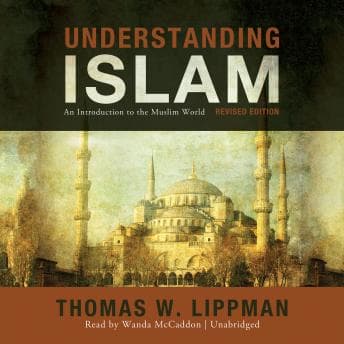

I expected this to feel like homework. Twenty years of teaching means I've developed a finely tuned detector for books that *should* be read versus books that actually reward the reading. When I downloaded Understanding Islam during a particularly brutal week of grading sophomore essays on The Great Gatsby—most of which confused the green light with a traffic signal—I figured I'd get through a chapter or two before my attention wandered.
Five hours later, I'd finished grading exactly zero essays and learned more about the Sunni-Shia split than I had in my entire undergraduate education.
What Hemingway Would've Cut (And What Lippman Kept)
Here's the thing about introductory texts: they're usually either so simplified they're insulting or so dense they're impenetrable. Lippman finds this strange middle ground where he's clearly a journalist first—Washington Post Middle East bureau chief, which explains everything—and an academic second. The prose moves. It actually moves.
The Five Pillars section could've been a dry recitation. Instead, Lippman contextualizes each one within the daily life of actual believers. The Hajj pilgrimage isn't just described as a religious obligation; he walks you through the logistics, the economics, the sheer human *scale* of millions converging on Mecca. I found myself pausing during a faculty meeting (sorry, Principal Martinez, I definitely wasn't listening to your facilities update) just to process the image of that many people unified in purpose.
But I should be honest about the book's age. This is the "Revised Edition," which sounds current until you realize it was revised to include... the Gulf War. The *first* Gulf War. Salman Rushdie's fatwa was fresh news when this was updated. There's discussion of fundamentalist movements in Algeria and Iran that reads like history rather than current events. If you're looking for analysis of ISIS, the Arab Spring, or anything post-2001, you won't find it here.
Does that matter? Depends on what you want. For understanding the *foundations*—the theological architecture, the historical development, the reasons Islam spread so rapidly across three continents—this remains remarkably useful. For understanding this morning's headlines, you'll need supplementary material.
Wanda McCaddon and the Art of the Measured Read
The narration is... interesting. McCaddon has this crisp English delivery that initially struck me as an odd choice for a book about Middle Eastern religion written by an American journalist. But it works, somehow. She reads with the authority of a BBC documentary narrator, which lends the material a certain gravitas without tipping into pretension.
She's fast. Faster than I usually prefer—I'm the dinosaur who listens at 1.0x because the author chose those words and I choose to hear them properly. McCaddon clips along at a pace that suggests she trusts her listeners to keep up. For a seven-hour educational text, this is probably the right call. You're here to learn, not to luxuriate in prose poetry.
What I appreciated: she doesn't stumble over Arabic terms. The Shahada, the Hadith, the various names and places—they flow naturally rather than feeling like foreign intrusions into English sentences. That's harder than it sounds. I've heard audiobooks where every non-English word becomes a speed bump. McCaddon treats them as what they are: essential vocabulary, not exotic decoration.
What I noticed: there's a certain sameness to the delivery. This isn't a book with characters requiring differentiation, so that's not a criticism exactly. But during the more analytical sections—the interplay between religion and government, the economic structures of Islamic societies—I occasionally wished for more tonal variation to signal "this part is particularly important" versus "this is context."
The Classroom Test
I keep thinking about how I'd use this with students. Not my sophomores—they'd riot—but the AP kids, maybe. The ones who actually want to understand why things are the way they are.
Lippman does something my best students do instinctively: he asks "why" instead of just "what." Why did Islam spread so rapidly? Why do certain interpretations dominate in certain regions? Why does the relationship between mosque and state look so different across the Islamic world? These aren't questions with simple answers, and he doesn't pretend they are. That same refusal to oversimplify complex belief systems is what made City of God so intellectually satisfying.
The book also acknowledges—gently but firmly—Western ignorance and misconception. Not in a preachy way. More in the way a patient teacher corrects a well-meaning student who's gotten something fundamentally wrong. This is why we still read the classics, why foundational texts matter even when they're a bit dated.
Who Gets an A, Who Gets an Incomplete
If you're starting from near-zero knowledge of Islam—and be honest with yourself about whether that's you—this is an excellent foundation. Seven hours is a reasonable investment for genuine understanding rather than headline-level familiarity. If you already have a solid grounding and want contemporary analysis, this will feel like review. Skip it.
If you're the kind of listener who needs narrative drive and emotional hooks, this probably isn't your book. It's educational in the best sense: clear, organized, respectful of both subject and audience. But it's not trying to entertain you. It's trying to teach you.
My students would find this dry. I found it clarifying. Make of that what you will.