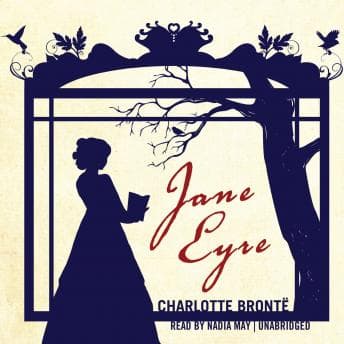

I've taught Jane Eyre to approximately 400 teenagers over the past two decades. Most of them hate it at first—too slow, too old, too many words they have to look up. But here's what happens every single year: by the time we hit the red room scene, someone's crying. By Rochester's proposal, they're invested. And by that ending, at least a handful of them understand why we still read the classics.
Listening to Wanda McCaddon's narration while grading papers at 11 PM was a different experience entirely. This is a book I know inside and out, one I've dissected paragraph by paragraph with students who'd rather be anywhere else. Hearing it performed? That's something else.
The Voice That Carried Me Through Lowood
McCaddon gets Jane. And honestly, that's the whole ballgame with this book. Jane Eyre isn't a passive narrator—she's sharp, observant, occasionally bitter, and fiercely moral. There's a reason Brontë has her break the fourth wall and address "Reader" directly. Jane is telling you her story, and she has opinions about it.
McCaddon captures that quality. Her Jane sounds like someone recounting her own life with the kind of clarity that comes from having survived it. The Lowood sections—which, let's be honest, can drag on the page—moved with genuine emotional weight. When Helen Burns dies, McCaddon doesn't oversell it. She lets the prose do what Brontë intended. The pause is punctuation. Hemingway said the dignity of movement of an iceberg is due to only one-eighth of it being above water. McCaddon understands that principle.
Now, some listeners have complained about the narration feeling too dramatic in the more intense scenes. I get it. Rochester's confession, Bertha in the attic, Jane's flight across the moors—these are melodramatic moments in a melodramatic novel. But here's the thing: Brontë was writing melodrama. The Victorians loved it. McCaddon is honoring the text, not fighting against it. My students would hate this. I love it.
Where Rochester Actually Sounds Like Rochester
The character differentiation isn't perfect—I'll give the critics that much. In scenes with multiple speakers, you sometimes have to pay close attention to track who's talking. But McCaddon's Rochester works. He sounds exactly as insufferable and magnetic as he should be. Arrogant, wounded, playing games with a governess half his age because he's bored and broken and can't help himself.
And St. John Rivers—cold, righteous, terrifying in his certainty—comes through clearly enough that you understand why Jane almost says yes to him. Almost. That's the genius of the novel, right? Jane has to choose between passion without principle (Rochester, pre-revelation) and principle without passion (St. John). McCaddon makes both options feel real.
I listened to most of this on my walks along the lakefront with Denise. She kept asking why I was muttering "Reader, I married him" under my breath. Worth pausing the faculty meeting for—though I should clarify I was definitely paying attention to Principal Martinez's budget presentation. (I wasn't. I was at Thornfield.)
Eighteen Hours Well Spent
Look, this is a long audiobook. Nearly nineteen hours. The pacing drags in spots—the Rivers family section especially, which even Brontë scholars admit goes on a bit. But the prose deserves to be savored. This is why we still read the classics. Brontë was doing something radical: writing a plain, poor, obscure woman as a complete human being with an interior life as rich as any man's. In 1847. That still matters.
If you loved Wuthering Heights (Emily's wilder, weirder novel), this is its more controlled sibling. If you've only seen the adaptations—the 2011 film is beautiful, the Ruth Wilson BBC version is excellent—you're missing the voice. The adaptations give you the plot. The audiobook gives you Jane.
Who This Is (and Isn't) For
Skip this if you need constant action, can't tolerate Victorian prose rhythms, or think a book about a governess sounds boring. (It's not boring. It's about class, gender, religion, colonialism, and what it means to be free. Midnight Line tackles some of those same freedom questions, though Reacher's version involves significantly more punching.) But if you want to hear why this novel has survived nearly two centuries? McCaddon delivers.
Her version isn't the only one out there—some folks prefer Rosalyn Landor's take, which is reportedly more restrained. But for my money, McCaddon's emotional investment matches the material. She's performing the text, not just reading it. And that's what audiobooks should do.
Class Dismissed
I'll be honest: I started this listen thinking I knew everything Jane Eyre had to offer. Twenty years of teaching will do that. But hearing it—really hearing it, at 1.0x because the author chose those words—reminded me why I fell in love with this novel in the first place. Before the grading, before the lesson plans, before I became the guy explaining symbolism to teenagers who'd rather be on their phones.
Jane deserved better than the world gave her. She made her own better. That's the whole story, really.