
Denise and I were walking the lakefront last Sunday - one of those rare October mornings where Chicago pretends it's not about to betray you with six months of winter - and I found myself explaining to her why Marianne Dashwood is essentially every seventeen-year-old I've ever taught.
"She's dramatic," I said, dodging a cyclist. "She's convinced her feelings are more real than anyone else's feelings have ever been. And she falls for the worst possible guy because he quotes poetry."
Denise, who has been married to an English teacher for twenty-two years, just nodded. She knows this speech.
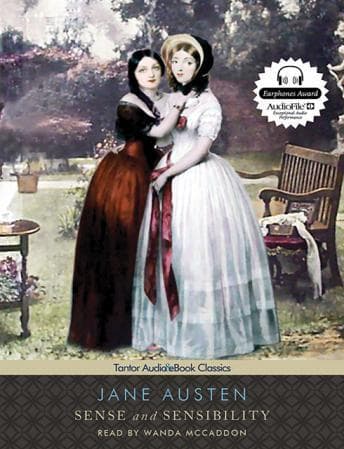
But here's what struck me about listening to Austen's first published novel again, this time through Wanda McCaddon's narration: I'd forgotten how funny Sense and Sensibility is. Not Pride and Prejudice funny - that's Austen at her most quotable. This is quieter, more surgical. The wit slips in like a knife you don't feel until you're already bleeding.
The Two Sisters Every Teacher Recognizes
Elinor and Marianne aren't just character types - they're the eternal classroom divide. Elinor is the student who turns in her essay a day early, properly formatted, thesis statement underlined. Marianne is the one who writes a passionate four-page response to the wrong prompt and then argues it's actually better than the assignment.
McCaddon gets this contrast immediately. Her Elinor has this measured, careful quality - you can hear the restraint in every syllable, the constant calculation of what's appropriate to say versus what she's actually feeling. And her Marianne? There's a breathlessness there, an urgency that borders on theatrical. It's not mocking, exactly, but you can tell McCaddon understands that Austen loves Marianne while also finding her slightly ridiculous.
The Willoughby scenes are particularly well done. McCaddon gives him this charm that's just a shade too polished - you can hear the performance in his performance, if that makes sense. That same performative charm shows up in Neon Gods, though with considerably less poetry and considerably more leather. My students would call him "a walking red flag." They're not wrong. But McCaddon makes you understand why Marianne falls anyway.
McCaddon's Pacing Problem (And How to Fix It)
Okay, here's where I have to be honest. McCaddon reads fast. Too fast, sometimes, for Austen's prose. And this is Austen's first novel - the sentences are longer, more convoluted than her later work. She hadn't quite figured out how to be economical yet.
I found myself reaching for the playback controls more than once. Slowing to 0.9x helped considerably. (Yes, I know - the man who lectures about listening at 1.0x "because the author chose those words" is now adjusting playback speed. My students would have a field day.)
But here's the thing: when McCaddon slows down - and she does, in the emotional climaxes - she's genuinely excellent. Her British accent work is precise without being showy. The class distinctions come through clearly: the Dashwood sisters sound different from Mrs. Jennings, who sounds different from Lucy Steele. That matters in Austen. Everything is about social positioning.
There's also this thing she does with the mothers in the book - a sort of baby-talk quality when they're dealing with children - that I can see bothering some listeners. It didn't particularly bother me, but I teach teenagers. I've developed a high tolerance for annoying voices.
What Austen Is Really Saying
This reminds me of what I tell my students about the title: it's not "Sense versus Sensibility." It's "and." The whole point is that Elinor needs a little more feeling, and Marianne needs a little more restraint. Neither approach, taken to extremes, leads anywhere good.
Listening to it now, at fifty-three, I hear things I missed at twenty-five. The economic anxiety running through every scene. The way women's entire futures depend on decisions made by men who barely think about them. Mrs. Dashwood's quiet desperation. The cruelty of inheritance laws that leave three women essentially homeless because they happened to be born female.
Austen wraps all of this in drawing-room comedy, but it's there. McCaddon doesn't oversell it - she trusts the text - but she doesn't hide from it either.
Skip If You Need Swordfights, Stay If You Love Subtext
If you loved Pride and Prejudice but haven't ventured into Austen's other novels, this is your next step. It's less polished, yes. The plot takes some odd turns. But it's also rawer, more experimental. You can hear a young writer figuring out what she's capable of.
New to Austen entirely? Maybe start with Pride and Prejudice. This one requires a little more patience. And if you're someone who needs action, who finds drawing-room drama tedious, who doesn't care about the subtle distinctions between what people say and what they mean - this isn't for you. No shame in that. But the prose deserves to be savored, and if you're not going to savor it, why bother?
Worth Pausing the Faculty Meeting For
Eleven and a half hours is a commitment. I spread it over two weeks of lakefront walks, grading sessions, and one particularly long faculty meeting about standardized testing. (Principal Martinez, if you're reading this: I was definitely paying attention. The part about benchmark assessments was riveting.)
McCaddon's narration isn't perfect - the pacing issue is real - but her character work is strong enough to carry it. And the novel itself? Still sharp after two hundred years. Still relevant. Still funny in ways that sneak up on you.
My students would hate this. I love it.