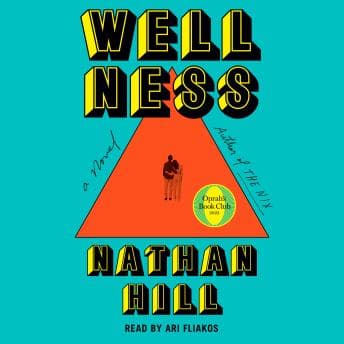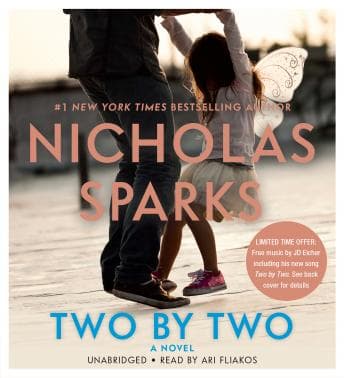

Look, I'll be honest with you. I picked this up expecting the usual Nicholas Sparks formula - pretty people, tragic circumstances, tears by chapter twelve. And yeah, that's basically what I got. But here's the thing: Ari Fliakos made me care about it way more than I expected to.
I started this during a particularly brutal week of grading sophomore essays on The Great Gatsby. (Spoiler: none of them understood the green light. None.) So I needed something that wasn't going to require me to think too hard, and fifteen hours of Sparks seemed like the literary equivalent of comfort food. Mashed potatoes for my brain.
The premise is pretty straightforward - Russ Green has the perfect life, perfect wife, adorable daughter named London, corner office, the whole deal. Then everything falls apart. Wife leaves, job implodes, and suddenly this guy who couldn't change a diaper is doing the full single-dad thing. It's not exactly groundbreaking territory. My students would probably call it "basic." (They call everything basic. I've stopped fighting it.)
But Fliakos. Man, Fliakos.
This reminds me of what I always tell my podcast listeners - all forty-seven of them - about the difference between reading and performing. The narrator understands that pause is punctuation. When Russ is watching his daughter sleep, trying to figure out how his life became unrecognizable, Fliakos doesn't rush through it. He sits in that silence. He lets you feel the weight of it. That's not just reading words off a page. That's interpretation.
His voice for London is particularly impressive. She's six, and he captures that without going into annoying territory. You know what I mean - that high-pitched, cartoonish thing some narrators do with kids that makes you want to fast-forward. None of that here. She sounds like an actual child. Sweet without being saccharine.
Now, I listened to the regular edition, not the Booktrack version with the music. From what I've heard, some folks found the soundtrack too loud in spots. Can't speak to that personally. The production on my version was clean - no weird audio jumps, no background hiss. Just Fliakos and fifteen hours of emotional turbulence.
The Predictability Problem (And Why It Doesn't Quite Matter)
Here's where I have to be real with you. The plot is predictable. Like, really predictable. Old flame shows up? You know where that's going. Estranged wife making questionable choices? Yeah, you can see the ending from about chapter three. Sparks isn't trying to surprise you. He's trying to make you feel things, and the prose deserves to be savored even when you know exactly what's coming next. That kind of emotional inevitability can work when it's done right, though I'll admit Inferno: A Novel took the opposite approach with its breakneck pacing and constant twists.
The pacing drags in the first few hours. Russ spends a lot of time being miserable and confused, which - fair, his life is falling apart - but it takes a while before the story finds its rhythm. I was walking the lakefront with Denise, and she actually asked me why I kept sighing. "The protagonist is wallowing," I told her. "Give him time."
Once you get past the setup, though, it moves. The father-daughter stuff is genuinely touching. There's a scene involving London's first bike ride that got me a little choked up. (Don't tell my students I said that. They already think I'm soft because I cried during our Flowers for Algernon unit.)
The sister, Marge, is probably my favorite character. She's got this dry humor that cuts through Russ's self-pity, and Fliakos gives her just enough edge to make her feel real. The parents are a bit one-dimensional - supportive and wise in that way fictional parents always are - but they serve their purpose.
Your Listening Assignment
If you're already a Sparks fan, you're going to love it. If you want something emotionally engaging that doesn't require you to track seventeen plotlines and a magic system, this works. It's great for long commutes or - and I'm speaking from experience here - pretending to pay attention during faculty meetings. (Principal Martinez, if you're reading this, I was definitely listening to your budget presentation. I wasn't. I was listening to Middlemarch. But I could've been listening to this.)
Skip it if predictable romance plots make you crazy, or if you need fast-paced action. This is a slow burn about a guy learning to be a dad while his heart gets stomped on. It's not trying to be anything else.
Class Dismissed
My students would hate this. I loved it. Well - loved is strong. I appreciated it. I was moved by it. Fliakos elevated material that could've been forgettable into something worth the fifteen hours.
Worth pausing the faculty meeting for? Yeah. Actually, yeah it was.