
What happens when you strip away someone's sense of certainty about themselves? Not just their job or their relationship status—but their actual identity, the thing that makes them who they are?
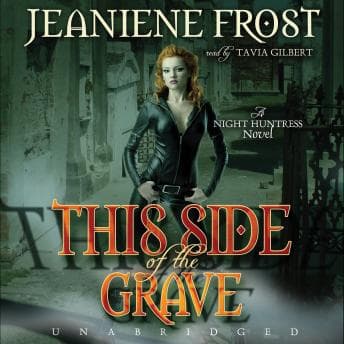
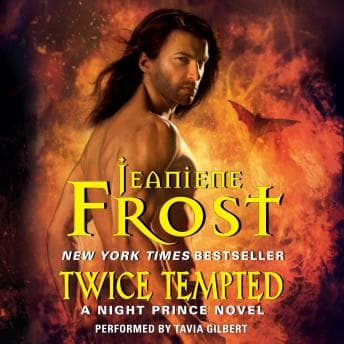
This is the question that kept nagging at me while listening to Twice Tempted during my morning runs through Cambridge. The first book in this series, Once Burned, introduced these identity questions—but here they become existential. Leila's psychic powers have been her defining trait, her survival mechanism, her reason for existing in Vlad's dangerous world. And now they're failing. As a researcher who studies how people construct identity through narrative, I found myself less interested in the vampire politics and more fascinated by watching Leila scramble to figure out who she is without her abilities.
The Psychology of Power Dynamics (And Why Vlad Is a Case Study)
Okay, so here's the thing about Vlad Tepesh—yes, that Vlad, the historical Dracula—he exhibits classic avoidant attachment patterns. The emotional distance, the refusal to verbalize love, the way he substitutes grand protective gestures for actual vulnerability. My therapist would have thoughts about this character. Many thoughts.
But what makes this compelling rather than frustrating is that Jeaniene Frost actually understands the psychology. Vlad isn't cold because he's a brooding romance hero archetype. He's cold because he's been alive for centuries, loved and lost, and genuinely believes emotional walls protect both himself and Leila. People who've experienced significant trauma often develop exactly this pattern—protect yourself by never fully committing.
Leila, meanwhile, is a fascinating case study in how modern women navigate relationships with partners who hold all the power. She's mortal. He's an ancient vampire prince. The imbalance is... significant. But she refuses to play the passive love interest, and watching her push back against Vlad's emotional unavailability felt psychologically authentic. She's not trying to fix him. She's demanding to be treated like an equal. Different thing entirely.
Tavia Gilbert Nails the Romanian Accent (And Everything Else)
I need to talk about the narration because Tavia Gilbert is doing something genuinely impressive here. Her Romanian accent for Vlad walks this perfect line between authentic and accessible—it sounds real without being so thick you're straining to understand. And the character differentiation is excellent. I never confused who was speaking, even in scenes with multiple vampires.
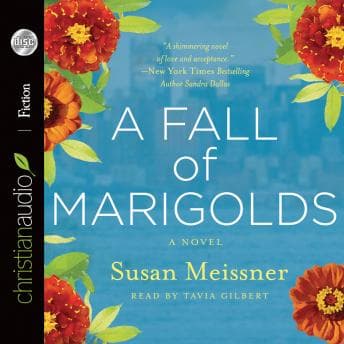
The emotional delivery is where Gilbert really shines though. There's a moment—I won't spoil it, but tragedy strikes, as the description promises—where her voice shifts in this subtle way that made me actually stop jogging and just... stand there on the sidewalk like a weirdo. Gilbert does something similar in Fall of Marigolds, navigating grief across two timelines with the same emotional precision. That's the mark of a narrator who understands character psychology, not just dialogue.
Fair warning: the pacing at the start is slower than I'd like. The first hour or so feels like setup, and I found my mind wandering a bit. But once the plot kicks into gear? Gilbert matches that energy perfectly.
The Love Triangle That Isn't Really a Triangle
There's a "tortured knight" character introduced who supposedly presents a romantic alternative to Vlad. Psychologically, this doesn't track as a genuine threat to the central relationship—and I think Frost knows that. He's there to force Vlad's hand emotionally, not to actually compete. It's a narrative device, and a pretty transparent one.
Does it work? Mostly. Leila exhibits classic conflict-avoidance behavior when it comes to this secondary love interest, which felt true to her character. She doesn't want to hurt anyone. She also doesn't want to be the kind of woman who strings someone along. The internal tension is more interesting than the external love triangle drama.
Who This Works For (And Who Should Run)
This is paranormal romance with explicit content, violence, and a hero who literally impales people. If that's not your thing, you already know. Skip it if you need your heroes emotionally available from page one. But if you're drawn to character-driven supernatural stories—especially ones where the psychology of immortality and power actually gets explored—this is worth your time.
I found myself asking: why does Leila really stay with someone who won't say he loves her? And the answer the book provides isn't "because he's hot" (though, yes, that's part of it). It's because she sees the person beneath the centuries of armor. That's a more interesting answer than most paranormal romance offers.
The Researcher's Verdict
The audiobook is a solid 8 hours—perfect for a week of commutes or a few long runs. Gilbert's performance elevates material that could feel formulaic in lesser hands. And honestly? After spending so much time analyzing why people make terrible relationship decisions in my research, it's kind of refreshing to watch fictional characters work through the same patterns.
(Don't tell my students I said that.)