
Henry James wrote code before code existed. And I mean that in the worst possible way.
Got paged at 2AM for a false alarm last Tuesday - alerts fired, dashboards looked fine, classic phantom incident. Too wired to sleep, too fried to be productive. Figured a 150-year-old ghost story would knock me out. Reader, it did not.
Henry James Writes Prose Like Nested Try-Catch Blocks
TL;DR: Worth your time, but ONLY if you downshift to 1x and actually pay attention. This is not background listening. This is not even 1.5x listening. James writes sentences with more dependent clauses than my team's microservices have dependencies, and that is saying something.
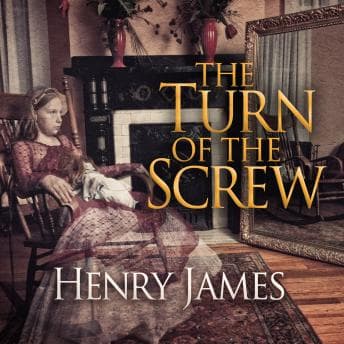
The Turn of the Screw is a ~5 hour novella about a governess who arrives at a country estate to care for two suspiciously perfect children - Miles (10) and Flora (8) - and starts seeing ghosts. Or does she? That's the whole thing. James never confirms whether the apparitions of Peter Quint and Miss Jessel are real or the governess is spiraling into a breakdown, and 150 years later scholars are still arguing about it like it's a tabs-vs-spaces debate.
As someone who debugs distributed systems for a living, the ambiguity absolutely wrecked me. I kept waiting for the definitive log entry, the smoking gun, the stack trace that proves "yes, the ghosts are real" or "no, this woman needs help." James gives you neither. Every piece of evidence parses two ways. It's maddening. It's also kind of brilliant.
That same tightrope walk between reality and madness is why I love First Fifteen Lives of Harry August—a time-loop thriller that makes you question every detail, and rewards obsessive attention in much the same way.But here's the thing about listening to Victorian prose in the dark at 3AM - James' sentences are architecturally complex in a way that punishes even a moment of inattention. He'll start a thought, embed three qualifications inside it, reference something from an hour ago, and then land on a conclusion that reframes everything you just heard. Miss one subordinate clause and you're lost for the next five minutes. I rewound more than I'd like to admit, and I was actually trying.
I’ll admit, I had an easier time with Daisy Miller—James with the complexity dialed down to “demanding” rather than “punishing,” and a shorter commitment if you just want to test the waters.Landor and Prebble Split the Unreliable Narrator Problem
The dual narrator setup here is smart. Simon Prebble handles the frame story - the prologue where a group gathers around a fire to hear a ghost story (very Victorian, very cozy) - and Rosalyn Landor takes over as the governess for the main narrative. The handoff works because it reinforces the story-within-a-story structure. Prebble's voice has this steady, fireside-chat authority that grounds you before Landor pulls you into the governess's increasingly paranoid perspective.
Landor's performance is where the real work happens. She has to sell you on a narrator who might be delusional, and she does it through these subtle escalations - the governess starts measured and professional, almost prim, and by the final stretch there's this breathless urgency that could read as genuine terror OR creeping mania depending on which interpretation you've bought into. She doesn't tip her hand. That's exactly right for this material.
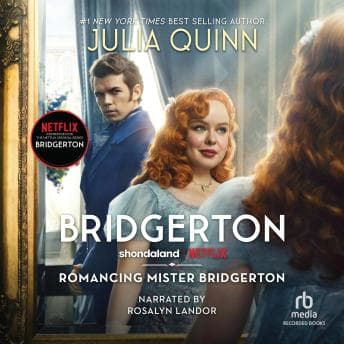
It’s wild that the same narrator voices the Bridgerton series—polar opposite territory where attention is optional and the scandals are far more straightforward. Bridgerton: The Duke and I is my go-to commute fluff when my brain needs a break from Henry James-level density.Neither narrator is Ray Porter (obviously), but they're well-matched to James' style. Prebble in particular - that man's voice was basically engineered for 19th-century English prose. Crisp, warm, authoritative without being stiff. No music, no sound effects, just two very capable narrators and James' prose doing the heavy lifting. Which is enough.
Not a Commute Book (And That's Completely Fine)
I'll be honest: this fails my standard commute-worthiness test pretty hard. The 6AM packed-Caltrain-surrounded-by-zombies version of me would absorb maybe 30% of this. James' prose demands the kind of attention I normally reserve for code reviews, not the half-conscious state I'm in between SF and Mountain View.
But at under 5 hours, it's a low-commitment experiment. I finished it in one sleepless night. And the payoff is real - that final scene with Miles is genuinely unsettling in a way that relies on zero jump scares or gore. Just mounting psychological pressure until something breaks. The last few minutes hit different at 4AM in a dark apartment with your phone still buzzing from Slack notifications you're ignoring.
Perfect for: insomnia, focused evening listens, October mood-setting. Skip for: morning commute, gym, anyone allergic to Victorian sentence architecture.
One caveat worth mentioning: this is public domain, so free versions exist everywhere. This particular recording earns its keep through the dual narration and clean production, but if you're tight on credits, check Libby first. The ROI on this audiobook is high per hour if you actually engage with it - but the attention cost is steep.
git commit -m "unsettling, will not resolve"
A well-executed audio version of a classic that's genuinely creepy if you meet it on its terms. Just know what you're signing up for - this is Henry James, not Andy Weir. I respect it more than I enjoyed it, and I think that's probably the correct response to Henry James in general. The ambiguity that drives the story is the same thing that'll make you want to argue with someone about it afterward. Kevin refused to discuss ghost epistemology with me at 5AM. His loss.