
So there I was, 11:30 PM on a Tuesday, wide awake after a deploy that went sideways and then un-sideways (the worst kind — adrenaline with nowhere to go). Kevin was already asleep. I needed something short enough to finish before my brain would shut down, and my backlog had this 85-minute Pohl story I'd been meaning to get to. Perfect. One sitting. Done by 1 AM.
TL;DR: Worth your commute — if you treat it like a puzzle box, not a novel.
Groundhog Day Meets The Matrix, Written in 1955
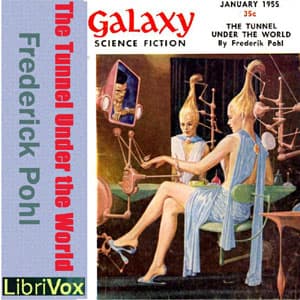
Here's what blew my mind: Frederik Pohl published this in 1955. Nineteen fifty-five. And the premise is basically a simulation theory horror story — Guy Burckhardt wakes up every morning on June 15th, lives the same day, but can't figure out why. The twist isn't just time-loop stuff though. There's a layer about advertising, corporate manipulation, and the question of whether you're even you anymore that feels uncomfortably relevant for someone who works at a company that literally optimizes engagement metrics for a living.
The Truman Show comparison that keeps popping up in reviews? Yeah, it's apt, but it undersells the darkness here. Truman gets to escape. Burckhardt's situation is way bleaker. When the reveal hits — and I won't spoil it, but it involves the physical nature of the town itself and what happened the night of those explosions — it's genuinely unsettling in a way that stuck with me past the runtime. I was lying in bed afterward staring at the ceiling thinking about miniaturization and consciousness and whether Pohl was just casually inventing cyberpunk thirty years early.
The science doesn't hold up by modern standards (it's 1950s SF, the "cybernetic" hand-waving is more vibes than rigor), but the philosophical core absolutely does. The idea that your entire reality could be a corporate testing ground for ad campaigns? That's not science fiction anymore. That's Tuesday.
Phil Chenevert: Solid LibriVox, Not Audible-Polish
Let me be honest about what this is: it's a LibriVox recording. Phil Chenevert reads it clearly and with decent pacing. He's not doing Ray Porter-level character differentiation — Burckhardt and his wife and the mysterious Swanson don't sound dramatically different. But for an 85-minute story, that's... fine? You can track who's talking from context. Chenevert's strength is that he reads at a steady, unhurried pace that lets Pohl's paranoia build naturally. He doesn't oversell the horror moments, which actually works — the flatness of his delivery during the increasingly surreal repetitions of June 15th adds to the creeping wrongness of it all.
No music, no sound effects, no production tricks. Just a guy reading a story into a microphone. For free. Though I'll say — free doesn't always mean worth it, which is something I had to reckon with when I picked up Giving Up The Ghost, another short that technically costs you nothing but attention. The ROI on this audiobook is literally infinite because it costs nothing.
The 85-Minute Sweet Spot
At 1 hour 25 minutes, this is basically a long podcast episode. And that's exactly the right length for this story — Pohl doesn't pad it. The repetition-with-variation structure (each June 15th gets weirder, the ads get more aggressive, Burckhardt gets more suspicious) keeps escalating without dragging. I'd compare the pacing to a well-structured conference talk: setup, escalation, reveal, gut-punch ending. No filler.
But here's my one real gripe: the ending is abrupt. Like, aggressively abrupt. The final revelation lands, and then it's just... over. No denouement. For a modern listener expecting some resolution or character arc completion, it might feel like the story crashes rather than lands. 1950s short fiction did this a lot — the idea WAS the point, not the character journey. If you're okay with that, great. If you need emotional closure, you'll be annoyed.
Who Gets on This Train and Who Waits for the Next One
Perfect for: anyone who likes Black Mirror, simulation theory rabbit holes, or vintage SF that predicted our weird corporate dystopia. Also perfect if you have a random 90-minute gap — airport layover, laundry day, insomnia after a bad deploy.
Skip for: anyone expecting a full novel experience, deep character development, or high production values. This is a short story. It does short story things.
If you've ever paused mid-scroll on an Instagram ad and thought "wait, am I the product?" — Pohl was asking that question before your parents were born. 85 minutes, zero dollars, and you'll think about it for longer than it takes to listen.
Commit This to Your Queue
It's free, it's short, and it's one of those foundational SF stories that half the stuff you already love was built on top of. Think of it as reading the original source code before the framework got popular. Not the most polished production, not the most sophisticated narration, but the core algorithm? Still runs.