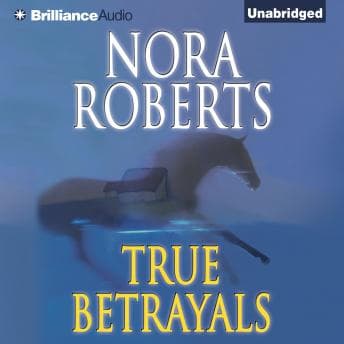

Look, I'm going to be honest with you - Nora Roberts wrote this book in 1995, and it shows. Not in a bad way, necessarily. But in that way where you're listening at 11 PM while grading yet another batch of essays on The Great Gatsby, and you realize the romance tropes feel almost... quaint? Like discovering your parents' love letters in the attic. There's something nostalgic about it, even if you weren't there the first time around.
I picked this up because Denise has been on a horse racing kick ever since we binged that documentary about Secretariat, and she kept saying "You need something lighter, Marcus. Not everything has to be Faulkner." She's right. She's usually right. (Don't tell her I said that.)
The Setup That Hooked This English Teacher
Here's what Roberts does well: she understands that family secrets are the oldest literary device for a reason. Kelsey Byden discovers her mother isn't dead - she's been in prison for murder. That's a premise that would make Sophocles nod approvingly. The Virginia horse farm setting gives everything this specific texture - you can almost smell the hay and money and old grudges. Roberts layers in the thoroughbred racing world with enough detail that you believe she did her homework, but not so much that it becomes a textbook. Fall From Grace does something similar with its small-town secrets—lots of atmospheric detail without drowning you in it.
The romance builds slowly, which I appreciated. My students would call it "boring." I call it "understanding that anticipation is its own reward." Roberts lets these characters circle each other like wary horses - pun absolutely intended - and the payoff works better for it.
Rose Anne Shansky: A Narrator Who Splits the Room
Here's where it gets complicated. Shansky has a well-modulated voice that handles the ensemble cast competently. When she shifts between Kelsey's uncertainty and Naomi's guarded warmth, you can tell who's speaking without checking. Her aristocratic edge for the old-money characters versus the more grounded tones for the working stable hands creates that class divide Roberts is going for.
But - and this is a significant but - she mispronounces words. Specific, noticeable mispronunciations that pulled me right out of the story. As someone who spends his days gently correcting teenagers on the difference between "literally" and "figuratively," this bothered me more than it might bother you. There's also this flatness that creeps in during emotional peaks. When the narrative calls for heat, Shansky sometimes delivers lukewarm.
I've seen reviews calling her delivery "flawless" and others calling it "the worst audiobook ever." The truth, as usual, lives somewhere in the messy middle. She's competent. Professional. But she doesn't elevate the material the way the best narrators do. I had a similar experience with Into the Water—technically fine, but missing that spark that makes you forget you're listening to someone read.
The Three-Quarter Slump
This reminds me of what I tell my students about pacing: the middle of any story is where writers earn their keep. Roberts starts strong - the mystery of Naomi's past, the tentative mother-daughter reconciliation, the simmering attraction with the love interest. But around hour ten or eleven, the plot starts spinning its wheels. You can feel the author stretching toward that fourteen-hour runtime.
I found myself grading faster during those sections, which is either a commentary on the book or on how desperate I was to finish those Gatsby essays. Probably both.
The ending picks back up. Roberts knows how to land a conclusion, and the resolution of both the romance and the family mystery feels earned. But that sag in the middle? It's real, and you should know about it going in.
Who Should Saddle Up (And Who Should Stay in the Barn)
If you love Nora Roberts, you already know what you're getting. This is vintage Roberts - romantic suspense with family drama and a specific world (horses, in this case) rendered with obvious affection. If you're new to her work, this isn't a bad entry point, though it's not her strongest either.
This works for long drives. Denise and I listened to chunks of it on the way to visit her sister in Indiana, and it kept us company through the cornfields. It requires more attention than background listening - you'll miss plot threads if you're not paying attention - but it doesn't demand the focus of, say, Middlemarch.
Skip this if narrator voice is make-or-break for you. Shansky is polarizing, and if you're in the "her voice is annoying" camp, fourteen hours is a long time to be annoyed.
Worth Pausing the Faculty Meeting For?
Not quite. But worth the lakefront walk? Absolutely. This is comfort food fiction - familiar flavors, reliable satisfaction, nothing that'll change your life but nothing that'll waste your time either. The prose doesn't demand to be savored at 1.0x the way literary fiction does, but Roberts writes clean, propulsive sentences that do exactly what they're supposed to do.
My students would probably like this more than they'd admit. The romance is earnest without being saccharine, the mystery has actual stakes, and the horse racing world is genuinely interesting. Sometimes you don't need Faulkner. Sometimes you need a good story, well-told, with a satisfying ending.
Denise finished it before I did. She says the romance reminded her of us - two stubborn people circling each other until they finally figured it out. I'm choosing to take that as a compliment.