
"He was invisible. He liked it that way."
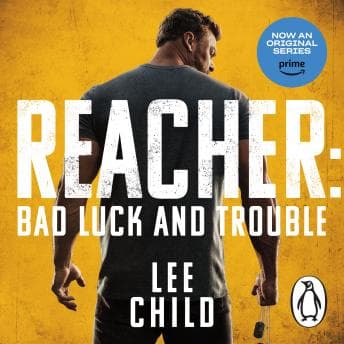
That line hits around the twenty-minute mark, and I remember pausing mid-step on the lakefront path, letting joggers stream past me while I stood there thinking about what invisibility really costs a person. This is why we still read the classics—because Lee Child, writing genre fiction in 1999, understood something Hemingway knew: the iceberg theory. What's beneath the surface matters more than what's showing.
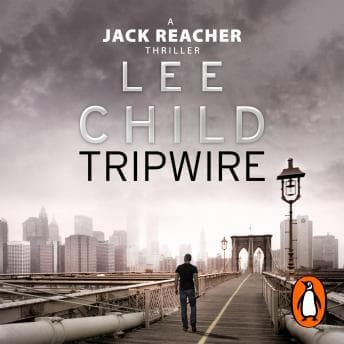
I finished Tripwire at 11 PM last Tuesday, grading papers with one earbud in (sorry, Principal Martinez, those margin notes might be slightly influenced by Jeff Harding's voice). And look—I need to address the elephant in the room before we go any further.
The Narrator Question That Divides Us
Jeff Harding is... polarizing. I've read the reviews. Some people find his intonation "infuriating to a silly level." Others think he captures Reacher perfectly. Here's my take after nearly sixteen hours: Harding reads Reacher like a man who's done violence and is tired of it. There's this weary quality to his delivery that some listeners mistake for slowness or—and I've seen this criticism—making Reacher sound "low-intellect."
They're wrong. But I understand why they feel that way.
Harding's Reacher isn't the movie Reacher. He's not quipping. He's a man digging swimming pools by hand in the Florida Keys because physical labor is the only thing that quiets his brain. Harding gets that. His pacing reflects it—deliberate, methodical, like Reacher himself. Where he genuinely shines is with Hook Hobie, the villain with the one-sided mouth and the prosthetic hook. Harding gives him this slithering quality, this aristocratic menace that made me genuinely uncomfortable during the interrogation scenes.
But I'll be honest: around hour eight, during some of the procedural middle sections, I found my attention drifting. The pacing does drag. Child's prose deserves to be savored, but there are stretches here that feel like they're testing your commitment.
What Hemingway Would Recognize
This reminds me of what Hemingway said about writing—that you could omit anything if you knew what you were omitting, and the omitted part would strengthen the story. Child does this brilliantly with Reacher's backstory. We're three books into this series, and we're still peeling back layers. The private detective sent to find Reacher—beaten to death, fingertips sliced off—that's not just plot machinery. That's a statement about what happens when you try to make the invisible visible.
The Vietnam thread running through this book surprised me. Child weaves in MIA investigations, the particular horror of uncertainty, the way some wounds never close. That same weight of historical trauma—how it shapes people decades later—is what makes Tattooist of Auschwitz so devastating. My students would hate this. I love it. There's genuine literary weight here beneath the thriller mechanics.
And those final pages? My heart was genuinely racing. Denise asked me why I was pacing the kitchen at midnight. I couldn't explain without spoilers, so I just said "Hook Hobie" and she looked at me like I'd lost my mind.
The Prose Deserves the Slow Read
Here's where I become that insufferable English teacher: I listened at 1.0x speed. The author chose those words. Child writes in these short, declarative sentences—subject, verb, object, period. It's almost Hemingwayesque in its economy. Speeding that up feels like fast-forwarding through a drum solo. You lose the rhythm.
That said—and this is where I'm being honest with you—this is not a background listen. Don't put this on while grading papers (I tried; I had to rewind constantly). Don't put this on during faculty meetings (okay, I did this too, and missed an entire subplot about Jodie, the lawyer love interest). This demands your attention. The plot threads—the detective's murder, Hobie's financial schemes, Reacher's military past—they're woven together in ways that require you to actually listen.
Worth Pausing the Faculty Meeting For?
If you loved the first two Reacher books, this is its spiritual successor—but darker, more contemplative. The violence is gory when it comes (fair warning), but Child earns it. This isn't gratuitous. It's consequential.
Who should skip this: Anyone who needs their Reacher to sound like an action hero. Anyone who wants pure escapism without the Vietnam-era moral weight. Anyone who finds deliberate pacing insufferable.
Who should absolutely listen: Readers who appreciate character-driven thrillers. People who want their genre fiction to have something to say. Anyone who's ever wondered what happens to soldiers when the war ends but they don't.
The narrator choice will make or break this for you. I'd suggest sampling the first chapter before committing. Harding's voice is distinctive—you'll know within ten minutes if it works for you.
My Margin Notes Say "Recommended"
At fifteen hours and forty-seven minutes, this is a commitment. It's not Child's tightest Reacher novel—the middle sags, the financial subplot gets convoluted, and there are moments where I wished Harding would just... move it along. But the emotional payoff is real. The final confrontation is genuinely tense. And there's a moment near the end involving a prosthetic hook that I'm still thinking about a week later.
My students would probably DNF this. But my students also think The Great Gatsby is "boring." So.