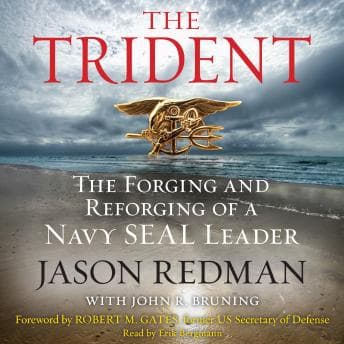

Eleven PM, papers stacked like accusations on my desk, red pen bleeding dry. Denise had gone to bed hours ago. I should've been grading essays on The Great Gatsby—seventeen-year-olds explaining why the green light matters, most of them missing the point entirely. Instead, I'm listening to a Navy SEAL describe getting shot in the face at point-blank range.
This is not how I typically spend my Tuesday nights.
The Hemingway Problem, Solved
Here's the thing about military memoirs—they often suffer from what I call the Hemingway problem. Hemingway could write about war because he understood that the horror lives in the spaces between words, in what you don't say. Most combat memoirs swing the opposite direction: all adrenaline, no reflection. Jason Redman's Trident does something different. The man writes about his failures with the same unflinching honesty he brings to describing firefights. That's rare. That takes a kind of courage that has nothing to do with bullets.
I saw that same appetite for self-interrogation in Becoming, though Michelle Obama gets there with fewer ambushes and better tailoring.Redman doesn't just recount his SEAL career chronologically—Colombia, Peru, Afghanistan, Iraq—he interrogates it. The moments where his ego nearly derailed everything. The times his leadership failed before it succeeded. My students would hate this. They want heroes uncomplicated, villains obvious. Real life doesn't work that way, and neither does this book.
Erik Bergmann narrates with what I'd call disciplined restraint. No melodrama. No voice-cracking emotional manipulation. When Redman describes the 2007 ambush that should have killed him—machine-gun fire tearing through his arm, his face, his body—Bergmann reads it almost matter-of-factly. And somehow that makes it worse. More real. The AudioFile Earphones Award makes sense here; this is narration that understands the material.
Twelve Hours That Earn Their Length
At twelve hours and change, this isn't a quick listen. But unlike some memoirs that pad their runtime with operational jargon or repetitive action sequences, Trident uses that space for something I didn't expect: character development. Not of Redman's teammates, though they're there. Of Redman himself. You watch a young, arrogant operator become something else—not softer, exactly, but more aware of his own edges.
The famous hospital room sign—"Attention to all who enter here"—doesn't appear until late in the book. And by then, you understand why it meant what it meant. Not just defiance. Not just motivation. It was a man who'd spent years learning how to lead finally applying those lessons to the hardest mission: surviving.
I found myself pausing more than usual. Not because the pacing drags—it doesn't—but because certain passages demanded I sit with them. Hemingway said all you have to do is write one true sentence. Redman writes a lot of true sentences. Some of them are about combat. Most of them are about becoming the kind of person who can face what combat does to you.
Where the Audio Shines (And Where It Simply Serves)
Bergmann's narration won't give you vocal fireworks. No distinct character voices, no dramatic accents. What you get is clarity and appropriate weight. That restraint is Bergmann's calling card; even in When to Rob a Bank, a much stranger classroom assignment, he keeps the whole thing from sprinting off the rails. He knows when to let a sentence breathe. He knows when Redman's words carry enough force that adding performance would be redundant.
The production is clean—no background noise, no volume issues, just a man's voice telling a difficult story well. At 1.0x (because the author chose those words, and I choose to hear them properly), the pacing feels deliberate. Intentional. You could speed it up, but I'm not sure why you'd want to.
What I can't tell you—because the research didn't reveal it—is whether Bergmann served, whether he understood this material from experience or craft. Either way, the result works. The narration never gets in the way of the story, and in a memoir this personal, that's exactly right.
Class Dismissed
I finished Trident around 2 AM, papers still ungraded. (Sorry, third period. Your Gatsby essays will have to wait.) And I sat there thinking about what we ask of the people we send to war, and what they bring back, and whether we're equipped to understand any of it.
This isn't a rah-rah military memoir. It's not a political statement. It's one man's honest accounting of what it cost him to become who he became—and what it cost him again to survive becoming someone new. The prose deserves to be savored. The story demands it.
If you loved Lone Survivor but wished it went deeper into the psychology of service, this is its spiritual successor. If you've never touched military memoir but appreciate honest writing about difficult lives, start here. Skip it if you want pure action or clear-cut heroics—Redman's too busy examining his own failures for that. My forty-seven podcast listeners would appreciate it. My mom might even stay awake.








![Steve Jobs [unabridged audiobook] audiobook cover](/_next/image?url=https%3A%2F%2Fcovers.audiobooks.com%2Fimages%2Fcovers%2Ffull%2F9788499923406.jpg&w=1920&q=75)