
I made a tactical error. I decided to listen to this one while cooking — a Sunday afternoon, making my mother's dal makhani from memory, which already requires a certain suspension of disbelief (hers is better, mine is fine, we don't discuss this). The idea was that something spiritually expansive would pair well with something meditative. Stirring lentils, contemplating the cosmos. Very Priya of me.
What I did not anticipate was Zachary Johnson delivering hypnotherapy session transcripts like he was narrating a trailer for a mid-2000s sci-fi thriller. The dal survived. My patience was tested.
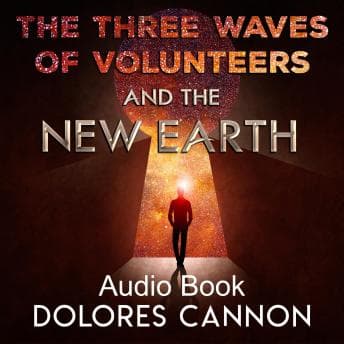
Let me be clear about what this book actually is, because the description does not fully prepare you: it's Dolores Cannon presenting transcripts from her QHHT (Quantum Healing Hypnosis Technique) sessions, in which clients — most of them women — apparently channel information about being soul volunteers from other dimensions who chose to incarnate on Earth to help humanity ascend. Nearly all the voices being represented are female. Nearly all of them are narrated by a male voice doing... a lot. Too much, really. One reviewer compared him to William Shatner's understudy, and I cannot improve on that description. There's a breathless intensity to the delivery that makes sessions that were presumably quiet and intimate feel like they're being read from a pulpit during a particularly dramatic sermon.
What Dolores Cannon Is Actually Doing Here (Psychologically Speaking)
Here's the thing that kept me intellectually engaged despite everything: as a narrative psychologist, I find Cannon's framework genuinely fascinating as a case study in meaning-making. The research actually shows that humans construct identity through story — we are narrative creatures, and when people feel profoundly alienated from their environments, they reach for explanatory frameworks. The 'Three Waves' concept — that certain souls are first-timers to physical existence, bewildered and sensitive and struggling to adapt — functions as a remarkably effective identity narrative for people who have spent their lives feeling like they don't belong here.
Is it empirically verifiable? No. Does it perform a real psychological function? Absolutely. The characteristics Cannon attributes to 'volunteers' — sensitivity to violence, difficulty with human cruelty, a persistent sense of mission they can't name — read clinically like descriptions of high sensitivity, dissociation, or trauma responses. The overlap with attentional and sensory processing differences is also worth noting — Driven to Distraction maps a remarkably similar portrait of people who feel fundamentally misaligned with the world around them, except it offers a clinical framework instead of a cosmic one. My therapist would have thoughts about this. Several thoughts. The book never engages with that possibility, which is where I part ways with it as a researcher. But I found myself asking: why does this framework work so well for so many people? And the answer is actually interesting — it externalizes alienation, gives it cosmic significance, and transforms suffering into purpose. That's not nothing. That's a very human need being met.
The Narration Problem Is Not Minor
I want to be fair: having two narrators — Moe Egan and Zachary Johnson splitting duties — does help with structural clarity. You know when you've shifted sections. That's a genuine organizational benefit for a 15-hour-plus listen that's essentially a compilation of session transcripts.
But the dramatic register is genuinely disruptive. When a hypnosis subject is speaking quietly about feeling like they don't belong on Earth, and the narrator is delivering it like a revelation from the mountaintop, the emotional texture gets completely distorted. You lose the intimacy that presumably made these sessions meaningful. I had to skip forward twice — not because the content lost me, but because the performance was actively working against the material. For a book asking you to seriously consider its claims, the narration inadvertently makes mockery feel like the reasonable response.
Who This Is Actually For
If you're already in Cannon's world — if you've read her other work and find her hypnotherapy framework valuable — you'll get through the narration because you're there for the content. Committed Cannon readers seem to consistently rate her books highly regardless of production choices.
If you're approaching this as a skeptic curious about the psychology of New Age belief systems, it's genuinely interesting source material — but you'll be doing your own analytical work, because the book isn't inviting that reading.
If you're somewhere in the middle, looking for something that might expand how you think about identity and belonging, I'd honestly suggest reading the print version. The ideas deserve better than what the audio production does to them.
Fifteen hours and forty-eight minutes is a significant commitment for a book where the narration is working against you. Borrow it if you can. The content has real psychological texture worth examining — but you shouldn't have to fight the delivery to find it.