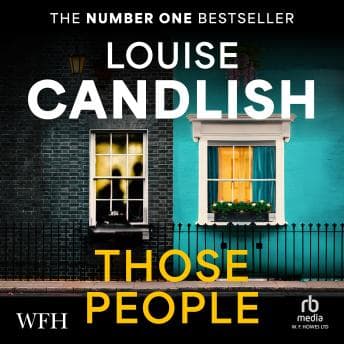

Everyone warned me about my neighbors before I bought in Pilsen. "Those people," they said, with that particular emphasis that tells you everything about the speaker and nothing about the subject. So when Louise Candlish's novel arrived with its premise of suburban paradise disrupted by undesirable newcomers, I expected to hate it. I expected to side with the outcasts. I expected Candlish to skewer the pearl-clutching middle class.
She does. And then she doesn't. And that's what kept me grading papers three hours past my usual stopping point.
The Moral Quicksand of Lowland Way
Here's what Candlish does brilliantly: she makes you complicit. The residents of Lowland Way are insufferable—the kind of people who form WhatsApp groups about parking violations and call noise complaints "community advocacy." Darren and Jodie, the new neighbors, are loud, inconsiderate, possibly dangerous. The novel asks a question I pose to my juniors every year when we read The Crucible: How does a community decide who belongs? And what happens when that decision turns violent?
The structure alternates between neighbors, each one convinced they're the reasonable party. Each one absolutely certain that those people started it. Candlish has clearly studied how resentment ferments in close quarters—the way a misplaced trash bin becomes evidence of moral failing, the way a loud party becomes an existential threat. My students would recognize this immediately. They live it on social media every day.
But here's where the novel surprised me. I expected clear villains. I didn't get them. Even Darren and Jodie, positioned as the disruptors, have moments where you understand their rage at being constantly surveilled, constantly judged. The best domestic fiction does what Hawthorne did, what Shirley Jackson did. It shows us the monster in the mirror. Homegoing does something similar with its examination of inherited trauma and community judgment across generations.
Tuppence Middleton's Complicated Performance
I need to be honest here, and it pains me because I genuinely wanted to love this narration. Middleton has the right instincts—she understands that pause is punctuation, and her pacing through the mounting tension works beautifully. When the prose deserves to be savored, she slows down.
But there's a problem. The mis-emphasis.
I lost count of moments where she stressed the wrong word in a sentence, completely inverting the meaning. It's the kind of thing that happens when you're reading ahead for flow rather than processing for sense. My students do this during oral reading exercises. I don't expect it from a professional narrator. There were stretches—particularly in the middle hours—where I'd have to rewind because her emphasis made a sentence nonsensical.
And then there's Ant. Without spoiling his role, I'll just say that every time this character appeared, I winced. The voice Middleton chose grated in a way that felt less like characterization and more like caricature. Some listeners might argue she's highlighting his obnoxiousness deliberately. Maybe. But it pulled me out of the story every single time.
The frustrating part? When she's good, she's genuinely good. Her handling of the climactic revelation—and trust me, it's worth the buildup—landed with appropriate weight. I just wish the journey there had been smoother.
The Slow Burn That Earns Its Fire
At nine and a half hours, this is not a quick listen. Candlish takes her time establishing the ecosystem of Lowland Way, and I understand why some listeners found it drawn out. But this reminds me of what I tell my students about Faulkner—sometimes the slow accumulation is the point. You need to feel the suffocating intimacy of these neighbors watching each other, judging each other, building their cases.
The payoff works because you've lived in that pressure cooker. When the crime finally happens, you're not just shocked by the act—you're shocked by how inevitable it feels. Great Train Robbery had that same quality of watching disaster unfold with terrible clarity. How you saw it coming and couldn't look away.
Denise walked in during the final hour and asked why I looked so tense. "These people," I said. "These terrible, recognizable people."
Who's Getting an A, Who's Getting Excused
This one's for readers who loved Our House (Candlish's Crime & Thriller Book of the Year winner) and want more of her surgical examination of middle-class anxiety. If you appreciate slow-building tension over explosive action, you'll find plenty to chew on here. Skip it if you need constant momentum—the middle section requires patience, and the narration hiccups will test you.
Those People is almost as good as Our House. Almost. The premise is sharper, the social commentary more pointed. But Our House had a propulsive urgency that this one lacks in its middle stretch.
The narration issues are real but not fatal. I'd recommend 1.0x speed—partly because I always do, partly because you need to catch the moments where Middleton's emphasis goes sideways. At faster speeds, you'll miss the corrections your brain needs to make.
Class Dismissed
Perfect for evening listening when you want something that simmers rather than explodes. My students would hate this—too much talking, not enough action. I loved it. The irony isn't lost on me.