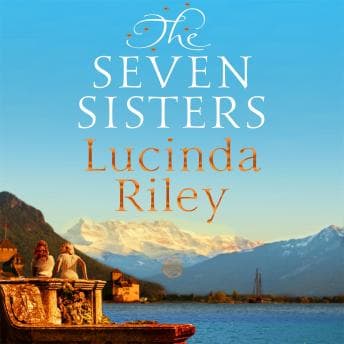

I started this audiobook at 3 AM during a particularly quiet night shift, charting notes while my patients slept. Eighteen hours is a commitment. That's like... four full work weeks of commutes. But sometimes you need something that'll carry you through the long haul, and Seven Sisters delivered in ways I wasn't expecting.
Maia D'Aplièse loses her adoptive father - a mysterious billionaire called Pa Salt - and suddenly she's got a clue to her biological origins that takes her from a Swiss castle to a crumbling mansion in Rio de Janeiro. The premise sounds like something my mom would pick up at the airport bookstore. (She did. She texted me about it three times before I finally caved.)
When History Grabs You by the Throat
Here's the thing about dual timeline stories - they can feel like homework. One narrative you're invested in, one you're tolerating until you get back to the good stuff. But Lucinda Riley does something clever here. The 1920s Rio storyline with Izabela Bonifacio? It's not filler. It's the emotional core.
Izabela's story - the arranged marriage expectations, the trip to Paris, falling for a sculptor named Laurent Brouilly - it's sweeping in that old-fashioned way. The kind of romance where you know it's going to hurt but you keep listening anyway. That same ache runs through Sense and Sensibility - different century, same emotional gut-punch. Carlos asked why I was crying in the car after one particular shift. I blamed allergies. It was not allergies.
The historical detail is solid. Belle Époque Rio, the construction of Christ the Redeemer, the social politics of wealthy Brazilian families - Riley clearly did her research. As someone who appreciates when authors don't just make stuff up, this matters. (Yes, I notice when medical details are wrong. I notice when historical details feel lazy too.)
Tuppence Middleton's Voice in My Head
Okay, so Tuppence Middleton. She's got a clear, steady voice that's easy on the ears during long listening sessions. Her character differentiation is there - you can tell when she shifts between Maia and the various sisters, between past and present timelines. The passion comes through, especially in the romantic moments.
But - and this is where I have to be real with you - some stretches felt a little flat. Not bad, just... consistent in a way that occasionally drifted toward monotonous. During the heavier emotional scenes, I wanted a bit more dynamic range. A bit more punch. It's like when a patient tells you they're "fine" but their vitals tell a different story. The words are there, but sometimes the urgency isn't quite matching.
That said? For an 18-hour listen, having a narrator who doesn't exhaust you is actually a feature, not a bug. I've listened to narrators who go SO hard on every line that I'm worn out by hour three. Middleton paces herself. My post-shift brain appreciated that.
The Slow Burn That Actually Pays Off
This isn't a thriller. It's not going to make you miss your exit because you're desperate to know what happens next. It's a slow burn - the kind of book that rewards patience. The mystery of Maia's origins unfolds gradually, moving through decades and continents.
Is it predictable in places? Sure. You can see some of the connections coming before Maia does. But that's not really the point. The point is the journey, the texture, the way Riley builds this world of six adopted sisters with six different origin stories waiting to be told. Their Eyes Were Watching God has that same focus on the journey over the destination - it's about how a woman finds herself, not just where she ends up. (This is book one of seven. My mom has already started texting me about book two.)
For commuters, this is perfect. The chapters are well-structured for picking up and putting down. I listened over about three weeks of night shifts and never felt lost when I came back to it. The pacing works for interrupted listening - which, let's be real, is how most of us consume audiobooks.
Who Should Queue This Up (And Who Should Skip)
If you love historical fiction with romance woven through it, you're home. If you want something that feels like a warm blanket rather than an adrenaline shot, this is your book. Perfect for that post-shift decompression when you need something engaging but not taxing.
Skip it if you need constant action or you're easily frustrated by slow reveals. And if monotonous narration really gets to you, be aware - some listeners found Middleton's steady approach worked against the material.
Clocking Out
I'm in for the series. My mom finally recommended something I actually enjoyed. Only took 15 years.