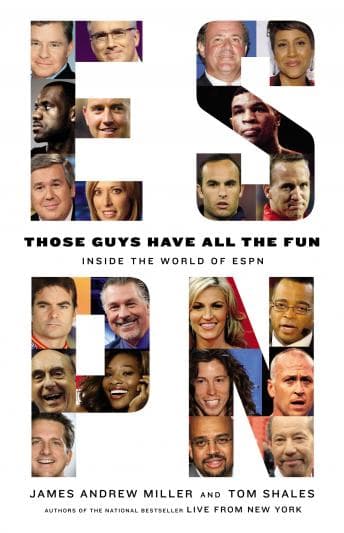

Most people told me this was the definitive ESPN book. The sports junkie's bible. Twenty-eight hours of behind-the-scenes gold. And look - they're not wrong, exactly. But nobody warned me I'd need the same endurance I used on those C-17 flights to Bagram to get through the whole thing.
I started this one during a three-day road trip to a client site in Houston and back. Ranger riding shotgun, Texas Hill Country rolling by, and 500-plus interviews from every era of ESPN piping through the speakers. By the time I hit Buda on the return leg, I felt like I'd attended every editorial meeting, budget fight, and holiday party Bristol, Connecticut ever hosted.
An Oral History That Actually Works - When It's Not Drowning You
Let me cut to the chase: the oral history format is both this book's greatest weapon and its biggest liability. Miller and Shales did something similar with Live From New York, their SNL book, and the structure is identical here - connective narration stitching together hundreds of first-person accounts. James Andrew Miller handles the interstitial narration himself, Matt McCarthy voices the male interviewees, and Joan Baker takes the female perspectives. It's a smart setup that keeps the voices distinct without needing a full cast.
The early chapters about ESPN's founding are genuinely electric. The idea that this whole empire started as a plan to broadcast Connecticut sports - Connecticut! - is wild. Bill Rasmussen scraping together funding, the early chaos of filling 24 hours of programming when nobody believed sports could sustain that, the desperation and scrappiness of those first years. That stuff had me leaning forward in the driver's seat. You can hear the disbelief in how these stories are delivered, like even the people who built the thing can't quite believe it worked.
But here's where it gets complicated. Once ESPN hits the mid-90s and starts becoming the behemoth we know, the book doesn't tighten - it sprawls. Every executive hire, every contract negotiation, every internal power struggle gets the full oral history treatment. Some of these stories matter. The Keith Olbermann-Dan Patrick dynamic, the behind-the-scenes ugliness of certain talent departures, the corporate knife fights between ESPN and its parent companies - that's compelling stuff. But then you get 45 minutes on a programming decision from 2003 that didn't actually change anything, and you're reaching for the skip-forward button.
Twenty-eight hours. I've done shorter combat rotations.
The Three-Voice System and Why It (Mostly) Holds Up
The narrator arrangement is smarter than I expected. McCarthy handles the male interviewee quotes with enough variation that you can generally track who's talking, and Baker does the same for the women. Miller's narration is clean and professional - he wrote the thing, so he knows where the emphasis should land. There's a natural rhythm to the handoffs: narration sets the scene, then you're dropped into someone's memory.
Where it gets tricky is when you have five or six different people recounting the same event in rapid succession. The format wants you to appreciate the contradictions and overlapping perspectives - and sometimes that's brilliant, like when multiple people remember a confrontation completely differently. But other times it feels like listening to a deposition where everyone's covering their own six. I've sat through enough after-action reviews to recognize that particular brand of selective memory.
No pronunciation issues that jumped out at me. Pacing is steady. I ran it at my usual 1.25x and it felt right - normal speed would've been brutal given the length.
Where This Beats the Bar Conversation
Here's the thing - most ESPN fans already know the greatest hits. SportsCenter's golden era, the Monday Night Football acquisition, the rise of the website. If you've been watching for 20+ years, a lot of this will feel familiar. Some reviewers complained about rehashed material, and I get it.
But what the bar conversation doesn't give you is the business side. The deals. The politics. How close ESPN came to dying multiple times before it became untouchable. The relationship with the NFL alone could be its own book. And the candor about bad behavior - the frat-house culture of the early years, the way certain people got pushed out - that's where the oral history format earns its keep. People say things in these interviews that a traditional narrative would've smoothed over.
I've seen this scenario play out in real life - organizations that grow too fast, where the culture that made them great becomes the thing that almost destroys them. Democracy in Chains documents a similar slow institutional rot from the inside - different arena entirely, but the same pattern of power consolidating until the original mission is almost unrecognizable. ESPN's story tracks exactly with that pattern, and Miller and Shales let you see it happen through the eyes of the people inside.
Who Should Deploy and Who Should Stand Down
If you're a serious sports media fan who wants the full archaeological dig, this is your book. Commit to it like a long deployment - you won't regret the investment, but don't expect every hour to be thrilling.
If you're a casual ESPN viewer hoping for fun SportsCenter stories, you'll enjoy the first ten hours and probably bail after that. No shame in it.
Worth your time? Here's the debrief: it's an impressive piece of journalism wrapped in about six hours of fat that needed trimming. At 28 hours, it's asking a lot. But the best parts - the founding, the scandals, the power struggles - are genuinely excellent. Ranger slept through the contract negotiation chapters but perked up for the Keith Olbermann stuff. Smart dog.





![Steve Jobs [unabridged audiobook] audiobook cover](/_next/image?url=https%3A%2F%2Fcovers.audiobooks.com%2Fimages%2Fcovers%2Ffull%2F9788499923406.jpg&w=1920&q=75)