
"Don't ignore half of me so you can fit me into a box. Don't do that." That line hit me like a slap, and from there this audiobook pretty much had me by the throat.
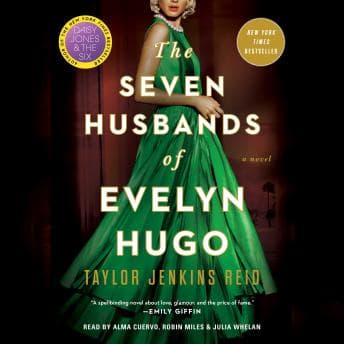
I listened to most of The Seven Husbands of Evelyn Hugo while cleaning up a client logo file that had gone completely feral - layers everywhere, nothing named correctly, my personal hell. And somehow Taylor Jenkins Reid gave me a different kind of beautiful mess: a woman curating herself so aggressively for public consumption that by the time she finally starts telling the truth, it feels less like gossip and more like a confession you maybe shouldn't be trusted with.
This book felt like opening a vintage jewelry box and finding blood under the velvet.
Old Hollywood, but make it ruthless
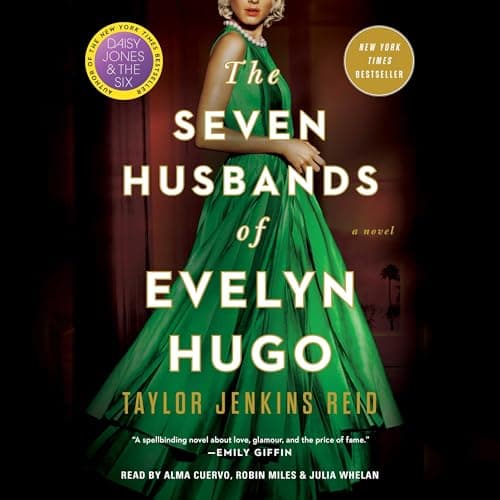
The setup is so deliciously specific: aging screen legend Evelyn Hugo, who has spent decades controlling her image, chooses Monique Grant - not a star journalist, not some famous biographer, just Monique - to hear the real story. And that choice matters immediately. It gives the whole book this off-balance tension, because even while Evelyn is telling you about the seven husbands, the green dresses, the studio-era maneuvering, the marriages used as camouflage, there's always that second question humming underneath: why Monique, and why now?
That's what kept me locked in during the slower first stretch. Because yes, I get why some listeners say it takes a minute to warm up. Early on, the book is arranging the furniture: Monique's stalled career, her husband leaving, the mechanics of these interview sessions in Evelyn's apartment. But once Evelyn starts pulling apart the mythology of "Evelyn Hugo" - not just who she loved, but what she traded for power, safety, visibility, survival - oh, baby. The vibes are immaculate and devastating.
And what I loved most is that the husbands are almost a structural trick. The title makes you expect scandal-by-numbers. The book gives you something sadder and sharper: how a woman can be desired by everyone and still not be seen. The forbidden love at the center of this story is the real engine, and it lands because Reid never lets Evelyn be simple. She's generous. Manipulative. Tender. Calculating. Sometimes all in the same conversation.
That complexity is the whole meal.
Three microphones, three shades of truth
This is one of those rare multi-narrator productions where the format actually adds something instead of feeling gimmicky.
Alma Cuervo voices Evelyn, and thank God they gave the lion's share of the book to someone who understands controlled glamour. Her performance has this low, composed authority that makes even Evelyn's cruellest choices sound intentional before the cracks start to show. Then, in the emotional sections - the ones about love, desperation, the cost of always performing - Cuervo lets that polish fracture just enough. Not a huge melodramatic break. Just enough ache in the voice that you feel the younger girl underneath the movie star. My heart. MY HEART.
Robin Miles as Monique is a smart counterweight. Monique could've disappeared next to a character as oversized as Evelyn, but Miles gives her a real interior life. You hear the hesitation, the professional hunger, the bruised self-worth after her marriage collapses, and then the gradual strengthening as she realizes this interview is changing her too. That matters because Monique isn't just a recorder here; she's the moral weather of the present-day storyline.
And Julia Whelan only pops in for the tabloid and magazine-style snippets, but those little interludes are so effective. She gives them this brisk, catty, polished-media voice that instantly recreates the machinery around Evelyn - the gossip columns, the public spin, the shiny lie of celebrity narrative. It's such a specific audio choice. No music, no sound effects, no overproduction. Just voice used with intention.
Basically: Alma Cuervo is the confession, Robin Miles is the witness, Julia Whelan is the myth machine.
The ugly-cry math
I didn't cry all the way through this one, which honestly made the ending hit harder. The book spends hours teaching you how to listen to Evelyn - how to sort performance from honesty, image from hunger, survival from selfishness - and then that final convergence with Monique lands like a dropped glass. Not because it's shocking for shock's sake, but because the reveal rewrites the emotional contract of the whole book.
And there's a particular kind of ache here I'm always weak for: stories about women building themselves out of scraps because the world offered them bad options and worse consequences. Add in bisexuality handled as identity instead of plot garnish, the domestic abuse thread, the private/public split of queer love in mid-century Hollywood, and yeah. This one lingered.
Abuela would have had opinions. Loud ones. Then she would've asked me to replay certain parts. The only other audiobook that left me in a similar state of quiet devastation this year was Gift — that same feeling of a story that knows exactly where to press to make something ache.
Who's this for? If you love character-driven fiction, morally messy women, old Hollywood image-making, and romances where the yearning is sharpened by secrecy, this is absolutely your book. If you need fast action right out of the gate or you hate books built around interviews, memory, and reveal-based structure, you might get impatient in the first couple hours. Skip it if slow-burn storytelling makes you restless — this one earns its payoff but it takes its time getting there.
For audiobook people specifically: this is a dedicated listening pick, not a casual-background-I'm-answering-emails situation. Miss one emotional turn and you lose texture.
I'm still staring at the ceiling a little
This audiobook understands that glamour is a costume and truth is usually said in a quieter voice. Listen at 1.0x. Let Alma Cuervo wreck you properly.