I was three days into a January stretch at the cabin - no cell service, woodstove cranking, snow coming sideways off the Absaroka Range - when I started this one. Figured a book narrated by a Labrador would be light. Something to keep me company while I organized seed packets and patched a draft in the north wall. I was wrong about the light part.
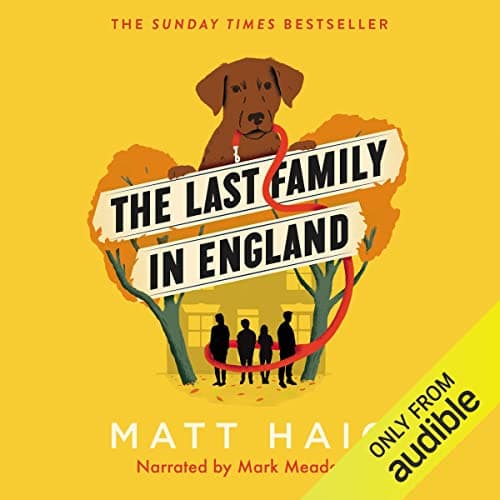
Matt Haig builds this whole thing around Prince, a black Labrador who takes his duty to protect the Hunter family with a seriousness that borders on religious devotion. There's a codified "Labrador Pact" - a set of rules governing how dogs should serve their humans - and Prince follows it the way a young ranger follows protocol before they've learned that the wilderness doesn't care about your handbook. The family is falling apart in every direction: affairs, a teenager spiraling, a marriage rotting from the inside. And Prince watches all of it, interpreting human behavior through canine logic that's both funny and quietly devastating.
The Pact vs. The Pack
What got me was how Haig uses the dog's perspective not as a gimmick but as a lens for examining loyalty pushed past its limits. Prince doesn't just observe - he intervenes. He makes choices that have real consequences. And the Labrador Pact itself functions like an ecological rule system. Stay loyal. Protect the unit. Don't break formation. It reminded me of watching a young wolf hold position in a pack hierarchy even when the alpha's decisions don't make sense anymore. That tension between obedience and instinct drives the whole book. I ran into a different kind of survival hierarchy in Dungeon Crawler Carl — the rules there are equally absurd and equally deadly, and watching someone decide which ones to follow is half the pleasure.
The Springer Spaniels as rebels - dogs who've rejected the Pact entirely - gave the story a political dimension I wasn't expecting. Haig's drawing a line between domestication and wildness, between serving a system and burning it down. And he's not entirely on the side of loyalty. That's what makes it interesting. Prince's devotion becomes its own kind of danger.
The early scene where Prince is taken to the vet - where he's facing being put down - hit me harder than I expected. Sitting in a cold cabin, alone, listening to a dog contemplate his own death with that strange mix of acceptance and confusion. Nature doesn't forgive mistakes. Neither do I, usually. But Haig earned that moment.
Mark Meadows and the Voice Problem
Here's where it gets complicated. Meadows narrates with genuine emotional commitment. The human characters land well - the exhaustion in Adam's voice, the brittle sharpness of Kate. He's clearly invested in the material. But Prince's voice? I wasn't fully convinced. Something slightly off about it - not quite earnest enough, not quite animal enough. It sits in an uncanny valley between a children's book narrator and a serious dramatic performance. The family cat was even less convincing.
For a book that lives or dies on whether you buy the dog's perspective, that's a real problem. I adjusted to it by hour three or so, but those first couple hours required some patience. Meadows is a skilled narrator - his emotional delivery in the heavier scenes genuinely works - but the central voice is the shakiest element of the whole production.
Romanticized vs. Real - This Gets Real
Haig isn't writing a nature book, so I'm not going to judge him on ecology. But I will say this: he understands something about animals that a lot of writers don't. He doesn't make Prince a furry human. Prince's logic is genuinely different - filtered through scent, through pack dynamics, through a loyalty that's almost chemical. When the family starts breaking apart, Prince doesn't understand it the way we do. He understands it the way a creature who's been bred for thousands of years to hold a unit together understands it. That gap between his comprehension and ours is where the real emotional weight lives.
The book sags a bit in the middle when the family drama turns more conventional - affair, teen rebellion, the usual suburban fractures. Without Prince's perspective grounding those scenes, they'd be forgettable domestic fiction. Haig knows this, I think, because he keeps pulling you back to the dog's desperate attempts to fix something that can't be fixed by loyalty alone.
Climate grief hit different in this one - not literally, but the structure is the same. Watching something you love deteriorate while you follow the rules that are supposed to prevent exactly this. Prince's helplessness mirrors something I've felt standing at the edge of a receding glacier. You did everything right. It wasn't enough.
Who This Trail Is For (And Who Should Turn Back)
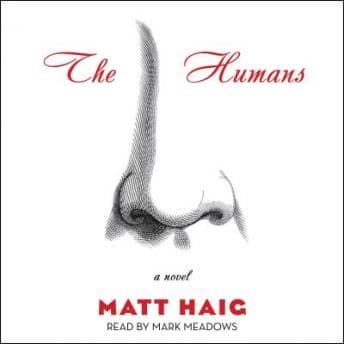
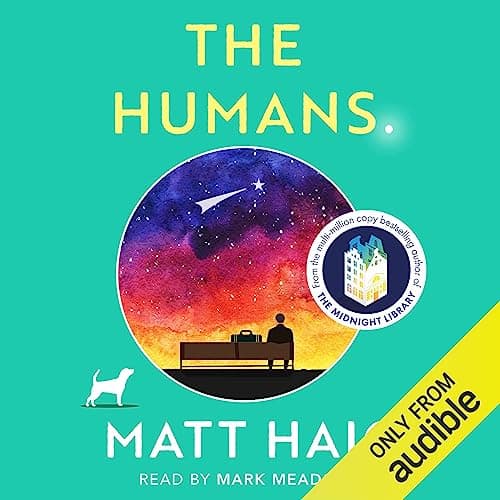
If you need a perfectly voiced animal narrator, this might frustrate you - give it a pass or brace yourself for a bumpy first two hours. If you can settle into Meadows' performance and let the story do its work, there's genuine power here. It's not Haig's strongest book - it lacks the philosophical ambition of The Humans - but it's doing something specific and strange, and mostly it works. At just under nine hours, it's the right length. Doesn't overstay. Doesn't rush. Skip it if you want a cozy dog story. Stay if you want a hard question about what loyalty costs.
I finished it on a night when the northern lights were doing that slow green pulse over the ridge. Sat there for a while after, thinking about what we ask of the creatures who live with us. What they'd say if they could. Whether loyalty is a virtue or a cage. Prince never figures that out. I'm not sure Haig does either. But the question lands.