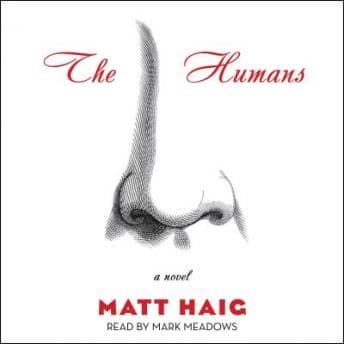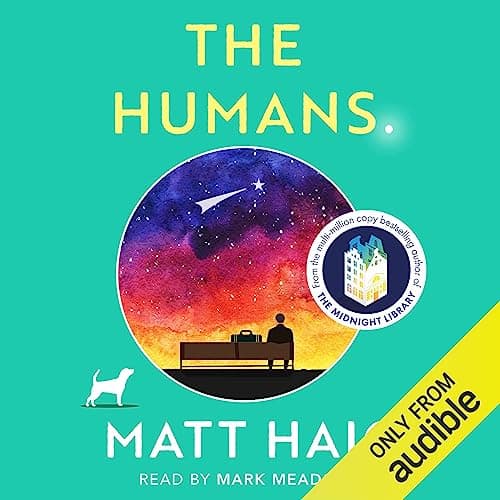

I was three hours deep into a coding session at 1 AM — supposedly debugging my procedural terrain generator, actually just staring at a nested for-loop like it personally offended me — when I decided to give my brain something else to chew on. The Humans had been sitting in my queue forever because Matt Haig keeps showing up on those "books that will change your perspective" lists, and I figured an alien-perspective sci-fi novel would scratch the same itch as my usual fantasy fare. It doesn't, exactly. But that's not a bad thing.
An Alien Who Rolls a Nat 1 on Disguise Self
Here's the premise: an alien entity replaces Cambridge mathematics professor Andrew Martin after the real Martin solves a proof so dangerous that an extraterrestrial civilization decides humanity can't be trusted with it. The replacement wakes up naked, confused, and profoundly disgusted by human bodies, human food, human everything. The early stretch — maybe the first hour, hour and a half — is basically this alien fumbling through the most basic human interactions. Discovering that you need clothes. Being baffled by peanut butter. Finding the concept of a nose hilarious.
And look, I get why some people bounce off this section. There's a fine line between "satirical outsider perspective" and "aren't humans so silly and gross, ha ha," and the opening chapters lean toward the latter. It reads a bit like a philosophy undergrad's blog post about the absurdity of human customs. If you've ever read any "alien observes humanity" fiction — or played a Warforged in D&D who doesn't understand emotions — you've seen this playbook before.
But here's where Haig earns it: the alien doesn't stay smug. The shift from contempt to curiosity to genuine affection happens gradually, and the moments where it lands are surprisingly sharp. There's a scene where the alien starts unconsciously adopting human slang and profanity, and he catches himself doing it — that tiny detail does more to sell the emotional arc than any monologue could. The progression is satisfying in a way that sneaks up on you.
Mark Meadows and the Art of Playing Confused
Mark Meadows narrates with this perfectly calibrated British reserve that works beautifully for the premise. His delivery in the early chapters has this slight clinical detachment — not robotic, but removed — like someone reading human social cues off a poorly translated manual. And then, as the alien starts to care about Isobel and Gulliver (the wife and son he's supposed to be pretending to love), Meadows gradually warms up. The tonal shift is subtle enough that you don't notice it happening until suddenly you realize the voice sounds different than it did three hours ago.
He's particularly good at the perplexed-alien register — those moments of genuine confusion about why humans do what they do. There's warmth and dry humor baked into his read that keeps the philosophical bits from becoming lectures. Is he Steven Pacey? No. Steven Pacey walked so other narrators could run, and Meadows is doing a solid jog here. But his voice fits this material like a glove. Clean production, no audio weirdness, just a guy perfectly cast for the role of a bewildered extraterrestrial.
Where it slightly wobbles: because the protagonist is an alien narrating everything with that observational distance, there are stretches where it's hard to fully sink into the emotional stakes. You're always slightly outside the story. Some listeners will find that frustrating. I think it's kind of the point, but I understand the complaint.
When the Disguise Self Spell Actually Works
The back half is where this book goes from "clever concept" to something that actually got me. The alien's relationship with Newton the dog is genuinely funny (the dog is basically the only creature he respects from minute one, which — fair). But it's the evolving dynamic with teenage Gulliver that caught me off guard. There's real tenderness there, and Haig doesn't oversell it. The alien becomes a better father than the actual Andrew Martin ever was, which is both sweet and quietly devastating.
Haig also sneaks in a list of advice about being human near the end that could easily be corny — and parts of it are, honestly — but enough of it lands that I didn't mind. It's the kind of thing that works better in audio because Meadows delivers it with just the right amount of sincerity without tipping into schmaltz.
At 8 and a half hours, this is a quick listen by my standards. (I listened to this instead of writing my thesis, and it barely even dented my procrastination schedule.) It's not the 40-hour commitment of a Sanderson epic. It's more like a one-shot campaign — self-contained, a little experimental, and emotionally rewarding if you let it in.
Who Gets the Most XP (And Who Should Save Their Credit)
If you want hard sci-fi world-building or magic systems, this isn't that. The alien civilization is intentionally vague — more philosophical device than actual setting. But if you're in the mood for something lighter that uses a sci-fi wrapper to ask genuine questions about what makes life worth living, this delivers. Think of it as a palate cleanser between epic fantasy binges.
The people who'll bounce hardest are the ones who need plot momentum. There are thriller elements — the alien has a mission, there's danger — but they're not the engine. This is a character study wearing a sci-fi costume. If that sounds like your thing, you'll probably love it. If you're checking your phone during character introspection, save your credit for something with more combat encounters.
Roll for Humanity (DC 15 Wisdom Save)
I didn't expect to feel things about a book where an alien learns to appreciate peanut butter and Emily Dickinson. But here I am at 3 AM, thesis still unwritten, weirdly emotional about the concept of dogs and prime numbers. Matt Haig wrote something that's a little uneven, a little preachy in spots, but genuinely warm in a way that earned my trust by the end. Meadows' narration is the right vessel for it. Not flashy, not showy — just right.
My D&D group would love this as inspiration for playing a fish-out-of-water character, honestly. Sometimes the best campaigns aren't about saving the world. They're about figuring out why the world is worth saving. H.G. Wells was chasing that same question a century ago — In the Days of the Comet wraps a similarly uneven but earnest argument for human potential inside its sci-fi premise, and I have complicated feelings about it for all the same reasons I have complicated feelings about this one.